
WASHINGTON–In a pardon-us-if-you’ve-heard-this-before issue for Americans, for credit unions and for their advocates on Capitol Hill, the partial federal government shutdown now taking place again has the potential to affect the credit union legislative agenda in Congress and put the paychecks of some members at risk.
But at least one credit union trade association doesn’t expect it to last all that long.
The current partial shutdown, driven by Democratic opposition to activities by Immigration and Customs Enforcement (ICE), which falls under the Department of Homeland Security, has led to a shutdown at the Pentagon and agencies that include Transportation. The Coast Guard also falls under DHS. DHS is operating on a two-week funding extension while Democrats and Republicans attempt to find some middle ground. Many of the departments that could be affected are expected to start implementing shutdown contingency plans.

“Anytime there is even a few days of uncertainty, it causes a lot of financial stress on families, especially those in active duty where spouses are deployed and where they’re now worrying if their family back home has the resources that they need to make mortgage payments and buy groceries, etc.,” said Jason Stverak, chief advocacy officer with the Defense Credit Union Council. “So, while we are hopefully coming to the end of this, we are by no means certain that this is going to get done.”
Some Complications
Stverak noted among the many complications is that, in addition to Democratic opposition to funding for ICE, members of the House Freedom Caucus have been campaigning to attach the Save America Act — which would require individuals to present an eligible photo identification document before voting — to any funding bill; representatives from the Carolinas want to see funding for FEMA following recent snowstorms; and Republicans want to see Bill and Hillary Clinton held in contempt for not agreeing to testify before Congress over the Jeffrey Epstein scandal.
Stverak noted several members of House leadership have said the two-week extension of funding will be insufficient to negotiate a funding deal for the remainder of the year.
“We would once again encourage both the House and the Senate to not use our active-duty men and women and the Coast Guard as part of this policy fight,” said Stverak, again calling for funding to ensure the Coast Guard continues to be paid regardless of the status of any government shutdown.
Effects on Agenda
Asked by The CU Daily what effect the renewed debates and negotiations around funding the government will have on the credit union agenda in Congress, Stverak summed it up in one word: “Delay.”
“It’s like you’re trying to start and run a race and you plan for the race and then it changes,” he said, noting both the House and the Senate have a limited number of workdays both before and after the midterm elections.
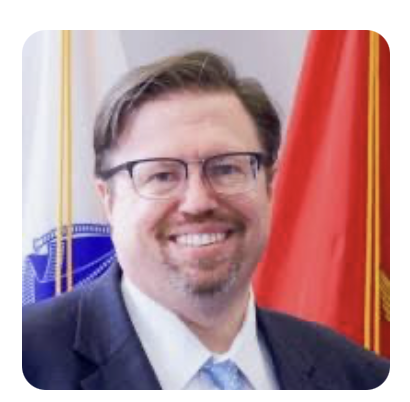
“We might be in a perpetual government shutdown with DHS — you know, two weeks after two weeks after two weeks — I think it’s concerning not only for the credit union agenda but for any industry,” he said. “There is not going to be enough time to move things through regular order, so it will once again be what major pieces of legislation can we attach multiple items to, and once again that’s the (National Defense Authorization Act) as a primary vehicle.”
Stverak said DCUC has been working with both House and Senate staff to identify areas where credit union priorities might be included.
When asked if there is a single piece of legislation that is a priority for the Defense Council in this Congress, Stverak quickly responded that it is the Veterans Members Business Lending legislation, which would not count business loans made to veterans against the 12.5% cap on member business lending for federal credit unions.
More Optimism From ACU
America’s Credit Unions is feeling more optimistic about the effects of the current partial shutdown.
The trade group’s president and CEO, Scott Simpson, said the current partial shutdown is considerably different from the one that took place in late 2025, though it may still elicit an “emotional response from the citizenry of the country,” many of whom may not have a good understanding of what is taking place. For those whose paychecks may end up being on the line, however, they have a very good understanding of what’s at stake, he said.
“Our credit unions from the very beginning have leaned into these things with a heightened sensitivity because they’re looked at as first responders and they behave like a lifeline in these moments for our membership,” Simpson said. He also praised credit unions for the work done last week in ensuring the Credit Card Competition Act — and any language that would impose a 10% credit card rate cap — did not advance out of committee.
‘Garden-Variety Shutdown’

Simpson, who called the current impasse in Washington more of a “garden-variety” shutdown, said credit unions have “been to the brink before” and have shown their value to members on multiple occasions.
Greg Mesack, senior vice president of advocacy with America’s Credit Unions, said in response to a question from The CU Daily about what the impasse means for the credit union agenda in Congress that he expects it to be a “short distraction,” adding that “even if things go off the rails, this should be done by the end of the week at the latest.”
“So, I don’t think it really slows down our agenda. Our agenda is protecting credit unions’ ability to serve their members, which means fighting against the Credit Card Competition Act, opposing rate-cap legislation, protecting the tax status, and then proactively trying to pass legislation that enables credit unions to do more to help their members,” Mesack said. “I think this shutdown does not interfere with that.”
2 Hearings, 1 Witness
Credit unions will be watching two committee hearings in Congress this week at which the same person will testify.
• Wednesday: The House Financial Services Committee will hold a hearing titled “The Annual Report of the Financial Stability Oversight Council,” at which Treasury Secretary Scott Bessent will testify.
• Thursday: The Senate Banking Committee will hold the same hearing with Bessent.