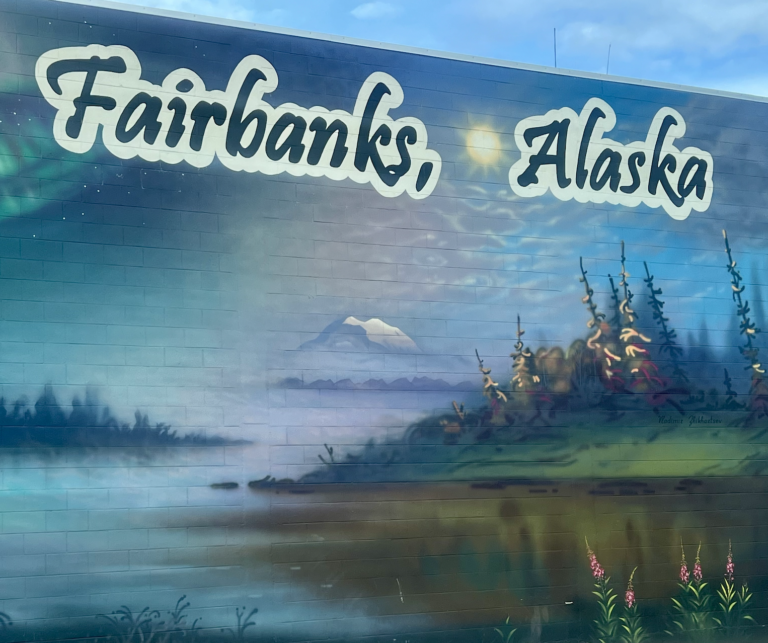
FAIRBANKS, Alaska—It is said that to live in Alaska requires someone who is a rugged individual, who can handle extremes, and who is self-reliant. The same can also be said for its credit unions, which serve a unique membership that has needs and behaves in ways unlike that seen in any other states—where else might a member come in looking to deposit gold they had mined themselves?
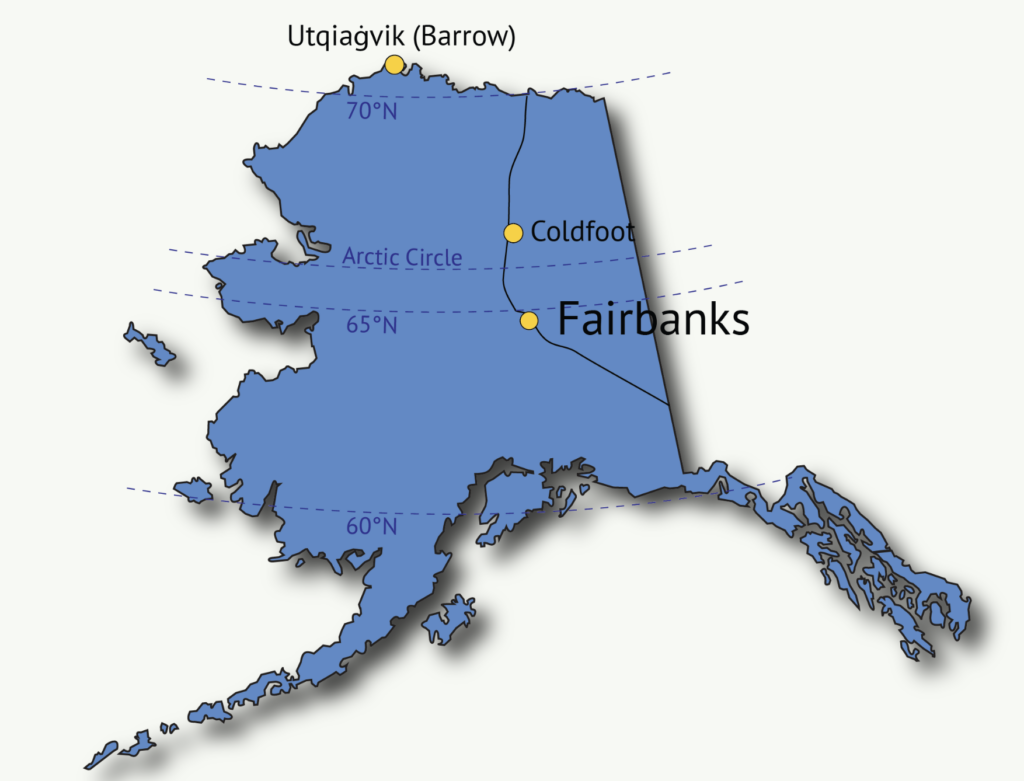
In Fairbanks, which is 350 miles north of Anchorage and even north of the North Pole (Alaska) itself, credit unions serve a boom-or-bust market and members who often leave for half the year. The city itself was only incorporated in 1903, just six years before the first credit union was chartered in the U.S., and today is a hub for the oil and timber industries, in addition to the military.
And it is, of course, known for its extreme weather, having just come out of the fourth coldest winter the city has seen in a century, hitting 50 below zero at one point.
All of those challenges haven’t stopped financial institutions from looking to build a presence here. Anthony Rizk, president and CEO of Spirit of Alaska Credit Union, told the CU Daily that it feels as if there is a “financial institution o every corner” in a city of about 32,000 people, perhaps because of the boom periods Fairbanks has seen in its history (and not because it has “banks” in its name–the city is named Charles Fairbanks, an Indiana senator who served as vice president under Theodore Roosevelt). Banks with offices in the city include local institutions such as Denali State Bank, Mt. McKinley Bank, and First National Bank Alaska, alongside national banks such as Wells Fargo and KeyBank.
“We’ve also got nine credit unions in the state and although we work together as a group, at the end of the day we’re all competitors, too,” he said.
A Slowly Shrinking Population
That competition exists despite negative population growth of -4.5% between 2014-24, and the growth remains slightly negative to stable, according to data from the state. The Alaska Beacon reported the city’s median age is much younger than many markets at 28.6, but that’s likely due to the strong military presence.
Rizk said the high cost of living, including housing, heating fuel and electricity, have played a role in the outflow, as has the fact the labor market has not been particularly strong, especially high-paying jobs.
“There’s just a lot of outbound flow right now in the state of Alaska,” Rizk explained in an interview during the Alaska league’s annual meeting in Fairbanks.

Hope for a New Pipeline Project
Rizk said one development could change the city’s fortunes. There is a proposed Alaska LNG project that would involve construction of an 807-mile pipeline to deliver North Slope gas to Alaskans and Asian markets, with targets for mechanical completion in 2028 and first gas in 2029. That project has an estimated price tag of $44 billion and has been awaiting a final investment decision by the lead developer, Glenfarne Group.
While the pipeline’s prospects are considered iffy by many, Rizk said if the funding is approved it will be good for the entire state and for the country.
Rizk said the population trends have not hurt the $200-million Spirit of Alaska’s numbers; it currently has approximately 9,200 members. He said that’s due in part because it serves two military bases: the 1.6-million acre Fort Wainwright, and Eielson Air Force Base.
“There’s always some constant movement of troops, but usually there’s a backfill of those troops so we’ve been able to gain a little bit of membership” from the bases, Rizk said.
Spirit of Alaska does not have a branch on either base, although MAC FCU (which is merging into Global Credit Union) does. Spirit of Alaska uses targeted marketing to reach the potential members who are stationed at the bases.
Big Seasonal Swings
One big thing that makes the Fairbanks market, along with all Alaskan markets, different from the markets served by other credit unions is the seasonal employment. Credit unions in other parts of the state see similar swings with the fishing industry.
“We can certainly see the spike,” said Rizk of member activity. “We see our deposits start to bump up probably from about March through the end of October. Those are seasonal construction jobs, whether that’s in town out or out on the highways up north to Prudhoe Bay and the oil fields. It spikes up and then and it kind of flattens in the wintertime, because a lot of these people they just work from March through September and then they take the rest of the year off. You start seeing them them eating into their deposits throughout the year.”
When it comes to lending, the seasonality also has an effect, Rizk said.
“We get into the middle of the year and they start thinking, ‘Oh, do I need to buy a new car or not?’ Some of these are probably not good financial decisions because they’re getting low on their funds and there are higher interest rates right now,” Rizk said. “We have a loyalty program at our credit union to attract them and they can get up to (one percentage point) off their auto loan rate. But I think lending in general is tough.”

An Appointment to Warm Up a Car
The weather plays another role in the winter time when it comes to auto buying, with Rizk explaining that when it’s 40 degrees below, not too many people are shopping for cars and, if they are, the cars are sitting frozen on auto dealers’ lots and have to be warmed up before they can be driven, so an appointment has to be made.
As is the case in other parts of the northern U.S., many people in Alaska plug their vehicles into heaters for the engine black, oil pan and transmission pan to keep them from freezing.
Mortgage lending has also been difficult, compounded by higher rates and a tough market for home shoppers.
“We have a real problem here in Fairbanks; there’s not a lot of inventory,” Rizk continued. “Housing prices are considerably inflated right here in town compared to what you could get 10 years ago.”
Asked why home prices remain high in market with flat to declining population, Rizk agreed it would seem prices should be flat or declining, “But that’s just not the case and prices are going up or not coming down.
“It’s a little bit of a task up here as far as lending,” he said.
Rizk said Spirit of Alaska has sought to make a go of solar lending, but the market has not “really taken off.”
Cabin Loans
It does, however, see interest from borrowers for “cabin loans,” primarily for those looking for second homes in more remote locations for activities such as snowmobiling.
“It’s got to be the right cabin” before the credit union will make the loan, Rizk said.
“The cabin has to be road accessible,” Rizk explained. “We won’t do anything for a cabin where you have to fly out to it. But there are a lot of cabins that are road accessible. There are a lot of places where you can find an old Alaska cabin. Some of the cabins can be hard to come by and they’re valuable.”
There is another thing that’s unique to Fairbanks and other areas of the state that credit unions in other parts of the country never see: Members seeking to pay for something or make a deposit with gold they have mined themselves.
“We have had people come into the branch from time to time who want to see if they can trade gold for cash,” said Rizk,. “It’s not something that we do…I saw someone probably about six months ago going to an (ATV) dealership to buy a snow machine and he had a bunch of gold that he wanted to pay with.”
Risk described those who try to pay with gold as the “true Alaskans: and said there are assessors in town who will give someone the value of their gold and buy it if they wish to sell.
Positive, Despite the Challenges
Despite all the challenges of living just 200 miles from the Arctic Circle, Rizk remains positive on the future of city in which he grew up.
“I think the future is good. I want to see this gas pipeline go through. That would bring a ton of economic activity here to Fairbanks,” said Rizk. “Fairbanks is the hub for oil service up on the north slope. That’s how stuff gets done; it goes through Fairbanks. That will bring a lot of jobs to Fairbanks and, ultimately, new members.”
But that isn’t to say there aren’t challenges, especially the long, cold winters and the months without sunlight. How does one deal with that?
“It’s difficult,” Rizk acknowledged. “But you still have to get out and get some fresh air, even when it’s dark. You have to go on walks. I do get a chance to travel out of the state and I think that’s helpful. Not everyone can do that. But definitely don’t sit around in your house and watch TV all the time that’s not going to be healthy for you.”