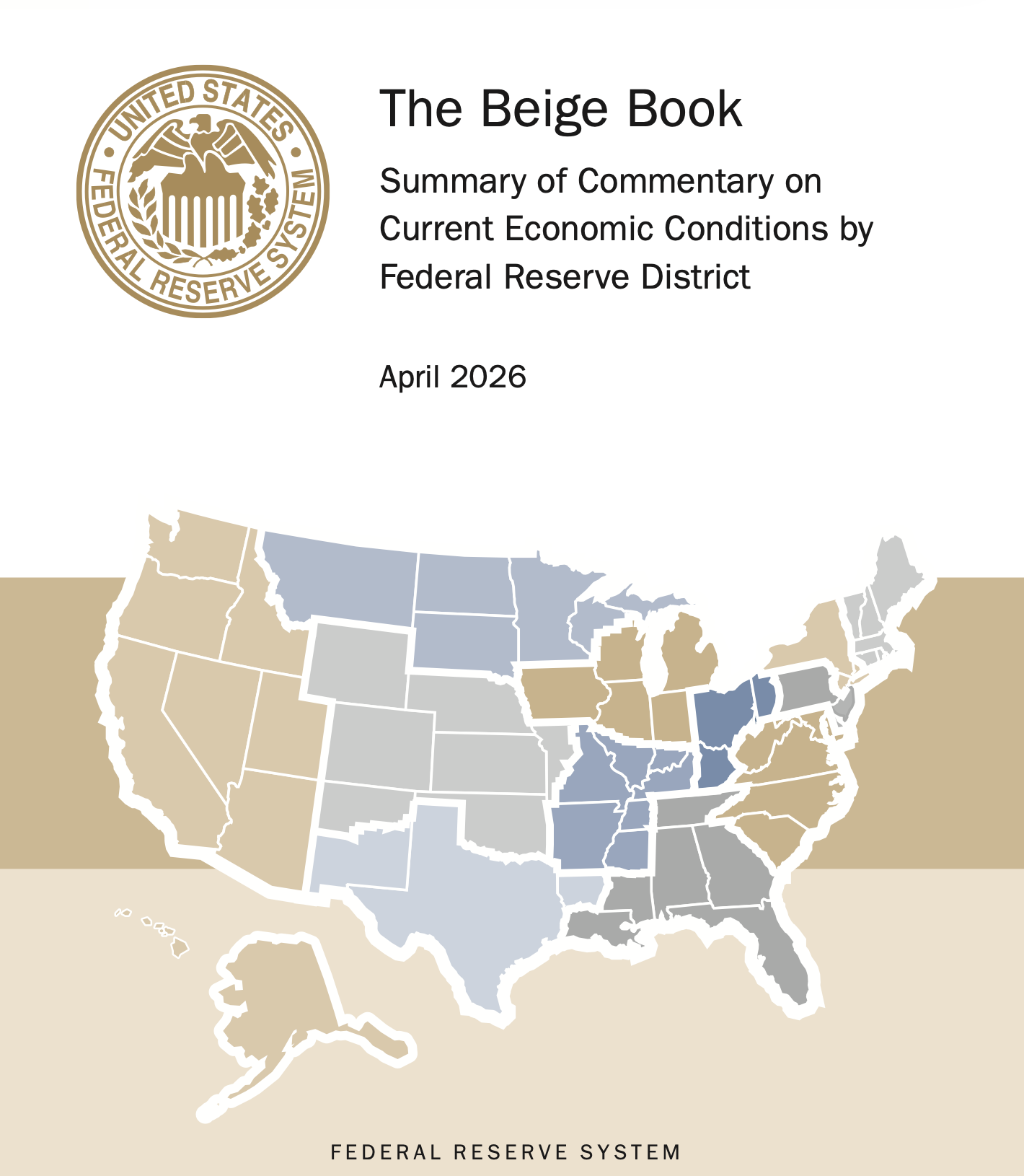
WASHINGTON — Economic activity across the United States continued to expand at a modest pace, but businesses and households are facing growing cost pressures, uncertainty and widening financial disparities, according to the Federal Reserve’s latest Beige Book.
The Federal Reserve said in its Beige Book report that activity increased in most of its 12 districts, with employment and consumer spending generally holding steady, even as underlying conditions showed signs of strain.
According to the Beige Book, the overall stability in economic activity masks significant divergence across income groups and business sectors. The report, which is based on interviews and surveys with business leaders, economists and community organizations, found that demand remains stronger among higher-income consumers, supporting areas such as luxury retail, travel and wealth management.
‘Cautious Spending’
At the same time, the Federal Reserve reported that businesses serving a broader range of consumers are seeing more cautious spending patterns, with households prioritizing essential goods and reducing discretionary purchases.
The Beige Book also highlighted ongoing pricing pressures, noting that many firms continue to face rising input costs that are increasing faster than their selling prices, compressing profit margins. Some businesses told the Federal Reserve that these pressures are being compounded by tariff-related costs and could eventually be passed on to consumers if demand stabilizes.
The Role of Uncertainty
The Federal Reserve said uncertainty is increasingly influencing business decision-making, with companies adjusting hiring plans, production levels and capital investment strategies in response to a more constrained operating environment.
“Most firms did not plan to raise prices in the near term, but contacts noted that the pricing outlook was hazy owing to recent cost shocks and lingering uncertainty related to tariffs,” the Beige Book stated.
The report also pointed to growing caution among consumers, particularly in response to higher prices. Federal Reserve contacts said households are becoming more sensitive to price increases, especially for nonessential goods, while elevated fuel costs could offset temporary boosts to spending, such as tax refunds.
In addition, the Beige Book underscored a widening financial divide among U.S. households. The Federal Reserve said higher-income households continue to benefit from stronger savings and financial stability, while lower-income households remain more financially exposed, with limited savings and reduced capacity to absorb unexpected expenses.
Wide Variances by Income
The Federal Reserve also noted that while employment levels remain relatively stable, financial flexibility varies significantly by income group, creating what the Beige Book described as a “fragile equilibrium” in which consumer spending can be sustained only as long as incomes remain steady.
Overall, the Beige Book portrays an economy that is continuing to grow but facing increasing constraints, as businesses contend with margin pressures and uncertainty and consumers navigate uneven financial conditions, according to the Federal Reserve.