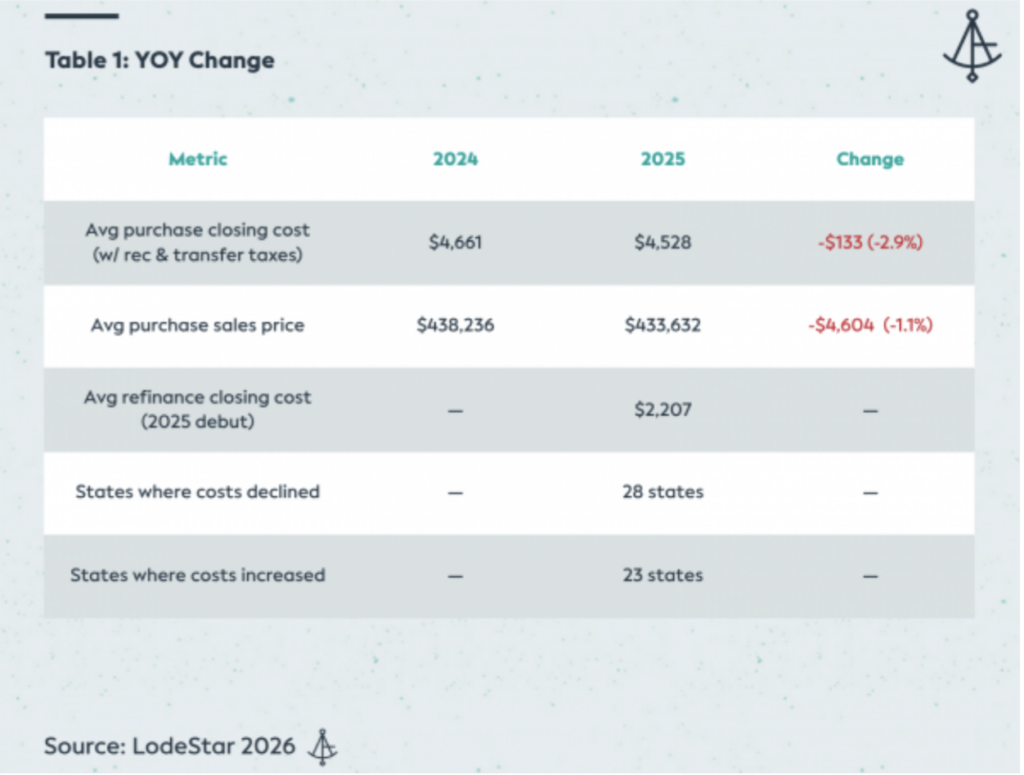
CONSHOHOCKEN, Penn. — Mortgage closing costs for home purchases declined 2.9% nationwide between 2024 and 2025, largely because lower home prices reduced transfer taxes in many markets, according to a year-over-year analysis released by LodeStar Software Solutions.
LodeStar Software Solutions, which provides mortgage closing cost and fee data, said its report analyzed mortgage quotes generated through its closing cost calculator platform across all 50 states and the District of Columbia.
According to LodeStar, closing costs declined in 28 states, while 23 states posted increases.
Key Findings
Among the report’s findings:
- Purchase loan closing costs fell 2.9% nationally from 2024 to 2025.
- Refinance loan volume increased 7.8%, with refinances accounting for 24.5% of loans in the dataset, up from 16.7% a year earlier.
- The average refinance closing cost nationwide was $2,207, less than half the average cost for purchase loans.
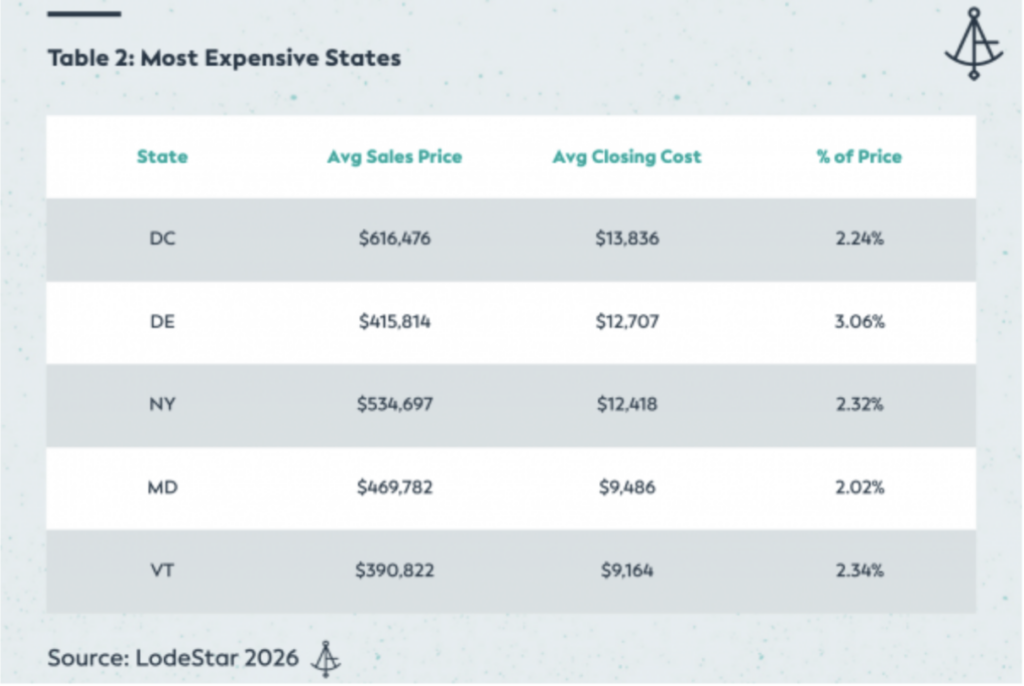
- Closing costs in the District of Columbia fell 21.1%, the largest decline of any market, although D.C. continued to post the nation’s highest average closing costs at $13,836.
- Delaware remained the most expensive state relative to home price, with closing costs equal to 3.06% of the average sale price after costs increased 4.5%.
- New York recorded the nation’s highest average refinance closing costs at $10,553 because the state’s mortgage recording tax applies to refinances as well as home purchases.
- Florida’s average refinance closing costs reached $5,250, more than double the national average, due to taxes based on the amount of the new loan.
Steep Decline in DC
LodeStar said the steep decline in Washington, D.C., reflected an average home price drop of about $119,000, which significantly reduced transfer tax obligations. The District nevertheless remained the nation’s most expensive market in dollar terms because of its comparatively high transfer tax rates.
The report also found that recording fees in a growing number of states are being directed toward programs unrelated to recording real estate documents, including affordable housing and homelessness initiatives. LodeStar said borrowers often receive little or no disclosure that a portion of the fees they pay supports those programs.
‘Direct Impact’
“The connection between closing costs and housing affordability is often overshadowed by other components to the equation, like interest rates and down payments,” Ron Carvalho, LodeStar’s director of data operations, said in a statement. “However, our data shows that decisions made at the state level on recording taxes and document fees have a direct impact on borrowers’ total financial ability to purchase or refinance their home.”
Carvalho said understanding state-level closing costs can help lenders provide borrowers with more accurate guidance as they navigate the homebuying or refinancing process.
For info, go here.