WASHINGTON — Inflation remained elevated in July, but household incomes grew faster than prices while consumers sharply slowed their inflation-adjusted spending, according to the Bureau of Economic Analysis.
The Personal Consumption Expenditures price index rose 0.2% in July from the previous month and 3.7% from a year earlier, BEA reported. Both rates were unchanged from June.
Core PCE, which excludes volatile food and energy prices, also increased 0.2% for the month and was up 3.3% from July 2025. The annual core inflation rate was unchanged from June.
While inflation showed little improvement, consumers gained purchasing power during the month. Personal income increased 0.4%, while disposable personal income — what households have available after taxes — rose 0.5%.
After adjusting for inflation, disposable personal income increased 0.4%.
No Immediate Spending
Consumers did not immediately spend those additional gains, however.
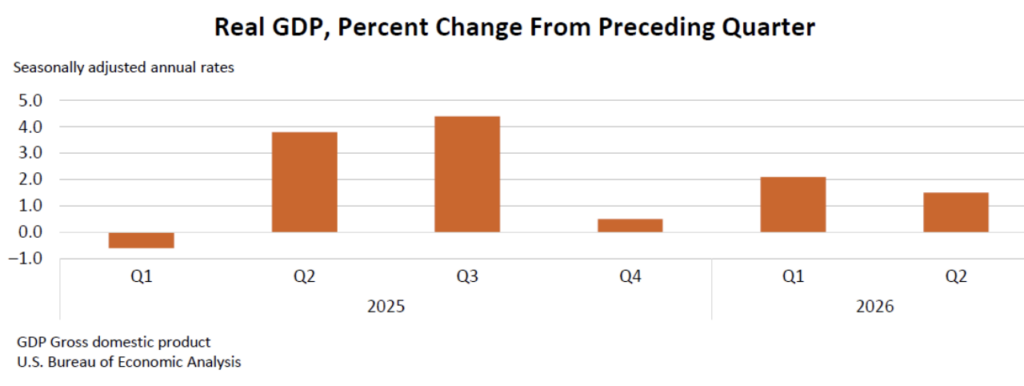
Personal consumption expenditures increased $36.3 billion, or 0.2%, in current dollars. After adjusting for inflation, spending was essentially unchanged, with BEA reporting a gain of less than 0.1%, rounded to 0.0%.
That marked a significant slowdown from June, when real consumer spending increased 0.4%.
Consumers Shift Spending Toward Services
The July report showed a widening divide between spending on services and goods.
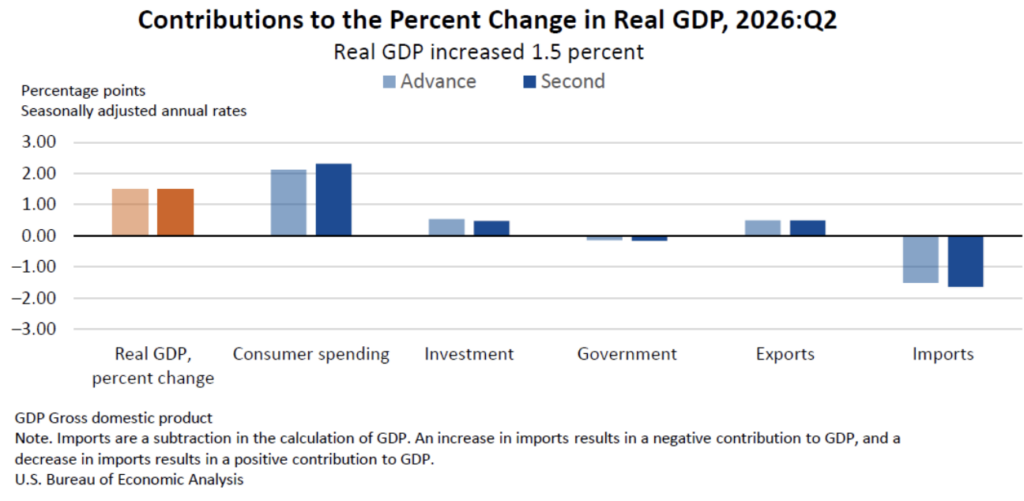
Spending on services increased $86.2 billion, while spending on goods declined $49.9 billion. The increase in services therefore accounted for more than the overall gain in consumer spending, with falling goods purchases offsetting much of the increase.
Among services, the largest dollar increases were in financial services and insurance, healthcare, housing and utilities, and other services, according to BEA.
Consumers cut spending on a broad range of goods, including gasoline and other energy products, recreational goods and vehicles, motor vehicles and parts, furnishings, food and beverages, and other nondurable goods. Spending on clothing and footwear increased slightly.
What Data Reveal
The BEA reported inflation-adjusted figures showed a similar pattern, including:
- Real spending on goods declined 0.6%, including a 1.4% drop in durable goods. Real spending on motor vehicles and parts fell 1.6%, while recreational goods and vehicles spending declined 2.9%.
- Real services spending increased 0.3%, led in part by gains in transportation services, healthcare, and food services and accommodations.
Saving Rate Rises as Purchasing Power Improves
The combination of stronger income growth and restrained spending allowed households to save a larger share of their income in July.
The personal saving rate increased to 3% from 2.7% in June, according to BEA.
The figures indicate that, in aggregate, inflation did not consume households’ income gains during the month. Real disposable income increased 0.4% while real consumer spending was essentially flat, leaving consumers with greater purchasing power without producing another surge in spending, according to the BEA.
The July slowdown does not mean consumers have broadly pulled back, however. Inflation-adjusted personal consumption expenditures remained 2.4% higher than a year earlier.
The PCE price index is closely watched as a measure of U.S. inflation and is the Federal Reserve’s preferred gauge for assessing progress toward its 2% inflation target.