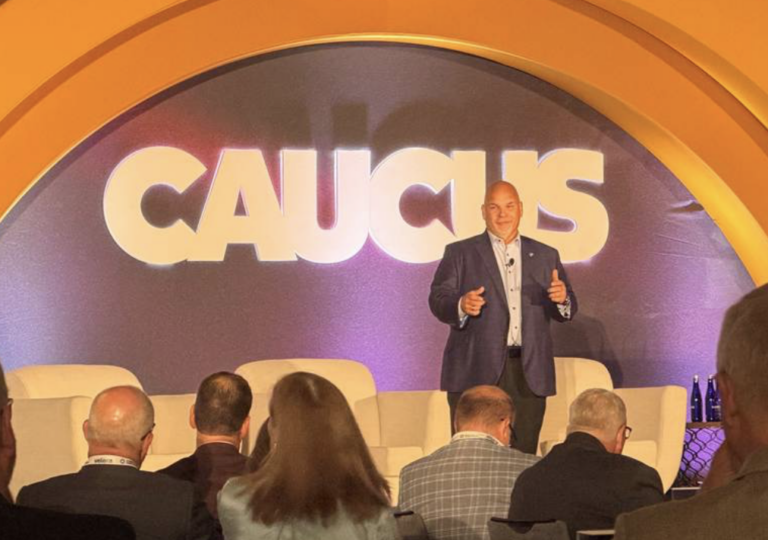
WASHINGTON — America’s Credit Unions’ Congressional Caucus is now underway in DC.
Congressional Caucus, a long-time NAFCU event before that group merged with CUNA to form Americas Credit Unions, is a bookend event for credit unions in Washington with the Governmental Affairs Conference in the Spring, and allows CUs to press their legislative priorities prior to the November midterm elections.
America’s Credit Unions said the event is bringing together industry leaders to coordinate advocacy priorities, meet with federal policymakers and strengthen relationships between national and state credit union organizations.
The timing is particularly significant because this week is expected to be the last time before the midterm elections that both the House and Senate are in session simultaneously, according to the trade group.
Focus on Relationships, Advocacy
John Bratsakis, chairman of the American Association of Credit Union Leagues and CEO of The League of Credit Unions & Affiliates, said Caucus gives the industry an opportunity to combine local and state perspectives with national advocacy efforts.
“Congressional Caucus brings together the people and organizations that make our movement stronger,” Bratsakis said. “The relationships formed and strengthened during this event help ensure that local insights, state-level expertise, and national priorities work together to advance credit unions and the people they serve.”
America’s Credit Unions said state league leaders are participating in general and breakout sessions, policy discussions, strategic planning and grassroots advocacy efforts, as well as meetings with members of Congress and other federal policymakers.
“Those relationships can provide information about how federal policies could affect individual credit unions and their members while helping national organizations coordinate advocacy efforts across states,” America’s Credit Unions said in a statement.
Bratsakis: ‘Advocacy Is About Relationships’
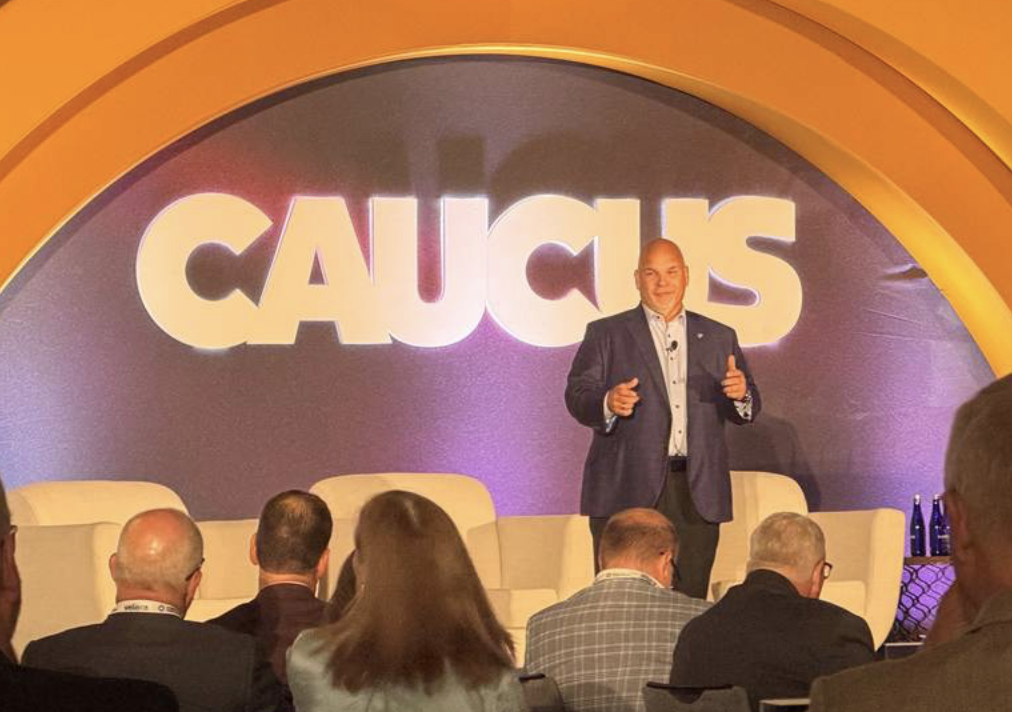
Speaking from the Caucus main stage, Bratsakis emphasized the importance of relationships in achieving legislative and regulatory objectives.
While advocacy often is judged by whether legislation is passed or regulatory changes are achieved, Bratsakis said its foundation is the trust developed over time with lawmakers, regulators and other policymakers.
He also highlighted cooperation between state credit union leagues and America’s Credit Unions, saying the partnership allows local perspectives to help shape national priorities while giving leagues access to national advocacy resources.
Other meeting highlights, according to America’s Credit Unions, included:
Lawmakers Set to Head Home
The trade association’s advocacy team told attendees that lawmakers are expected to spend much of the remaining time before the November elections in their home districts, making direct engagement by credit unions with members of Congress increasingly important.
At the same time, year-end legislation could provide opportunities to advance credit union-supported measures that have bipartisan backing, ACU said.
Must-Pass Bills Could Provide Opportunities
America’s Credit Unions Senior Vice President of Advocacy Greg Mesack said Congress has relatively little legislative time remaining this year, but several must-pass measures could offer opportunities for credit union legislation.
Among them are:
- The National Defense Authorization Act.
- Legislation needed to fund the federal government beyond Dec. 11.
- Other year-end legislative packages that could provide vehicles for bipartisan credit union measures.
“The good news is we can work with both parties, and we’ve done a good job of building a brand with both parties that is respected and trusted,” Mesack said. “They see that our goal is helping Americans.”
America’s Credit Unions said it has identified several year-end legislative priorities, including legislation aimed at combating check fraud, expanding credit union loan maturity limits and updating Currency Transaction Report and Suspicious Activity Report thresholds.
Grassroots Advocacy Called Critical
Association officials said credit unions’ relationships with lawmakers in their home states and districts are particularly important because constituents can reinforce messages delivered by national trade groups in Washington.
Chief Marketing and Communications Officer Meghan Burris Small said credit unions can provide lawmakers with firsthand examples of how policies affect their members and communities.
“We work every day to get data and information to share with you, but helping members is a story you hear every single day, that you’re a part of every single day,” Small said.
She said there is a significant difference between policymakers hearing from a Washington-based trade association and hearing directly from credit unions and their members.
“It’s a different thing for those lawmakers to hear directly from their constituents, their voters, businesses on Main Street,” Small said. “That makes a real impact.”
Vice President of Policy Engagement and Credit Union Operations Ann Petros said grassroots advocacy also should be viewed as part of a credit union’s broader strategy for managing legislative and regulatory risk.
“Incorporating advocacy grassroots is a resilience strategy that ensures that you’re prepared for any potential legislative and regulatory shocks that may come down the road that could impact your long-term operational stability,” Petros said. “This protects our industry, it protects your institution, and it’s something we can only do together.”
Political Engagement Starts With Relationships
Several Congressional Caucus breakout sessions focused on how credit unions can build political relationships and educate policymakers long before individual legislation comes up for a vote, according to the trade group.
America’s Credit Unions Director of Political Action and Engagement Andy Byun moderated a panel featuring:
- Jennifer Wagner, executive vice president and chief advocacy officer of the GoWest Credit Union Association.
- Brandee Bickle, senior vice president of strategy and governmental affairs at Georgia’s Own Credit Union.
- Alan Meyer, CEO of 1st MidAmerica Credit Union.
Panelists stressed that relationships with lawmakers can begin while candidates are campaigning and continue after they take office, America’s Credit Unions said.
Meyer discussed 1st MidAmerica’s experience involving members in political advocacy. He said the credit union initially proceeded cautiously but found no negative membership reaction to its first communication.
“After the first [member communication], with no negative impact from a membership perspective, the next time we came back to the board and relayed another opportunity, there were no hesitations,” Meyer said.
Wagner said credit unions that make an additional effort to engage policymakers can distinguish themselves. “Taking those steps above and beyond what most people are doing has an exponential impact,” Wagner said.
Bickle said educating employees internally about the reasons for political engagement is an important first step.
“Once you get started, it becomes part of your DNA,” Meyer added.
Advocacy Strategy Looks Beyond November
America’s Credit Unions said another session examined what credit union advocacy could look like in 2027 and beyond, including the possibility of changes in congressional leadership following the November elections.
Head of Legislative Advocacy Brad Thaler said the industry’s bipartisan approach provides opportunities to advance credit union priorities regardless of which party controls either chamber.
Many credit union-related bills have Democratic and Republican sponsors, he said, allowing proposals to be reintroduced and potentially gain support over multiple sessions of Congress.
Head of Regulatory Advocacy James Akin said America’s Credit Unions also plans to continue pressing for regulatory relief through its work with newly installed NCUA Chairman John Crews and the administration.
Crews was sworn in Aug. 24 and is scheduled to make his first in-person speaking appearance as NCUA chairman during the Congressional Caucus.
State Issues Increasingly Have National Impact
The intersection between state and federal policy also received attention during the Caucus, according to America’s Credit Unions.
Petros moderated a discussion featuring Alaska Credit Union League President Tim Sullivan, New York Credit Union Association Chief Advocacy Officer Amy Kramer, and Honor Credit Union Chief Strategy Officer Heather Luciani.
Panelists pointed to several state-level issues they said could have broader implications for credit unions nationally, including:
- State efforts to regulate interchange fees.
- An expanding patchwork of state data privacy requirements.
- Different state approaches to regulating artificial intelligence.
- State laws that credit union advocates contend can place state-chartered credit unions at a competitive disadvantage to federally chartered institutions.
The panel cited the Illinois Interchange Fee Prohibition Act and similar proposals in other states as examples of issues requiring coordinated state and national advocacy.
Credit union groups have opposed the Illinois law and have challenged it in federal court.
Policy Battles Begin Before Votes Are Cast
The trade group also reported that another breakout session focused on the factors that can shape public policy well before lawmakers vote on legislation.
America’s Credit Unions Vice President of Strategic Communications Cassie Blake moderated the discussion, which included Penta Group Senior Partner Sean Harper, a BGR Group representative and The Daily Wire Senior Vice President of Public Relations Brad Bishop.
Panelists said advocacy organizations should not assume the issues receiving the most attention on social media or in news coverage are necessarily dominating lawmakers’ daily work. Instead, they emphasized sustained communications, constituent engagement and relationships with congressional staff.
Because major policy changes can take years to advance, panelists said advocates frequently must repeat their message before it gains traction.
“Members ultimately listen to their constituents,” one panelist said. “Local impact is very important.”
Bishop said advocates also should connect policy proposals to real-world experiences.
“Every policy has a story behind it,” Bishop said.
Panelists encouraged credit unions to bring examples of their impact on members and communities into meetings with lawmakers and their staffs, stressing that repetition and consistency can help an issue gain recognition over time.
They also emphasized developing relationships with congressional staff members, who often play significant roles in researching issues, developing legislation and advising lawmakers.