PURCHASE, N.Y. — Credit unions frequently remind members to cut up their old plastic cards, but for a small community of collectors in the U.S., old credit cards are artifacts that document the evolution of payments, retailing and technology, and they go to great lengths to collect certain credit cards.
In a profile published by Mastercard, the company has highlighted how the hobby ranges from collecting early charge cards and Master Charge cards to tracking down examples featuring the first magnetic stripes and computer chips. Some rare cards can command thousands of dollars, Mastercard reported as part of a series marking the company’s 60th anniversary.
Among the collectors is Rich Hudson, a 44-year-old British business owner who began saving expired cards about eight years ago after deciding to keep one featuring a sunset design rather than discard it.
More Than 15,000 Cards
Hudson has since accumulated more than 15,000 credit cards, most of them vintage and many carrying the Mastercard brand. The cards are organized in binders in his library.
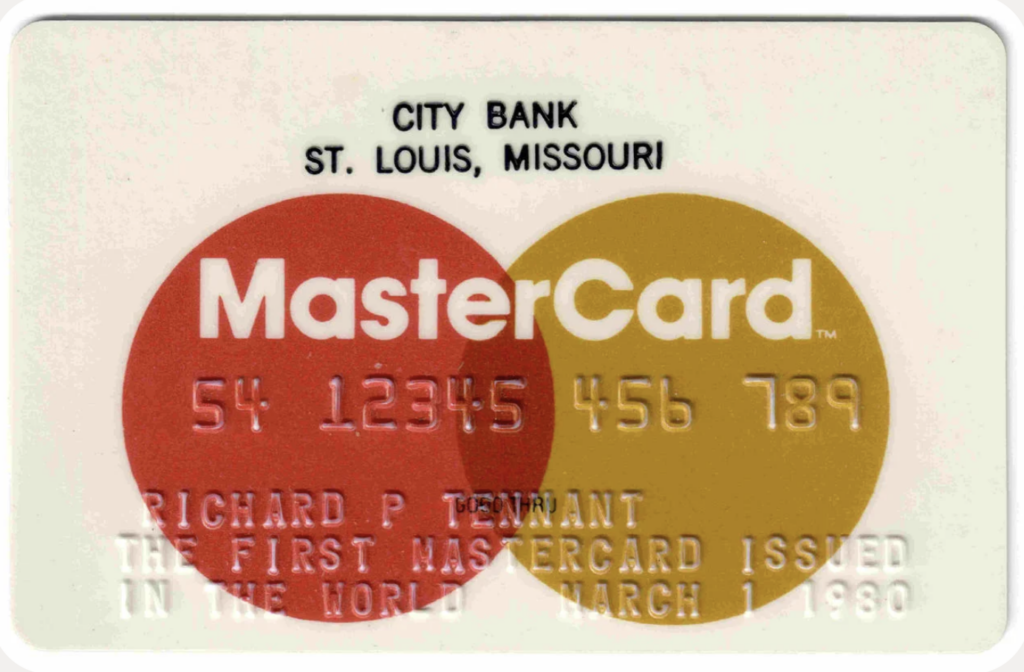
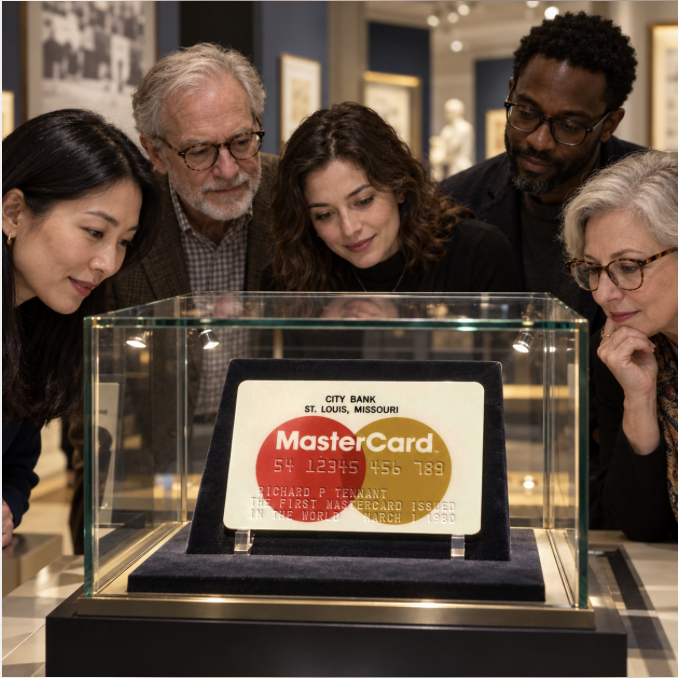
One of the most notable cards in Hudson’s collection was issued by City Bank of St. Louis and is embossed with the name Richard P. Tennant and wording identifying it as the first Mastercard issued March 1, 1980, according to Mastercard.
Master Charge became MasterCard in 1979, with the brand later changing its name to Mastercard.
Hudson told Mastercard that collectors view the cards as pieces of commercial and technological history that illustrate changes in how consumers have shopped, traveled and paid.
“Each card is like a time capsule,” Hudson said.
50 Members in Society
Credit card collecting remains a relatively small hobby compared with coin and currency collecting. The American Credit Card Collectors Society has about 50 members, according to Mastercard. The organization traces its roots to a newsletter called “The Credit Card Collector” and was formed in 1993.
The group holds a convention every two years, typically drawing 10 to 15 collectors who meet to trade cards and discuss their collections. Collectors also buy and trade cards online and regularly deal with enthusiasts around the world.
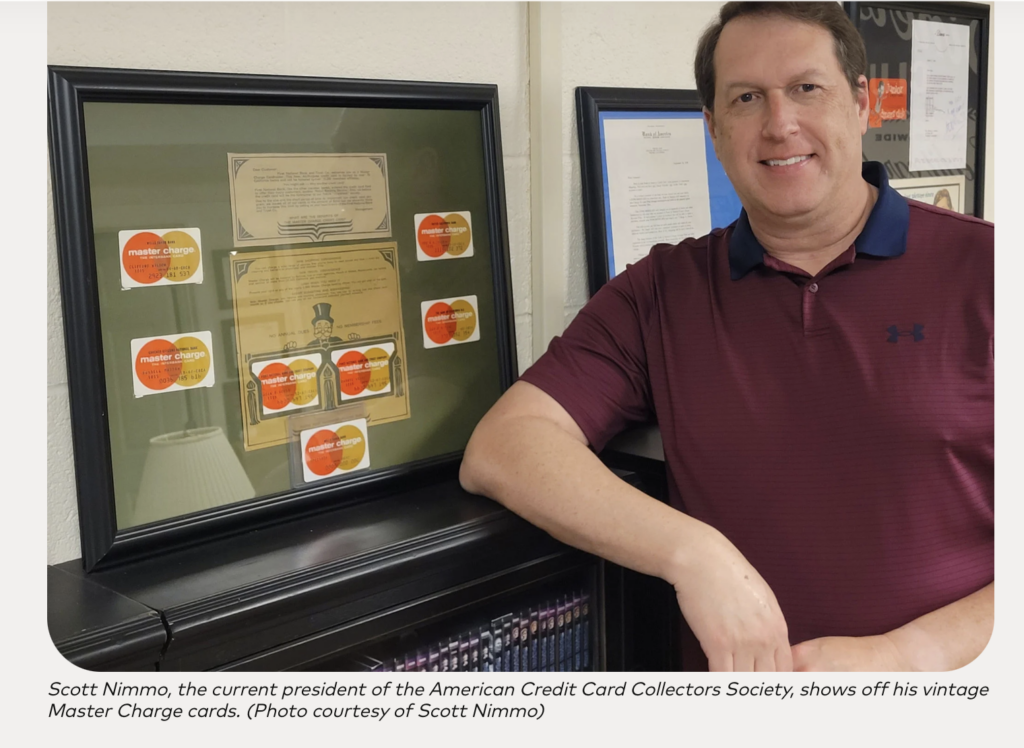
Scott Nimmo, 55, president and a founding member of the collectors society, began collecting vintage cards in the early 1990s while working at Sears. His collection includes an early Master Charge card issued by Crocker-Citizens National Bank in California with a November 1967 expiration date.
The Cost to Collect Cards
Prices vary dramatically. Common cards can sell for $1 or $2, while rare or historically significant examples can fetch thousands of dollars. Mastercard cited a 1994 auction in which actor John Corbett reportedly paid $41,400 for a 1973 credit card that had belonged to Elvis Presley.
Collectors specialize in different areas. Some seek co-branded cards issued with airlines and retailers, while others focus on technological developments, including cards from the 1960s featuring early magnetic stripes or cards from the 1980s containing early embedded computer chips.
Older payment technology also attracts collectors. Before magnetic stripes became common, merchants used manual imprinting machines to record embossed card information. Earlier still were metal charge plates, typically issued by department stores from the 1930s through the 1950s.
The Holy Grail of Cards
For Nimmo, one of the most elusive collectibles remains a card issued by Franklin National Bank in New York in 1952, which Mastercard described as among the first general-purpose charge cards.
Hudson believes other historically significant cards remain undiscovered in homes and collections.
“There are some very rare and valuable cards out there that people have no idea they’ve even got,” he told Mastercard.
The full Mastercard profile of the collectors can be found here.