WASHINGTON— Consumers who pay overdraft fees are significantly more likely to have been denied access to traditional credit, according to a new analysis by the Consumer Bankers Association (CBA), which argues the findings underscore the importance of overdraft services as a financial safety net for households facing unexpected expenses and cash-flow shortages.
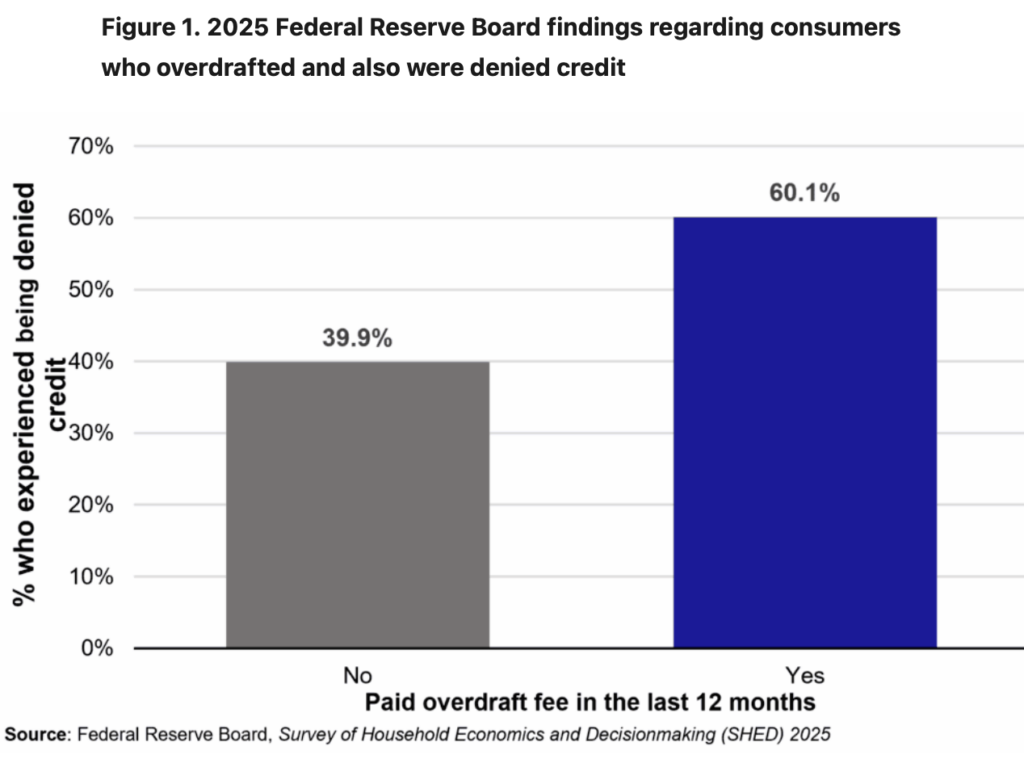
The CBA analysis of the Federal Reserve Board’s 2025 Survey of Household Economics and Decisionmaking (SHED) found 60% of consumers who paid an overdraft fee during the previous 12 months also reported being denied credit during that period.
That rate was approximately 1.5 times the rate among consumers who did not report paying an overdraft fee, according to the banking trade association.
CBA said the findings reinforce its position that consumers who rely on overdraft services often have fewer alternatives for covering emergency expenses, including credit cards, personal loans and home equity lines of credit.
Earlier Survey Found Similar Results
The association said the Federal Reserve data closely aligns with findings from its own 2024 national consumer survey.
That research found:
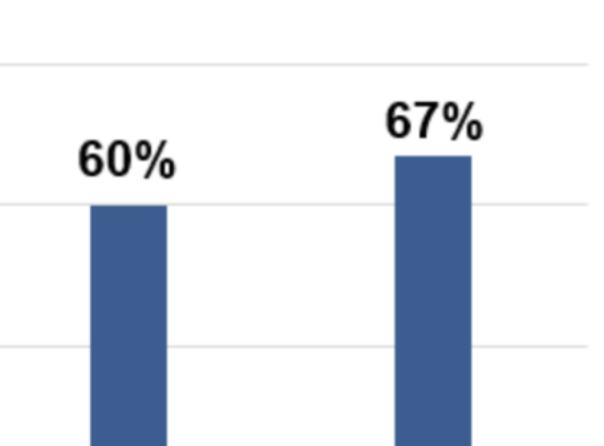
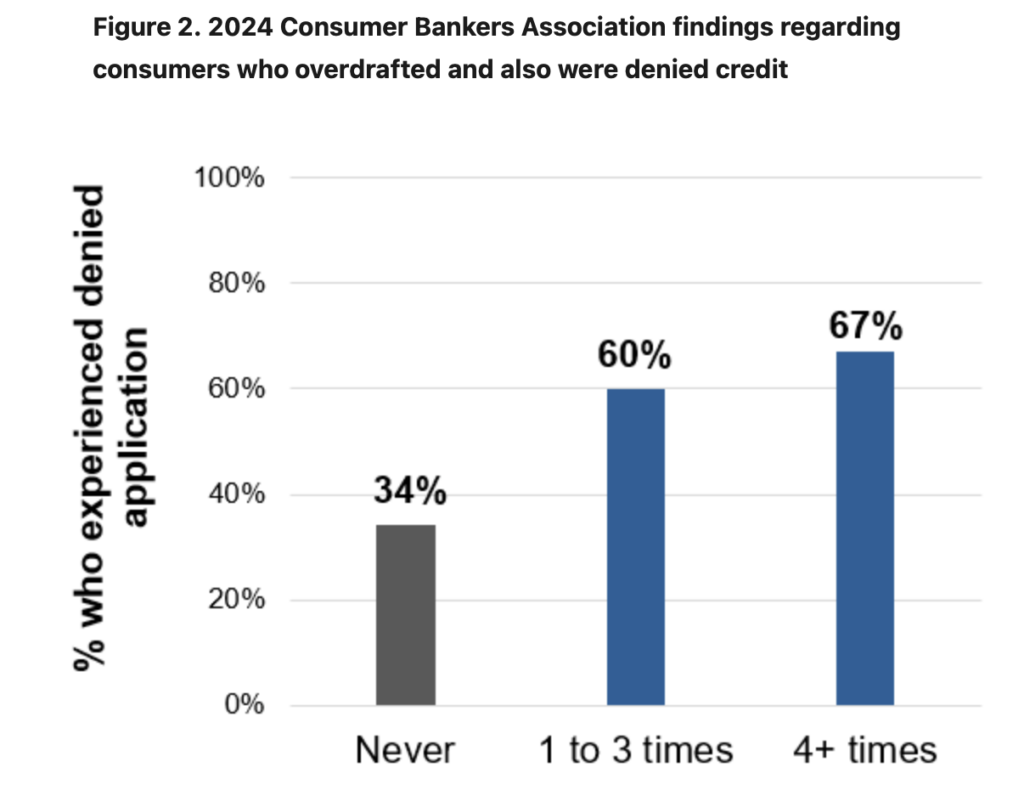
- 60% of consumers who overdrafted one to three times during the previous year reported having a credit card application denied.
- 67% of consumers who overdrafted four or more times reported being denied a credit card.
- 34% of consumers who did not report using overdraft services said they had been denied access to credit.
According to CBA, the results demonstrate that consumers who use overdraft services frequently face greater obstacles obtaining conventional credit products.
“When an unexpected expense or short-term cash-flow gap arises, consumers who need access to overdraft services are more likely to have limited access to credit,” the association said in its analysis.
The findings show an association between overdraft use and credit denials, although they do not establish that limited credit access causes consumers to overdraft.
Financial Pressures Driving Demand
CBA pointed to additional research showing the financial challenges confronting households, particularly those with limited savings or access to borrowing.
A 2024 analysis of the Consumer Financial Protection Bureau’s Making Ends Meet survey found 75% of households experienced at least one unexpected expense during the previous year. The median annual total of those expenses was $5,000.
The association also cited research indicating that rising costs for essential goods and services are consuming larger portions of household budgets, leaving consumers with smaller financial cushions.
Households with substantial savings or established credit histories may be able to rely on credit cards, personal loans or home equity lines of credit when unexpected expenses arise.
Other consumers, however, have fewer options
CBA cited CFPB research estimating that 12.5% of Americans are considered “credit invisible,” meaning they lack a credit record or have insufficient credit history to generate a credit score.
The association said overdraft services can provide immediate access to funds without requiring a separate credit application or approval based on a consumer’s credit score.
Overdrafts Frequently Used for Essential Purchases
CBA’s 2024 survey also examined the types of expenses consumers covered through overdraft services.
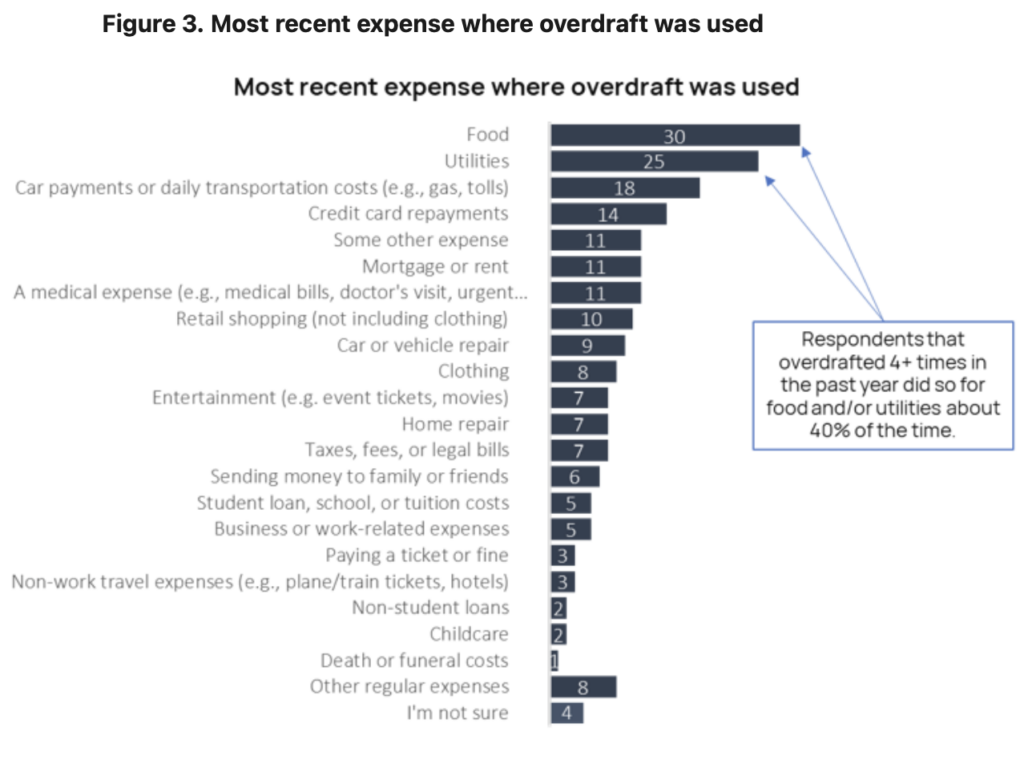
The association reported that consumers most frequently used overdrafts for necessities, including:
- Food: 30% of respondents.
- Utilities: 25%.
- Transportation: 18%.
Consumers who had been denied credit card applications were somewhat more likely to use overdraft services for those same expenses, according to the association.
CBA said such purchases can be difficult to postpone, particularly when failing to pay bills could result in additional penalties, service interruptions or other financial consequences.
The association argued that overdraft protection can help consumers complete necessary transactions rather than delay payments or seek alternative sources of short-term financing.
Few Consumers Say They Could Simply Forgo Purchases
The association’s survey also asked consumers what they would do if overdraft services were unavailable.
CBA said relatively few respondents indicated they could simply abandon the transaction.
Instead, consumers identified several alternatives, including paying bills late, borrowing from family or friends, using credit cards, obtaining small-dollar loans, or selling or pawning personal possessions.
The Findings
The survey found substantial differences between occasional and frequent overdraft users, including:
- Among consumers who overdrafted one to three times annually, 23% said they could use a credit card as an alternative.
- Among those who overdrafted four or more times, just 10% reported having that option.
- Frequent overdraft users were as likely to report needing to sell or pawn possessions as they were to have access to a credit card.
- Frequent overdraft users also were approximately twice as likely to say they would pay a bill late, potentially exposing themselves to additional fees or penalties.
Banks Have Modified Overdraft Programs
The association noted that many banks have changed their overdraft programs during the past decade, including reducing or eliminating certain fees, introducing grace periods, establishing overdraft cushions and limiting the number of fees assessed daily.
CBA maintained that those changes have made overdraft services more consumer-friendly while preserving access to short-term funds.
The analysis comes amid a broader policy debate over overdraft fees and their effects on financially vulnerable consumers.
Consumer advocates have argued that overdraft charges can disproportionately burden households already experiencing financial difficulties, while banking organizations have maintained that restricting the services could leave those same consumers with fewer options.
The CBA analysis focuses on the availability and use of overdraft services rather than providing a comparison of their costs with alternative borrowing products.
Association Sees Overdraft as Financial Lifeline
CBA concluded that the Federal Reserve findings strengthen the argument that overdraft services remain an important financial tool for consumers with limited access to traditional credit.
The association said households facing unexpected expenses or temporary cash shortages often use overdraft services to maintain access to food, utilities and transportation rather than delay essential purchases.
According to CBA, eliminating or substantially restricting overdraft services could force some consumers to rely on alternatives that may carry their own costs and financial risks.
The association said the findings underscore the need for policymakers to consider the limited credit options available to many overdraft users when evaluating regulations governing the services.