


BOSTON– An estimated 78 million Americans changed their primary credit card during the past two years, but a new analysis finds the biggest competitive threat to credit card issuers may not be a newly opened account, but another card consumers already carry.
According to a new report from PYMNTS Intelligence, 58% of consumers who changed their primary credit card during the previous 24 months simply elevated a card they already owned, while 42% obtained a new card.
That translates into approximately 45 million consumers shifting their primary spending to an existing card, compared with 33 million who selected a newly acquired card.
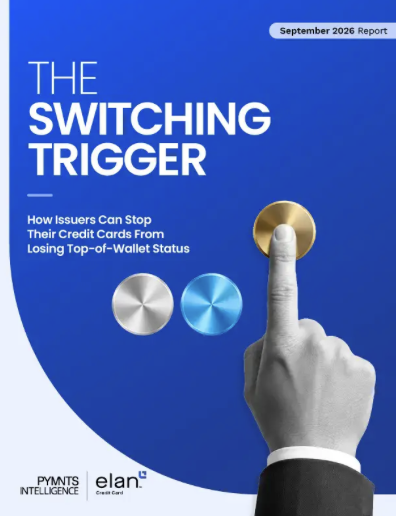
The findings are included in the report, “The Switching Trigger: How Issuers Can Stop Their Credit Cards From Losing Top-of-Wallet Status,” produced by PYMNTS Intelligence in collaboration with Elan Financial Services.
The report is based on a June survey of 2,460 U.S. consumers with at least one general-purpose credit card, including 884 who had changed their primary card during the previous two years.
Overall, 36% of U.S. cardholders reported switching their primary card during that period.
According to PYMNTS Intelligence, the findings suggest financial institutions face a significant challenge in retaining their position as consumers’ preferred payment provider, even when those consumers maintain their existing accounts.
Most Switching Decisions Made Quickly
The analysis found consumers generally spend little time deciding which credit card will become their primary payment method.
Among those who switched:
- 17% searched for alternatives for less than one week.
- 29% spent one to two weeks considering their options.
- 25% spent three to four weeks before deciding.
- 38% seriously considered only the card they ultimately selected.
- 40% compared their eventual selection with just one other card.
In total, 71% of switchers made their decisions within one month, while 78% seriously considered no more than two cards.
PYMNTS Intelligence said the relatively short decision-making period creates challenges for issuers seeking to identify customers who may be preparing to move their spending elsewhere.
Nearly Half Switched Without Contacting Issuer
The report also found many consumers changed their primary credit card without giving their previous issuer an opportunity to retain their business.
According to the analysis, 46% of switchers had no contact with their previous issuer before making the change.
Another 37% initiated contact themselves but ultimately switched anyway.
Among that group, 20% of all switchers said the issuer’s counteroffer was insufficient, while 17% reported receiving no offer or resolution.
Only 17% of switchers said their previous issuer initiated contact, and those respondents indicated the outreach did not include a meaningful retention offer.
The findings suggest issuers may be losing their preferred position with customers without recognizing that spending patterns are changing, PYMNTS Intelligence said.
The report also noted that losing top-of-wallet status does not necessarily mean an account has been closed. Consumers may continue maintaining an existing credit card while shifting most of their purchases to another institution.
Retention Offers May Be Missing the Mark
The analysis identified a potential disconnect between the incentives credit card issuers offer and the benefits consumers say would persuade them to remain loyal.
Among 335 switchers whose previous issuer attempted to retain them, the most common offers included:
- 32%: Annual fee relief.
- 31%: Statement credits or cash back.
- 31%: Promises to improve the digital experience.
- 31%: Bonus points or miles.
However, when all switchers were asked what might have persuaded them to keep their previous card as their primary payment method, their priorities differed.
A meaningful loyalty or retention bonus ranked first, cited by 25% of respondents, followed by a higher credit limit at 24% and a matched or improved rewards rate at 23%.
Just 13% said nothing could have persuaded them to retain their previous card’s primary position.
According to PYMNTS Intelligence, the findings indicate issuers may have opportunities to retain more customers by better understanding their individual preferences and tailoring retention incentives accordingly.
Previous Switchers More Likely to Switch Again
The report also found that consumers who have already changed their primary credit card are substantially more likely to do so again.
Approximately 14% of all U.S. cardholders, representing an estimated 30 million consumers, said they are extremely or very likely to change their primary card during the next 12 months.
But among consumers who switched during the previous two years, 29% said they were likely to switch again.
That compares with just 5% of consumers who had not changed their primary card during the previous 24 months.
The analysis also identified significant generational differences.

Among Generation Z cardholders, 26% said they were extremely or very likely to switch their primary card during the coming year, compared with just 3% of baby boomers and seniors.
Implications for Credit Unions and Other Issuers
The findings suggest credit unions, banks and other credit card issuers may need to focus more closely on changes in existing customers’ spending behavior rather than relying primarily on new-account activity or account closures to measure retention.
PYMNTS Intelligence said the movement of spending between cards already held by consumers means an issuer can lose its preferred position without a competing institution acquiring a new customer.
The report also suggests that financial institutions have a relatively narrow window to intervene once consumers begin considering a change, particularly because most switchers evaluate only one or two alternatives and reach a decision within a month.
For issuers, the analysis indicates that retaining top-of-wallet status may require earlier identification of declining card usage, more personalized incentives and greater attention to consumers who have previously demonstrated a willingness to shift their spending.
The report concludes that maintaining a cardholder relationship and remaining that consumer’s preferred payment provider are increasingly two different challenges.




