

WASHINGTON — The Defense Credit Union Council is urging the Independent Community Bankers of America to withdraw its proposal to tax credit unions with more than $1 billion in assets, arguing the cost would fall on members, including military families and veterans.
In a Nov. 5 letter to ICBA President and CEO Rebeca Romero Rainey, DCUC President and CEO Anthony Hernandez responds point by point to Rainey’s November 2 American Banker commentary. It includes 14 substantive sections addressing cooperative ownership, Subchapter S banks, acquisitions, small-business and mortgage lending, transparency, and the consequences for credit union members.
Rainey’s American Banker commentary was titled, “Wait, credit unions are ‘banks’ now? Not so fast…” As the CU Daily has reported, the ICBA has repeatedly in the past called for revoking the tax exemption of credit unions of more than $1 billion in assets, a call it is repeating.
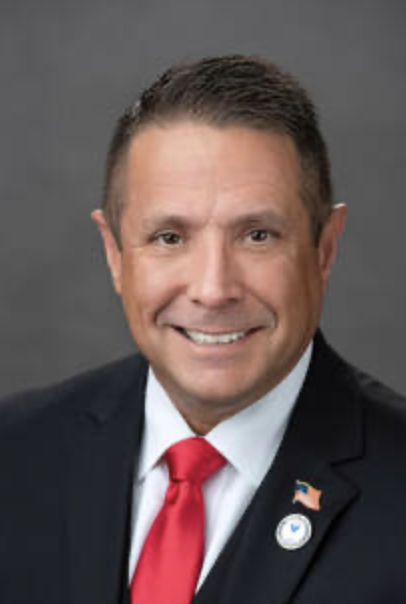
“A credit union’s success does not cancel its members’ ownership,” Hernandez wrote. “The resources that help community banks lend also matter when they support a cooperative and the families who rely on it.”
Structure Hasn’t Changed
Hernandez said growth does not change a credit union’s cooperative structure or its members’ voting rights. Offering products similar to those available at banks, he argued, does not justify ending the federal income tax exemption.
Hernandez also challenged ICBA’s comparison of tax-paying banks and tax-exempt credit unions, pointing to Subchapter S treatment available to eligible banks. He cited Federal Reserve Bank of Kansas City data showing that 1,447 community banking organizations, or 38%, had elected that status as of Sept. 30, 2024.
He acknowledged that shareholders generally pay taxes on income passed through by those institutions and that the arrangement differs from the credit union exemption. But he said ICBA’s advocacy for bank tax preferences should be included in the debate.
Hernandez questioned a $2.6 billion estimate cited in Rainey’s commentary, saying it combined roughly $2 billion in hypothetical federal income taxes and $580 million in state taxes for 2024. Applying community-bank tax rates to credit union earnings, he said, is not an official revenue estimate for a specific repeal bill.
“The exemption has a fiscal cost,” he wrote, adding that Congress must weigh potential revenue against effects on lending, capital, pricing and member benefits.
Challenging Statements About Bank Acquisitions
The letter also disputed conclusions about credit union acquisitions of banks. Hernandez said profitable bank owners may choose to sell and that restricting qualified buyers could reduce their options and sale proceeds.
He asked ICBA to release the transaction lists, definitions, time periods and comparisons behind claims about declining Small Business Administration lending and rising mortgage denial rates after acquisitions. Those findings, he argued, do not establish that cooperative ownership caused the changes.
On disclosure, Hernandez acknowledged that public quarterly Call Reports do not include every disclosure required by IRS Form 990 and that the Government Accountability Office has identified an executive compensation disclosure gap. He nevertheless opposed a blanket Form 990 requirement without evidence of what it would add to existing oversight.
Fraud Case Cited
Hernandez also rejected using fraud at Jackson Area Federal Credit Union to support the proposed tax threshold. According to the letter, Jackson Area had about $60 million in assets, while Five Star Credit Union, which assumed members’ share accounts, had $1.261 billion.
Under ICBA’s proposal, he argued, the larger institution preserving service would face a new tax while the failed institution fell below the threshold.
Hernandez said taxing credit unions would leave fewer resources for reserves, lending and member assistance, including emergency loans, payment deferrals and fee waivers for military households facing income disruptions.
“I welcome a serious conversation about how our institutions can better serve their communities,” he wrote. “DCUC will be a willing participant in that conversation and a firm defender of our members.”






One Response
Meanwhile the politicians take money from the Banks (tax CU’s!) and the Credit Unions (Don’t tax CU’s!) and do nothing to continue collecting all this sweet lobby money from both sides