

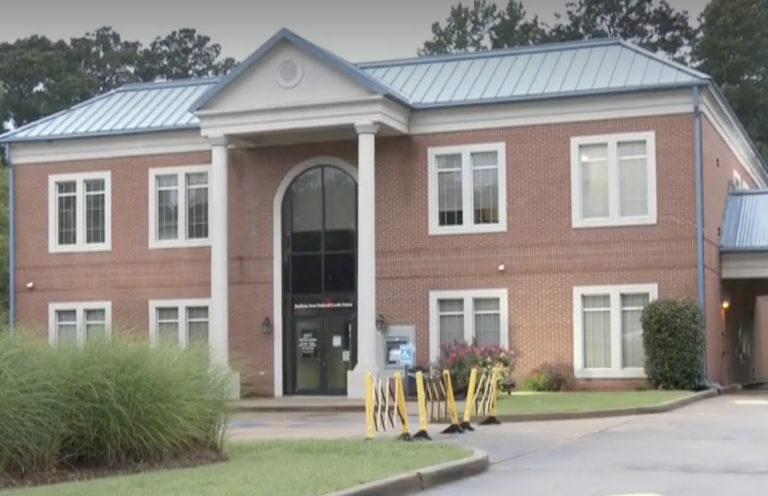
JACKSON, Miss. — The National Credit Union Administration is asking a federal judge to consider additional arguments that retirement funds sought by two defendants in its Jackson Area Federal Credit Union lawsuit would remain subject to an asset freeze once withdrawn, even if the retirement accounts themselves are protected.
As the CU Daily has been reporting, the Jackson Area FCU case involves one of the largest embezzlements in credit union history. NCUA placed the deeply troubled JAFCU into conservatorship in May and has been going through its books ever since. The credit union has since been merged into Alabama-based Five Star Credit Union.
As the CU Daily reported here, former CEO Leigh Bridges pleaded guilty in October to three federal charges stemming from the embezzlement of more than $69 million from the credit union and now faces up to 70 years in prison and millions of dollars in fines when she is sentence Feb. 25 of 2027. U.S. Magistrate Judge LaKeysha Greer Isaac set Bridges’ bond at $25,000 during a preliminary hearing. Jordan kept the bond in place, allowing Bridges to remain free pending sentencing.
As of its mid-year 5300, JAFCU was reporting $60.8 million in assets, 15,704 members and a whopping $103 million loss and -145.63% net worth. What JAFCU’s ultimate cost will be to the National Credit Union Share Insurance Fund has not yet been determined.
New Memorandum Filed
Now, in a memorandum filed Nov. 4 in the U.S. District Court for the Southern District of Mississippi, the board sought permission to submit a supplemental legal brief concerning requests by Chad Bridges and Leigh Bridges to dissolve or modify a preliminary injunction.
The board, acting as liquidating agent for Jackson Area Federal Credit Union, argued that deciding whether it can attach the retirement accounts would not resolve whether the defendants can use money withdrawn from those accounts.
The filing is a request for permission to present additional arguments, not a court ruling on access to the funds. It does not include the defendants’ motions or their full arguments.
Withdrawals at Issue
The board contends that funds protected from creditors while held in retirement accounts under the Employee Retirement Income Security Act or similar state laws lose those protections once withdrawn. According to the filing, money transferred from the retirement accounts into other accounts belonging to the Bridges would become subject to the existing freeze.
That would apply even to withdrawn funds that are “untainted,” the board argued, citing a federal statute governing its authority to attach assets before judgment. The board said that authority can extend to assets of a person it designates even if that person did not commit fraud against the credit union.
The memorandum does not establish that either defendant committed fraud, and the board’s position on the retirement funds remains a legal argument for the court to consider.
The board said the defendants could separately ask the court to authorize use of frozen funds. Such a request would require the judge to weigh the relevant factors, according to the filing.
Request for Further Briefing
The board argued that considering the additional brief now could avoid an unnecessary decision on whether its statutory attachment authority reaches the retirement accounts themselves.
Its lawyers said they had not raised the points in earlier opposition briefs because the defendants’ motions assumed that deciding the retirement-account issue was necessary. Counsel also said the additional points were not fully understood until legal research conducted while preparing for a court-ordered settlement conference.
If the court considers the arguments untimely, the board said, they could still be raised in a request to reconsider an order modifying the preliminary injunction. It urged the court to address them now to conserve judicial resources.
The board said it would not object to response briefs from the defendants if permission to file the supplemental memorandum is granted.
Tina Funez is also named as a defendant in the lawsuit. The Nov. 4 memorandum addresses the retirement-account requests by Chad Bridges and Leigh Bridges.






One Response
This is interesting but I’m still waiting for the story or series with theories that detail how they got away with this for so long! Board, examiners, others asleep at the wheel? There had to be signs that would have triggered investigations!