


WASHINGTON — Young Americans entering military service often gain a steady paycheck before they have much experience managing credit, making them vulnerable to expensive car loans, mounting debt and fraud schemes that exploit military life—financial threats credit unions are constantly cautioning the newly enlisted about even though the message often isn’t heard until it’s too late.
With Veterans Day here, studies by the Consumer Financial Protection Bureau, Federal Trade Commission, nonprofit credit counselors and the Defense Credit Union Council continue to point to financial pressures that can follow servicemembers from their first duty assignment into civilian life. Some troubles stem from costly financial decisions; others involve deceptive lenders, identity thieves and outright scammers.

A 2025 Financial Literacy and Preparedness Survey conducted by The Harris Poll for the National Foundation for Credit Counseling found that 50% of active-duty servicemembers said they were “just getting by financially.” The organization also reported that 83% of service members and 62% of spouses had experienced consequential financial changes, including using savings for everyday expenses, during the previous year. The survey findings cover active-duty personnel broadly, not exclusively young troops.
Fifty-two percent of married servicemembers reported financial stress had led to “conflict” with spouses.
Auto Debt Can Become an Early Trap
As every credit union located near a military base knows well, one of the most consequential financial decisions for a new recruit can be buying a vehicle. In a January 2025 report, the CFPB said young servicemembers were nearly twice as likely as civilian peers to take out auto loans and accumulated vehicle-loan debt at roughly twice the rate. The Bureau cited deceptive marketing and lending practices and abusive collection tactics affecting military borrowers.
A car may be necessary to travel from an installation, but focusing on a monthly payment rather than the total purchase price, interest rate, loan term and insurance costs can leave a borrower with an unaffordable obligation.
The CFPB found at the time that the average monthly payment for new vehicle loans was more than $644 for servicemembers, nearly $20 more per month than for non-service members.
Additional details can be found here.
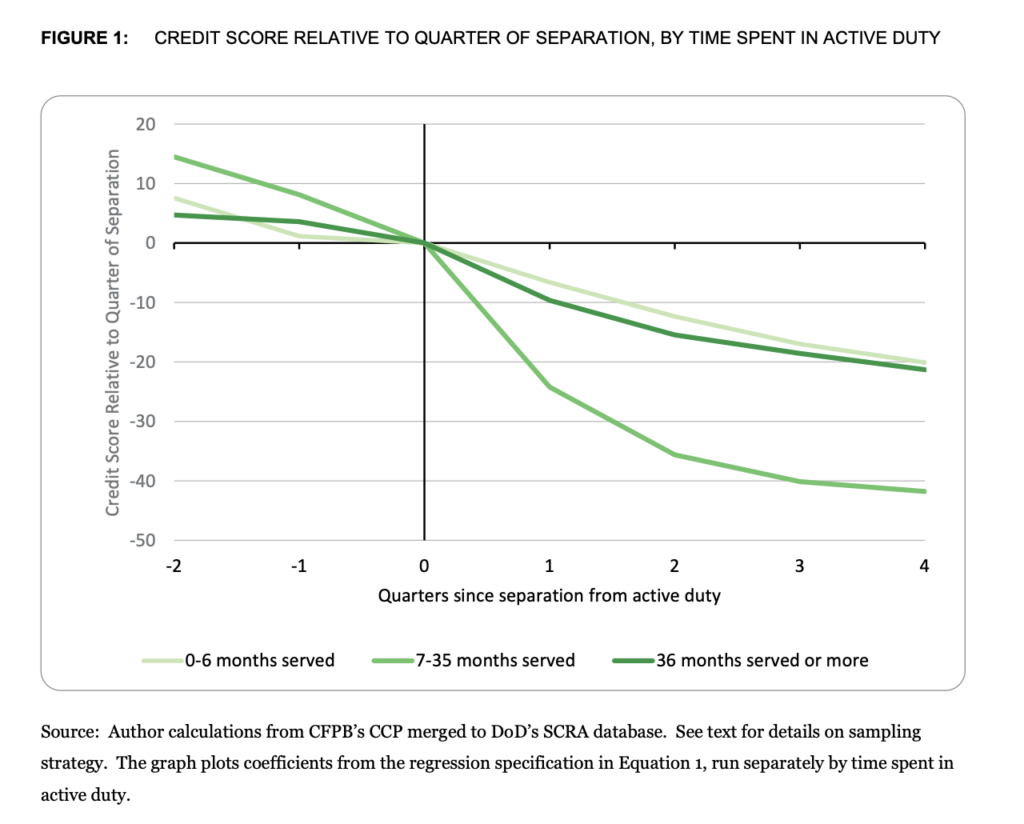
In addition, the CFPB report found that among servicemembers with vehicle loans who left the military after seven to 35 months of service, 33% became seriously delinquent or defaulted on that debt within a year of separation.
Credit Cards, Thin Savings and the Transition Home
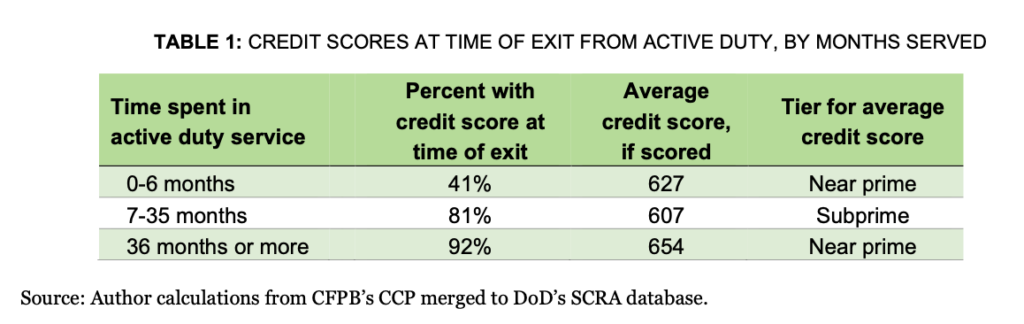
Other hazards include carrying high-interest card balances, relying on expensive short-term borrowing and failing to build emergency savings before a move or separation from service. A CFPB study of young veterans found that delinquencies and defaults were two to 10 times more likely to appear on credit records in the six months after leaving active duty than in the six months before. The study examined those who served at least seven months.
As every credit union is aware, financial trouble can have consequences beyond late fees. The CFPB has warned that unpaid debts can jeopardize security clearances, career advancement and continued military employment. Its March 2026 consumer complaint report counted approximately 136,300 complaints in 2025 from people identifying as servicemembers, veterans or military family members. Credit reporting accounted for 55% of those complaints, debt collection 15% and checking or savings accounts 8%. The figures describe complaints, not confirmed wrongdoing, and include all ages.
Scammers Exploit Military Routines
Military consumers reported $584 million in fraud losses in 2024, according to the FTC’s Consumer Sentinel Network Data Book. That total included $71 million reported by active-duty servicemembers. Among active-duty fraud reports, the median reported loss was $920. Veterans and retirees accounted for most of the broader military community’s reported losses, so the overall figure should not be interpreted as losses suffered by young troops.
The FTC figures reflect reported cases and do not measure every fraud incident. Military consumers reported impostor schemes, investment fraud, fraudulent shopping offers and identity theft. The Military Officers Association of America, reviewing FTC data in April 2025, said impostor schemes generated more than 44,000 reports from military-connected consumers in 2024. Source:
Permanent changes of station create particular exposure. Troops may need to find housing, transportation and child care quickly, often while sharing personal information or making deposits online. The CFPB warned in a 2023 report that military families had reported significant losses through digital payment app scams and sometimes struggled to obtain timely help afterward.