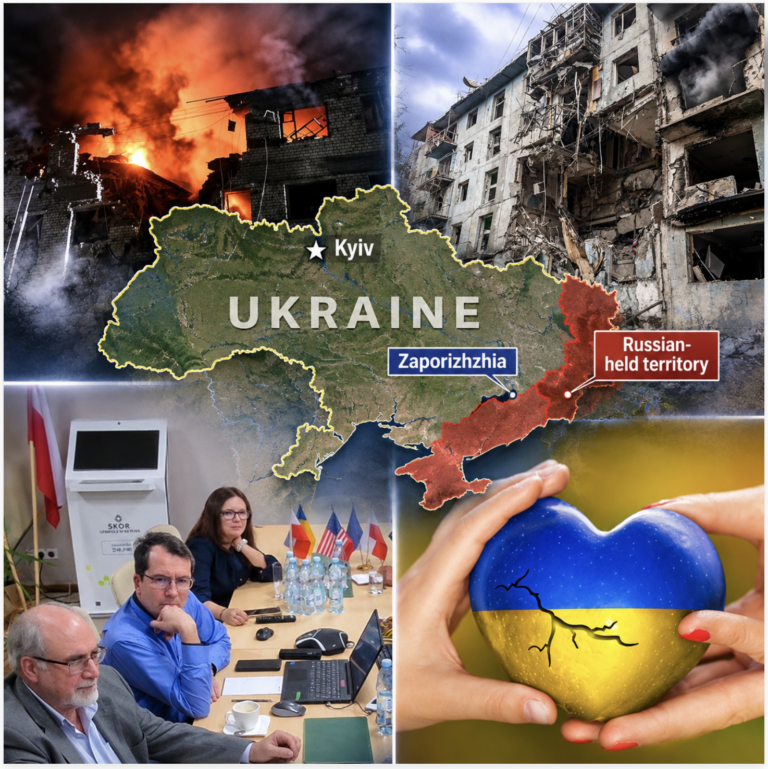
ZAPORIZHZHIA, Ukraine/LUBLIN, Poland–In an ironic juxtaposition, with Thanksgiving celebrations approaching in the United States, it was a group of people who are just trying to remain alive while also providing desperately needed help in a warzone–including plans for modest Christmas celebrations underground–who shared thanks of their own with their U.S. counterparts–and who also have an ask.
Four years after the invasion by Russia and the devastating war, credit union representatives in Poland, along with Ukrainians who are close to the front lines offered an update on what their lives are like, how they plan to get through the winter, how the funds raised by credit unions around the world are being used, and what is desperately needed.
Almost from the moment Russia invaded, credit unions responded by forming a foundation and collecting donations to help the people and credit unions of Ukraine, as well as the estimated more than 800,000 refugees who fled west to Poland.
Susan Mitchell of Mitchell Stankovic, and Brian Branch, the former president of the World Council of Credit Unions, joined with Poland’s National Association of Co-operative Savings and Credit Unions (NACSCU), commonly known in Poland as SKOK (Kasa Krajowa) and its CEO, Rafal Matusiak, to create the Via Stella Foundation, which over the last four years has been very active in raising funds to provide assistance that has ranged from purchasing vans and converting them into ambulances to be delivered to Ukraine, to purchasing back-up power supplies, to assisting Ukraine’s credit unions, to assisting Ukrainian refugees in Poland, almost all of whom are woman and children.
The Worldwide Foundation for Credit Unions has also been very active in providing assistance in those countries.
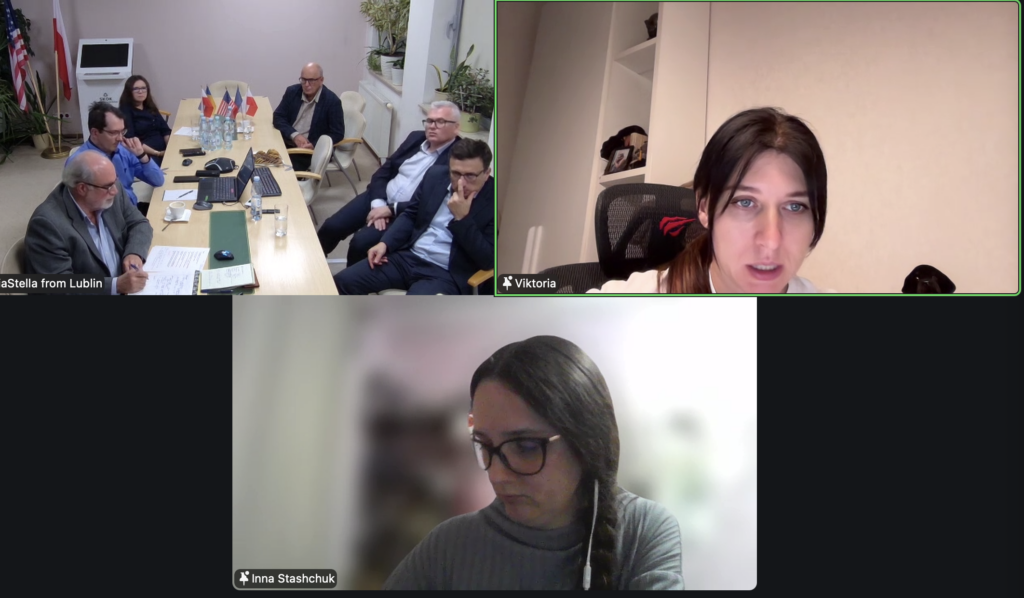
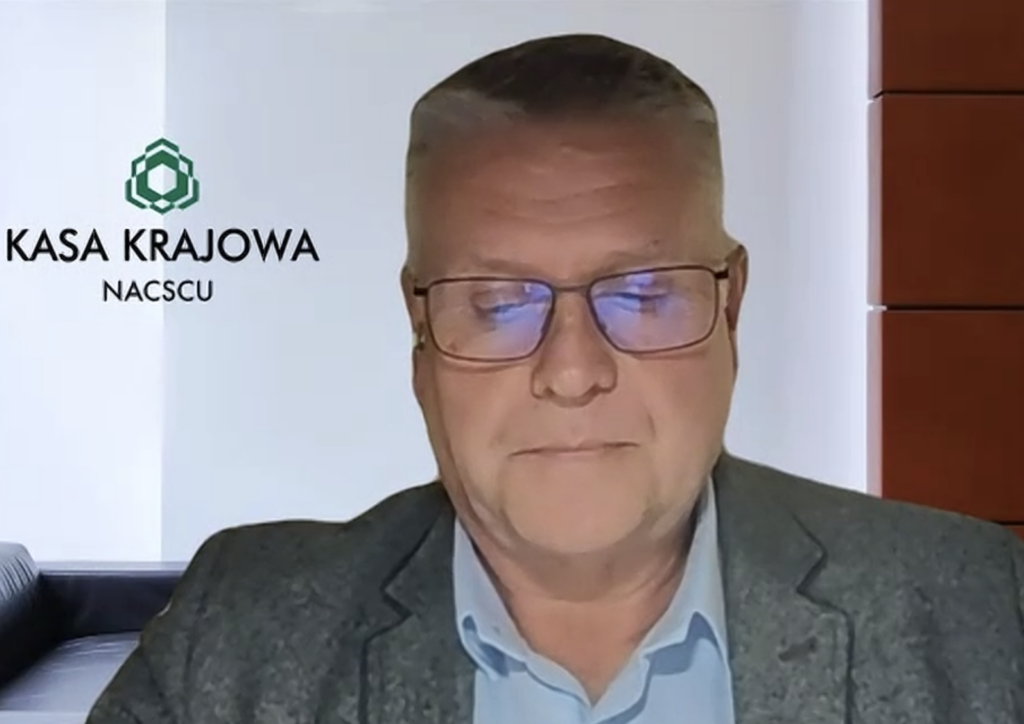
On Wednesday, Via Stella hosted a webinar that included participants from the front lines of the war in Zaporizhzhia, Ukraine, and from Lublin, Poland, where that country’s trade association is based. Branch was also in NACSCU’s headquarters in Poland and led most of the Q&A following opening remarks from Matusiak.
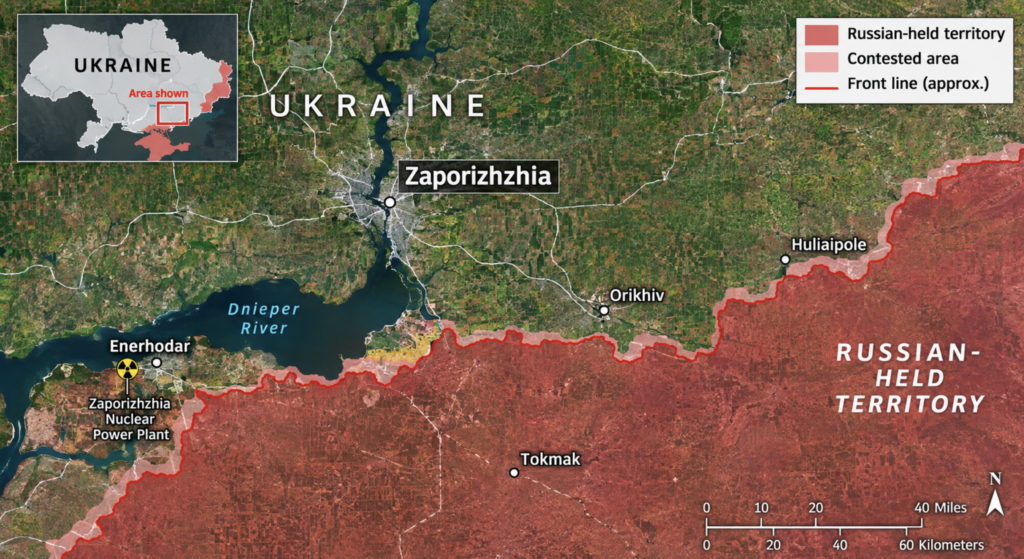
The Ukrainians who participated in the webinar were in Zaporizhzhia, which is located in southeastern Ukraine along the Dnipro River. A city that once had a population of more than 800,000 is located close to the front of the war.
‘The Best Proof’
Matusiak called the Via Stella Foundation and all of the work being done by credit unions, the “best proof of the effectiveness and reach of our efforts. It demonstrates how much people and goodwill can achieve when they work together. We support individuals who have found themselves in exceptionally difficult circumstances. War is an unimaginable tragedy, both for entire nations and for its individual citizens. The level of barbarity by the Russian bandits has caused devastating destruction in Ukraine. Every bit of aid, ever single dollar is vital in supporting those who have been affected.”
Matusiak thanked numerous individual credit unions and organizations for their donations, and further noted Ireland’s credit unions have also provided significant help, as well.
Speaking in both Ukrainian and English from Zaporizhzhia, “Viktoria,” who is with that city’s council and who is the primary contact for the aid being provided by credit unions, called life in the city a “very dangerous situation” of daily drone attacks and people being killed. She said the support coming from credit unions “gives us hope and reminds us we are not alone in standing against the enemy.”
The Approaching Cold
With the Russians attacking power plants and heating facilities as winter arrives, Branch asked what lies ahead as the cold weather sets in. Viktoria said there have been “severe power outages” and “constant challenges,” noting her city just one day earlier had been without power for 14 hours.
“It also affects our heating and water supply,” she said. “Every family faces this challenges in trying to lead a dignified life, to bring children to schools. The next problem is how hospitals operate during these power outages, especially when we talk about life-saving equipment that depends on stable electricity. Our other great problem is immigration from the neighboring areas and villages that are shelled constantly by drones and missiles…They come to Zaporizhzhia with no clothes, no supplies. It is a great challenge for cities…”
Winter will be a “big problem” Viktoria said, as construction work is needed on 43 high-risk buildings that have been struck by missies and drones. Families often return home to find their flats are uninhabitable, and even with city support, many families can’t afford to rent “proper housing,” she added.
Despite the extraordinarily hostile conditions, Viktoria said her city now has 19 underground schools with 30,000 kid enrolled. There is one kindergarten, with another in the works. There have been many cases where parents didn’t want their children to attend school out of fear over their safety, only to have their homes shelled in attacks, which meant they are actually safer in school.

Back-Up Power, But a Problem Remains
When it comes to the hospitals, which are also underground, Victoria said back-up generators and solar power have filled the void when power is knocked out.
“We have backup heating. We also have supplies that help to maintain backup heating. A few hospitals have an alternative water supply,” Viktoria shared. “The city continues to work with big donors in this area. But there is a problem that is very crucial. When there is a power outage, you need some time to switch to these backup power sources. These 10-15 minutes can be really crucial for critical equipment and lifesaving. There is where the hospitals need other portable and faster devices so there can be an intermediate supply.”
A Special Delivery
On the day of the webinar, Via Stella and Poland’s credit unions were preparing to make a special delivery to Zaporizhzhia, according to Robert Rusiecki of the National Association of Co-operative Savings and Credit Unions, who has been very active in working with Via Stella and getting aid to those most affected.
“One of the problems is when rockets or drones attack, the blast wave from the explosion breaks a lots of windows and glass. “In and itself that is dangerous for the people nearby” Rusiecki said. “Large pieces of glass can kill someone. When windows are broken in autumn or winter, the whole building becomes impossible to use. We were asked to provide protective film for windows to prevent it from breaking into those dangerous pieces. We have a shipment ready here in Lublin.”
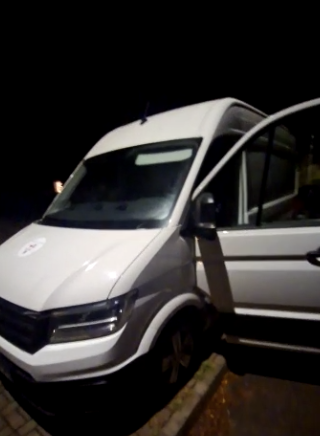
Two drivers were preparing to deliver the film, and during the webinar they showed a van (which is also being donated) with their cargo, which, in this case, was to be delivered to a hospital. Rusiecki said the van will then be used to transport medical equipment and medicine.
‘Points of Invincibility’
In Zaporizhzhia, Victoria related that the city has worked to create what are called “points of invincibility,” where people can go during an attack. There are now some 172 such points of invincibility in the city.
“They are at city schools, cultural centers, administrative buildings. They work not only to host people after emergency situations, but some families also even spend nights there due to prolonged air attacks,” Viktoria explained. “It can be 20 hours without stop. They have power banks, heating, generators. People can charge their phones, receive food. These points are only part of the story. There are busses that go to the sites of attacks (that have) some basic supplies–food, drinks, tea coffee, power charging–to provide residents who suffered from the attack with basic aid.”
Inna Stashchuk, who is also in Zaporizhzhia and who was on the call and did some translating, said in response to a question about how first responders are being kept safe, that the city is in constant contact with the military, which provides information about possible attacks and targets.
‘Attacks are too Fast’
“We can know which places are in danger in the next few hours,” said Stashchuk. “It is not a 100% guarantee and sometimes these attacks are too fast and there is no time for a notice. The city council has tried to supply emergency personnel with protective gear, such as helmets and bulletproof vests and boots. It’s really a challenge for local authorities. Another problem is we have these commissions of specialists who go to affected residential areas and have to write a statement, assess the damage, so that families can then receive compensation. These commissions can’t fully operate in some districts of the city.”
“There is this very tricky strategy of the Russian drones,” said Viktoria. She explained the city busses that are still operating have been covered with a medal grid in an attempt to provide some coverage from the aerial assault. They don’t just attack the busses. We try to protect city busses with metal grids to reduce the damage.
Three Most Important Things
Asked about the three most important things the people of Zaporizhzhia and Ukraine need, Viktoria pointed to backup power sources, medical equipment and vehicles. With more than 30 city busses having been struck by the Russians, she said those who use wheelchairs often can’t get around, and the residents of the city have been using their own vehicles to create what she called “social busses.”
When it comes to what Christmas will be like in Zaporizhzhia, Viktoria said plans are being made to hold a celebration for children–but it will be underground, with shelters nearby. In a dramatically un-Christmas-like scenario, she said the hope is to have a Christmas tree in the city that will be protected by anti-drone technologies.
“We will have some social activities and concerts underground,” Viktoria said, adding they will be run by volunteers and paid for by donors so the city doesn’t have to spend any of its limited budget.”
‘Tiny Spark, Beautiful Flame’
Poland’s Matusiak expressed gratitude to everyone who has provided help.
“It is remarkable how such a tiny spark can light a beautiful flame of mutual aid,” he said. “Through initiatives like this we demonstrate the many different forms the principal of people helping people can take.”
He urged anyone who could do so to continue to provide support.
“There is much work to be done,” he said.
The QR code below can be used to make a donation to the Via Stella foundation.