CHICAGO—Generation Z consumers are heading into the holiday shopping season with greater confidence in their finances than other age groups, even as inflation continues to strain household budgets, according to a new TransUnion survey.
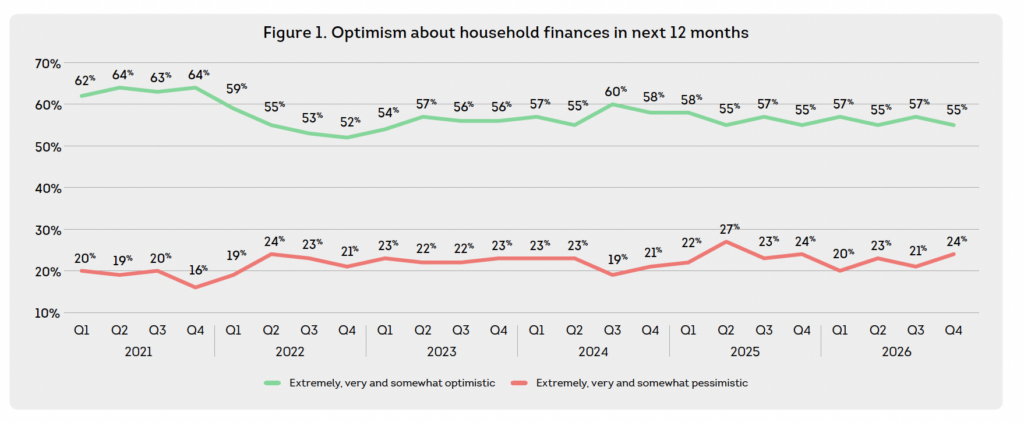
TransUnion’s fourth-quarter 2026 Consumer Pulse study found 68% of Gen Z respondents were optimistic about their household finances over the next 12 months, up from 63% a year earlier and compared with 55% of consumers overall.
The younger generation also expressed the strongest holiday spending outlook. Seventy-one percent of Gen Z consumers said they planned to spend as much as or more than last year, compared with 58% across all generations. While most consumers expect to maintain or increase spending on electronics, gift cards and toys, more Gen Z shoppers anticipated spending increases than reductions in every category except jewelry and watches.
‘Stepping into the Spotlight’
“Gen Z is stepping into the spotlight this holiday season with unmatched financial confidence and a clear willingness to spend,” said Charlie Wise, TransUnion’s senior vice president and head of global research and consulting. He said the outlook was encouraging for retailers heading into the busiest shopping weeks of the year.
Overall, 33% of consumers expect to spend more than $500 on holiday shopping, up from 31% in 2025. Online shopping on Thanksgiving, Black Friday and Cyber Monday was planned by 43% of respondents, up from 41% a year earlier. In-person shopping on Thanksgiving and Black Friday rose to 36% from 33%.
Credit cards remain the preferred holiday payment method, cited by four in 10 shoppers, TransUnion said. Wise said Gen Z consumers, who historically use credit cards less than older generations, also expect to use them more frequently this season.
178-Million Cardholders
About 178 million U.S. consumers had at least one active credit card at the end of the third quarter, an increase of 3.2 million from a year earlier, according to TransUnion’s Credit Industry Insights Report. The serious balance-level delinquency rate declined slightly to 1.99% from 2.05% a year earlier.
The survey also found 64% of consumers would consider opening a store credit card in exchange for a checkout discount. On average, respondents said a discount of about $111 would be enough to persuade them.
Among those willing to open a store card, 20% favored a discount of $100 to $149, while 18% cited $50 to $99. Nine percent would open a card for savings of less than $25, while another 9% would require a discount of at least $500.
“For many shoppers, it takes around $100 in savings to open a new card at checkout,” Wise said. He added that consumers who pay on time could benefit from such offers.
Upbeat, But Also…
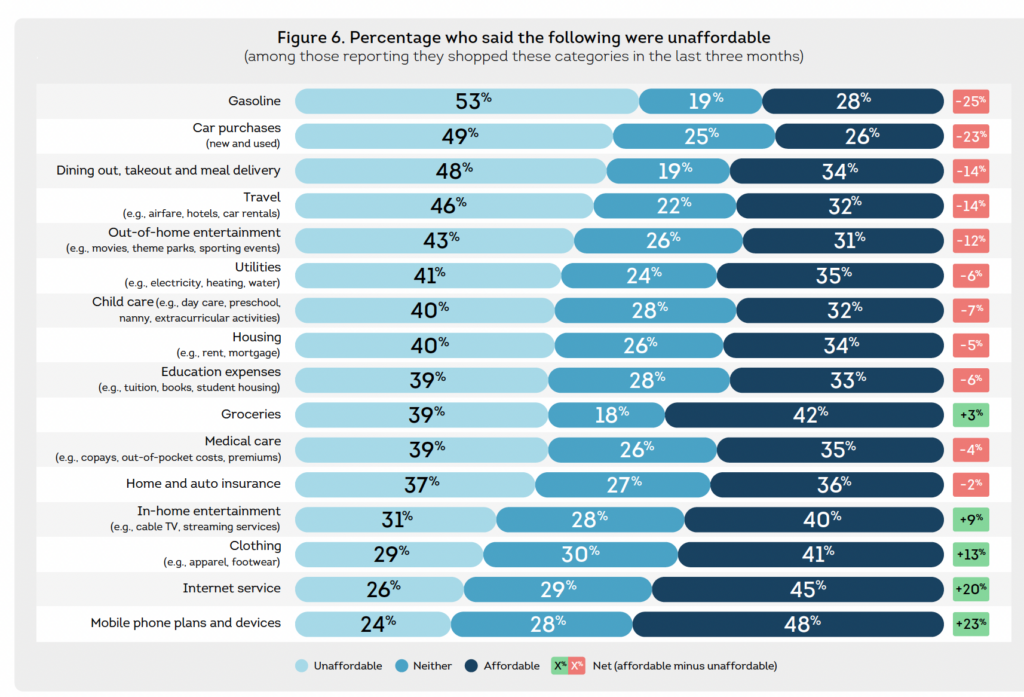
Despite the upbeat holiday outlook, consumers reported significant affordability concerns. Gasoline was considered unaffordable by 53% of respondents, compared with 28% who described it as at least somewhat affordable, the largest gap among categories surveyed.
Car purchases were deemed unaffordable by 49% of consumers, a 23-percentage-point gap over those finding them affordable. Dining out, takeout and meal delivery were rated unaffordable by 48%, while 46% said the same of travel expenses, including airfare, hotels and rental cars. Each of the latter two categories had a 14-point affordability gap.
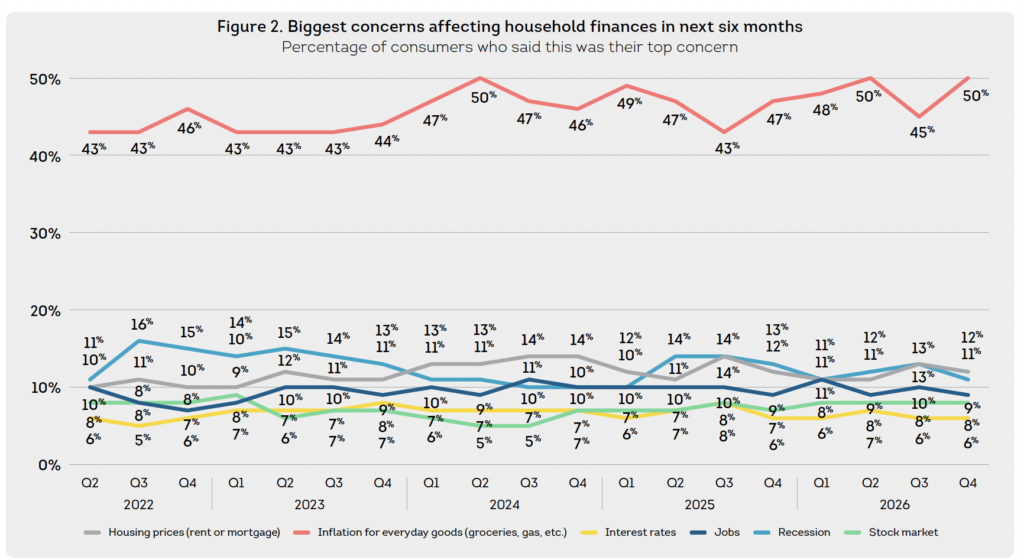
Inflation in everyday goods was the leading financial concern for 50% of consumers, up from 47% a year earlier. Housing prices ranked second at 12%, followed by a recession at 11%. Interest rates ranked sixth, cited by 6%.
Wise said a steady job market has helped consumers remain resilient despite years of price increases and has supported expectations for holiday spending.
TransUnion surveyed 3,000 U.S. adults from Oct. 1-12, 2026, for the Consumer Pulse study.