
TROY, Mich.–Nearly a third of U.S. consumers plan to spend less this holiday season than they did last year, and nearly one-in-five financially vulnerable consumers expect to skip holiday gifts altogether, according to a J.D. Power report released Nov. 24.
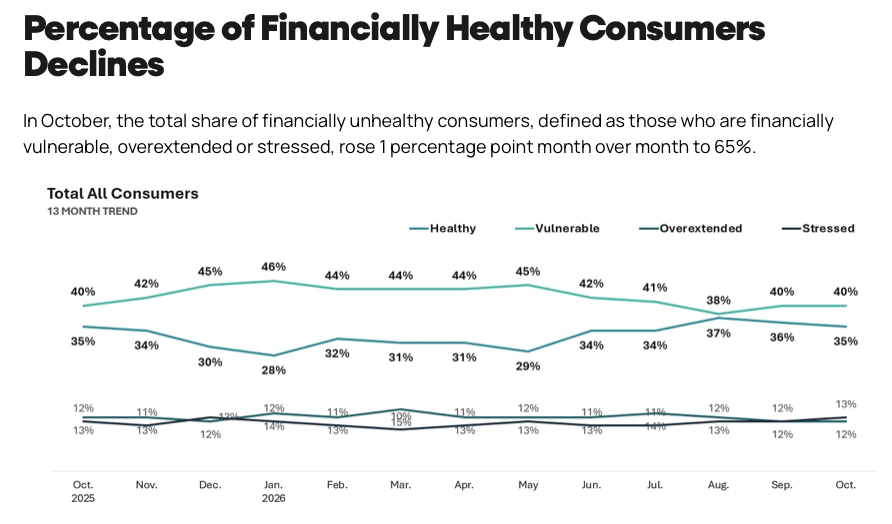
J.D. Power classified 65% of consumers as financially unhealthy in October, up 1 percentage point from September. The financially healthy share fell to 35%, down from 37% in August. October was the second straight month of deterioration after a brief improvement at the end of the summer.
Households Cut Back
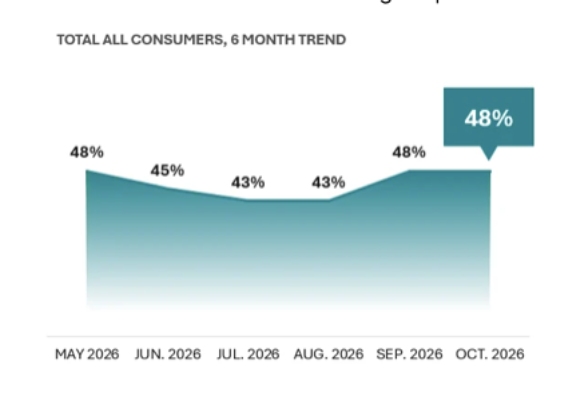
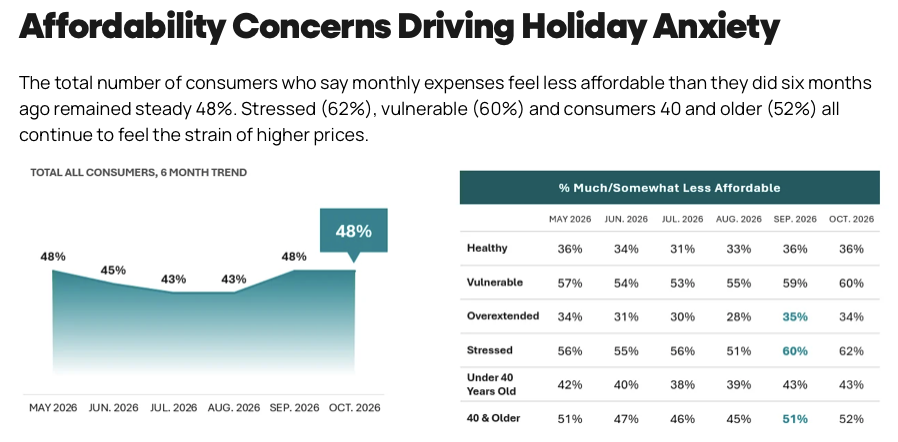
Monthly expenses felt less affordable than six months earlier to 48% of consumers, unchanged from September. The share reached 62% among financially stressed consumers, 60% among financially vulnerable consumers and 52% among those 40 and older.
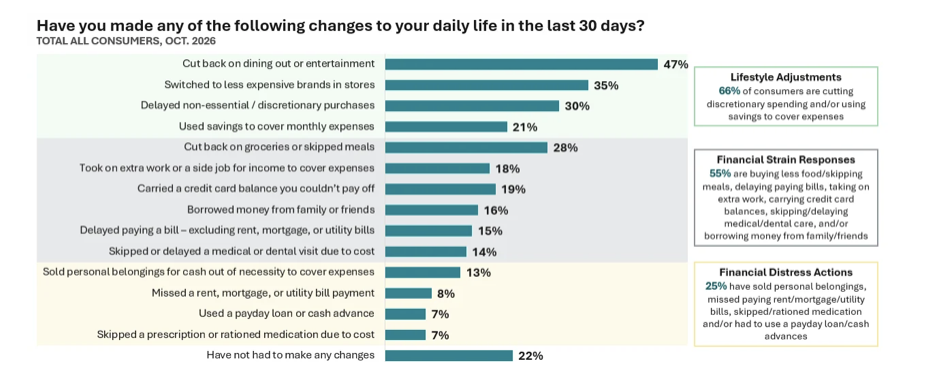
Overall, 78% changed their day-to-day spending in October, including 58% of financially healthy consumers. The other 22% reported no changes.
- Discretionary cutbacks and savings. Some 66% cut discretionary spending or used savings to cover expenses. Dining and entertainment cutbacks (47%) and switches to less expensive brands (35%) each rose 3 percentage points from September. Other changes included delaying nonessential purchases (30%) and drawing on savings (21%).
- Financial strain. Some 55% took at least one step in this group. The most common were cutting back on groceries or skipping meals (28%) and carrying a credit card balance they could not pay off (19%, up 2 percentage points from September). Others took extra work (18%), borrowed from family or friends (16%), delayed a bill other than rent, mortgage or utilities (15%) or skipped or delayed medical or dental care (14%).
- Financial distress. A quarter took at least one of these steps. Some sold belongings to cover expenses (13%), missed a rent, mortgage or utility payment (8%), used a payday loan or cash advance (7%) or skipped or rationed medication because of cost (7%).
Holiday Purchases & Payments Plans
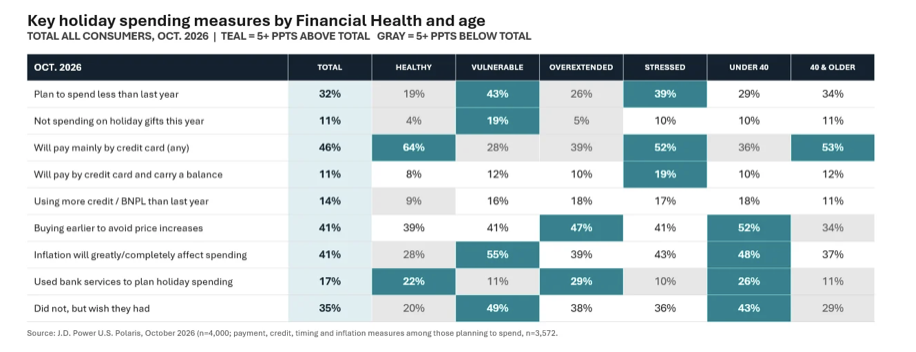
Overall, 32% plan to spend less than last year, including 43% of financially vulnerable consumers. Overall, 11% plan to forgo holiday gifts, including 19% of vulnerable consumers.
Among those planning to spend, 46% expect to pay mainly by credit card and 11% expect to use a card and carry a balance. Another finding was that 14% expect to rely more on credit or buy now, pay later than last year. Some 41% say inflation will greatly or completely affect their spending. The same share plans to shop early to avoid price increases, down 5 percentage points from last year.
J.D. Power found that 17% used bank services to plan holiday spending, and 35% wish they had. Among financially vulnerable consumers, 11% used those services and 49% wish they had.
How Financial Institutions Could Help
Jennifer White, J.D. Power’s managing director of financial services intelligence and the report’s author, said banks could use what they know about customers’ finances to offer budgeting tools to those who need them. Helping customers plan for predictable expenses throughout the year could strengthen relationships and make next year’s holiday costs easier to manage, the report said.
The November Banking and Payments Intelligence Report drew on J.D. Power studies and proprietary market data. It was based on responses from 4,000 consumers nationwide surveyed in October. J.D. Power uses spending relative to savings, creditworthiness and safeguards such as insurance to group consumers. It counts vulnerable, overextended and stressed consumers as financially unhealthy.