TROY, Mich. — Americans’ financial health improved modestly in June, but most consumers remain under financial strain, with many cutting back on spending and increasingly turning to artificial intelligence for financial guidance, according to J.D. Power.
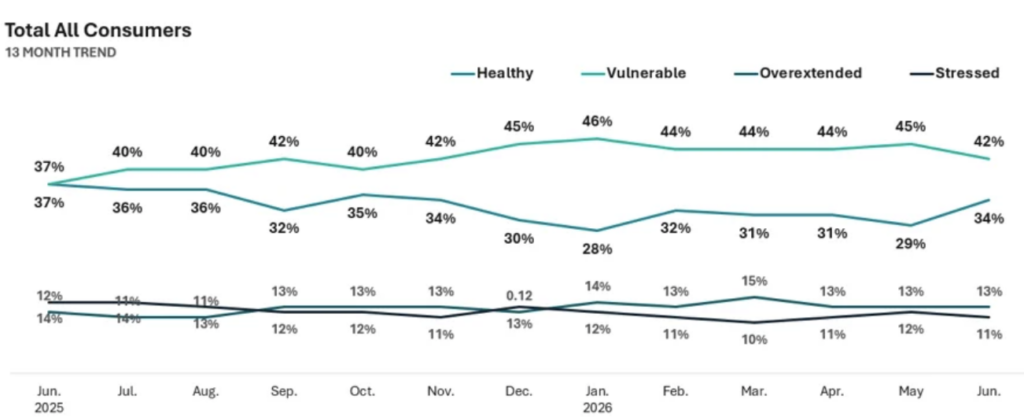
The firm’s latest Banking and Payments Intelligence Report found 34% of U.S. consumers are now considered financially healthy, the highest level since November 2025. Even so, 66% remain financially unhealthy, a category that includes consumers classified as financially vulnerable, stressed or overextended.
The report also found AI is emerging as a trusted financial resource, nearly matching banks as a source of financial advice during affordability challenges.
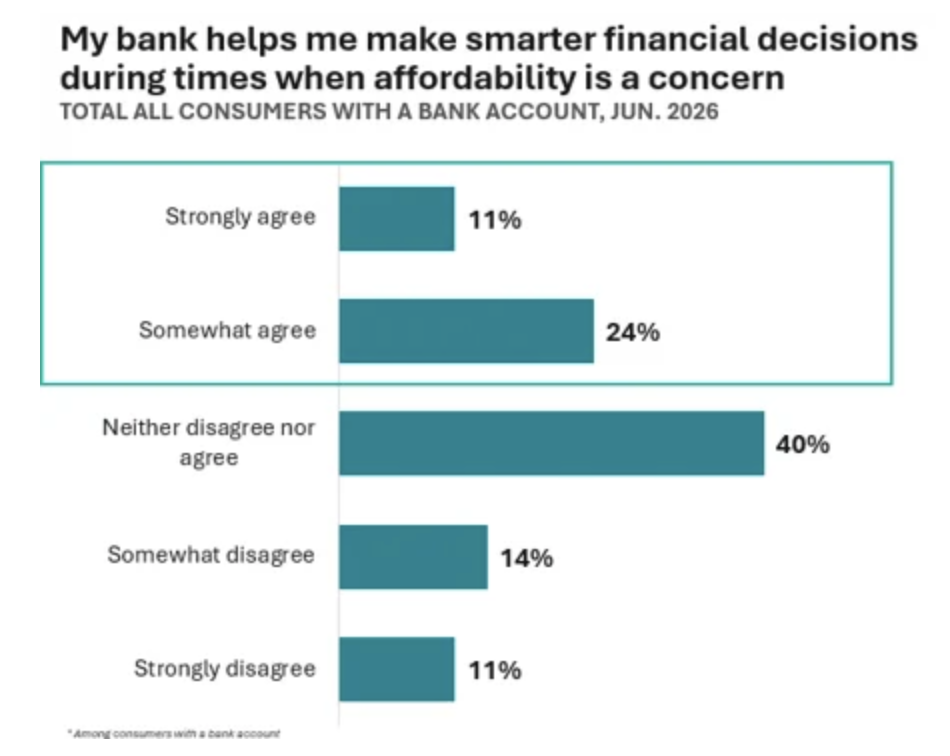
“More than one-third (34%) of consumers credit AI with helping them make smarter financial decisions, just one percentage point behind the 35% who credit their bank as a key source of financial guidance,” J.D. Power said.
Overall, 77% of consumers reported changing their day-to-day spending habits in response to higher costs, although that was down four percentage points from May.
Key Findings
Key findings from the report include:
- Thirty-four percent of consumers are financially healthy, the highest level since November 2025.
- Sixty-six percent remain financially unhealthy, though that is the lowest level recorded since November 2025.
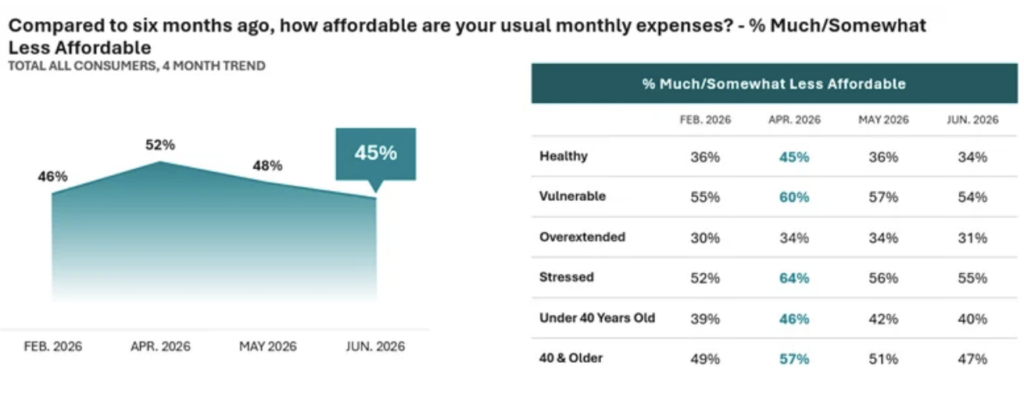
- Forty-five percent said monthly expenses feel less affordable than they did six months earlier, the lowest level since February. The biggest improvement came among consumers age 40 and older, where affordability concerns declined four percentage points from May.
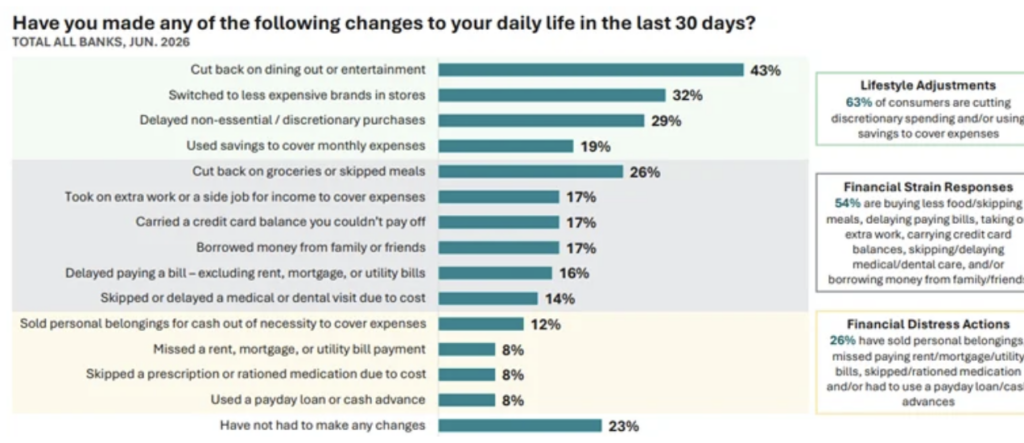
- Seventy-seven percent said they have altered their daily spending habits because of higher costs.
- Sixty-three percent reported making lifestyle spending cuts.
- Fifty-four percent said they have reduced spending because of financial strain.
- Twenty-six percent have taken more serious financial distress actions, including:
- Selling personal belongings to cover expenses (12%).
- Missing rent, mortgage or utility payments (8%).
- Skipping prescriptions or rationing medications because of cost (8%).
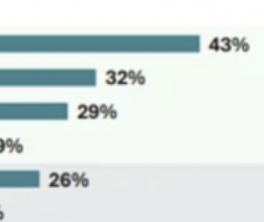
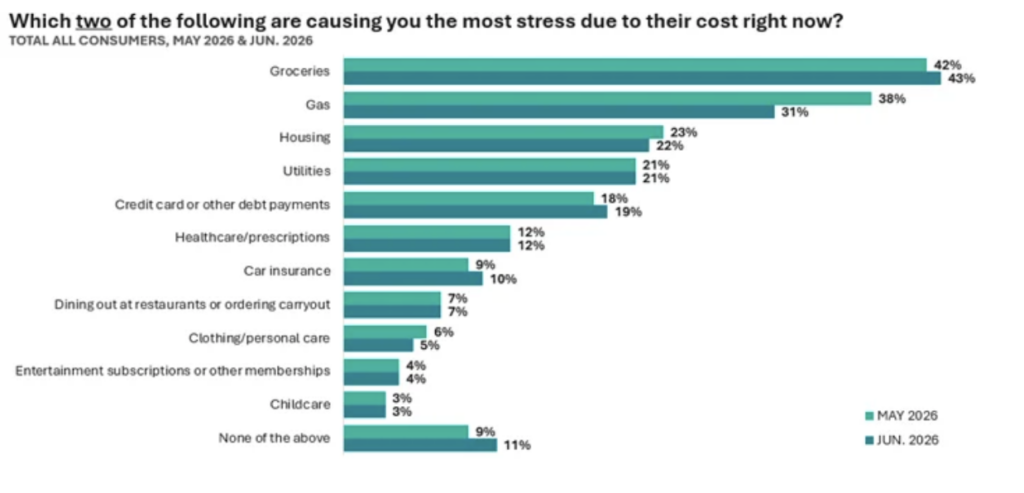
J.D. Power said grocery prices remain the leading financial stressor, with 43% of consumers citing food costs as their biggest concern, up one percentage point from May. Concern over gasoline prices eased, however, falling seven percentage points to 31%.
The report found consumers are increasingly relying on AI tools to help manage their finances.
‘Somewhat or Significantly Helpful’
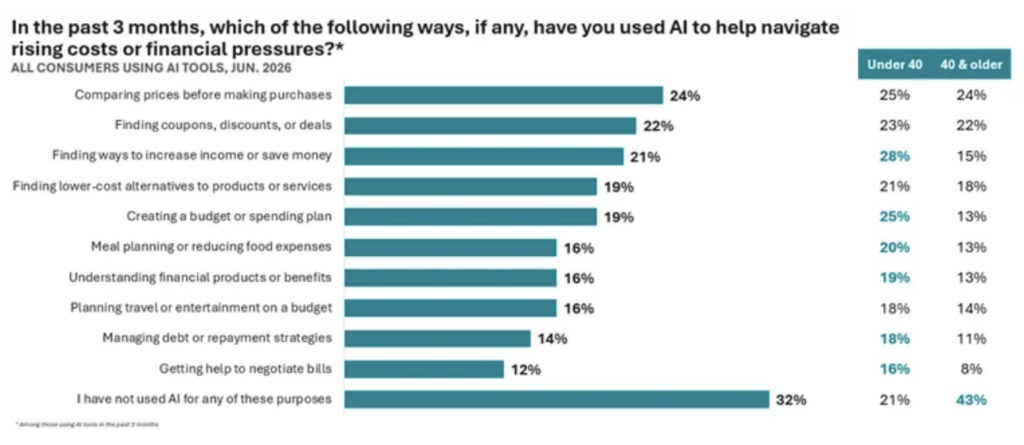
Overall, 40% said they have sought assistance from AI for personal financial management, and 27% said those tools were somewhat or significantly helpful. AI adoption was highest among consumers younger than 40 and among those categorized as financially overextended.
Consumers reported using AI during the previous three months to:
- Compare prices before making purchases (24%).
- Find coupons, discounts or deals (22%).
- Identify new ways to increase income or save money (21%).
J.D. Power said the findings suggest AI is becoming nearly as influential as traditional financial institutions when consumers seek guidance during periods of economic uncertainty.
Overall, 35% of consumers agreed to some extent that their bank helps them make smarter financial decisions during affordability challenges, compared with 34% who said AI provides similar assistance.
Consumers Using Broad Range of Sources
Jennifer White, managing director of financial services intelligence at J.D. Power and author of the report, said consumers are willing to seek financial guidance from a wide range of sources.
“Whether it’s their bank, a family friend or even AI, consumers want answers on how best to manage their finances during times when affordability is a concern,” White said.
She said the trend presents an opportunity for banks and other financial institutions to strengthen customer relationships.
While AI has become a widely available financial tool, White said financial institutions possess decades of institutional knowledge as well as a customer’s financial history that can provide more personalized guidance.
“Banks that build meaningful bonds with their customers will be the ones that can show that they offer the best of both worlds in technology and interpersonal relationships,” she said.
The Banking and Payments Intelligence Report is based on responses from 4,000 U.S. consumers surveyed during June 2026. J.D. Power measures financial health using a combination of spending and savings behavior, creditworthiness and financial safety-net factors such as insurance coverage, placing consumers on a continuum from financially healthy to financially vulnerable.