
ALEXANDRIA, Va.–A new survey from Motley Fool found financial stress continues to weigh heavily on Americans, with inflation, housing costs and debt contributing to anxiety levels that respondents said are affecting their sleep, mental health and daily lives.
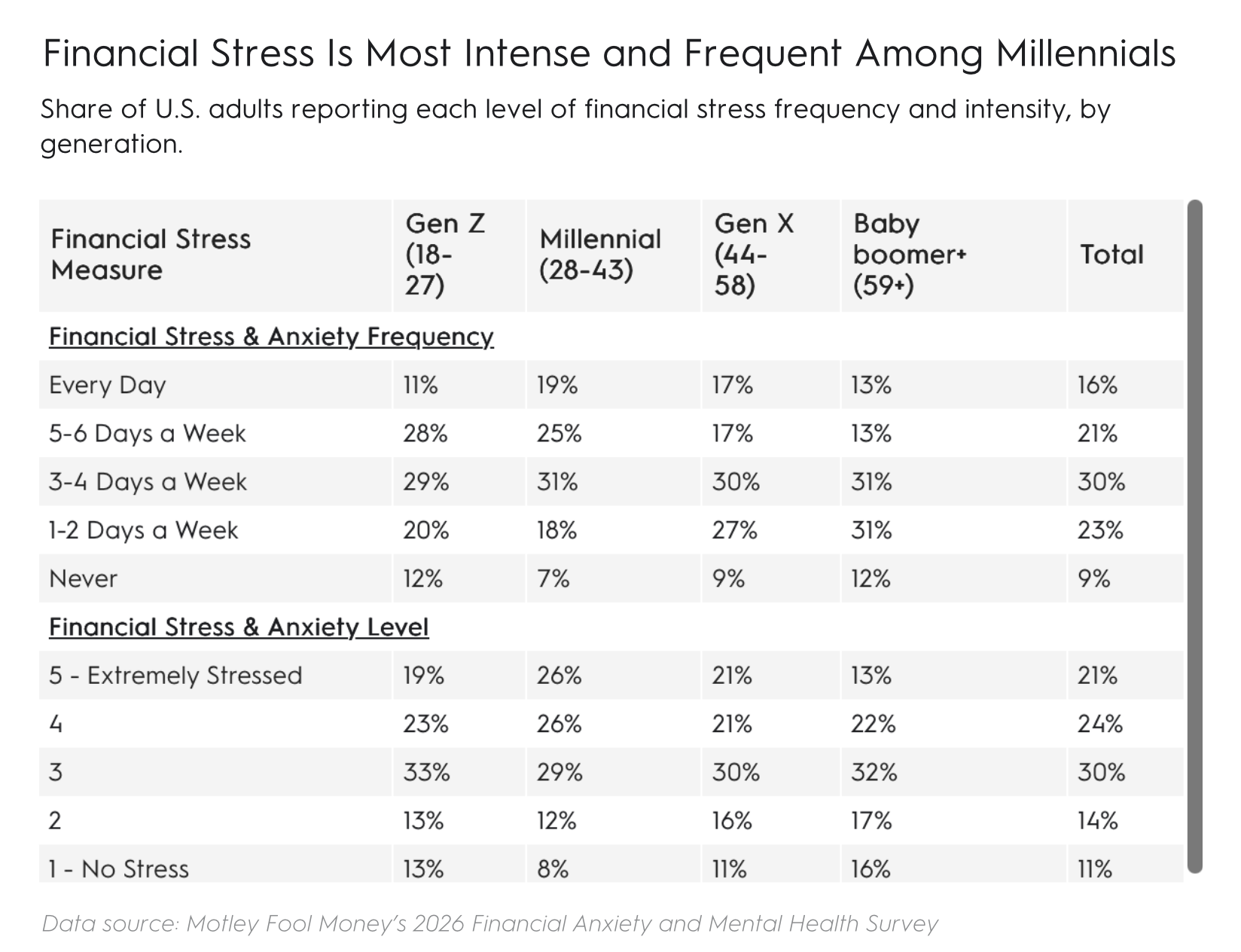
According to Motley Fool Money’s 2026 Financial Anxiety and Mental Health Survey, 44% of Americans described their financial stress as high or extremely high, while 36% said they feel stressed about money at least five days a week. Just 9% said they never feel stressed about finances.
The survey found younger generations and lower-income Americans experience the greatest financial strain, often tied to weaker savings cushions and concerns over housing, inflation and debt.
The Findings
Among the findings:
- 52% of millennials reported high or extremely high financial stress, compared with 44% of baby boomers.
- 44% of millennials said they experience financial stress five to seven days a week.
- Only 44% of Gen Z respondents and 50% of millennials said they have enough savings to cover more than one month of expenses if they lost their income.
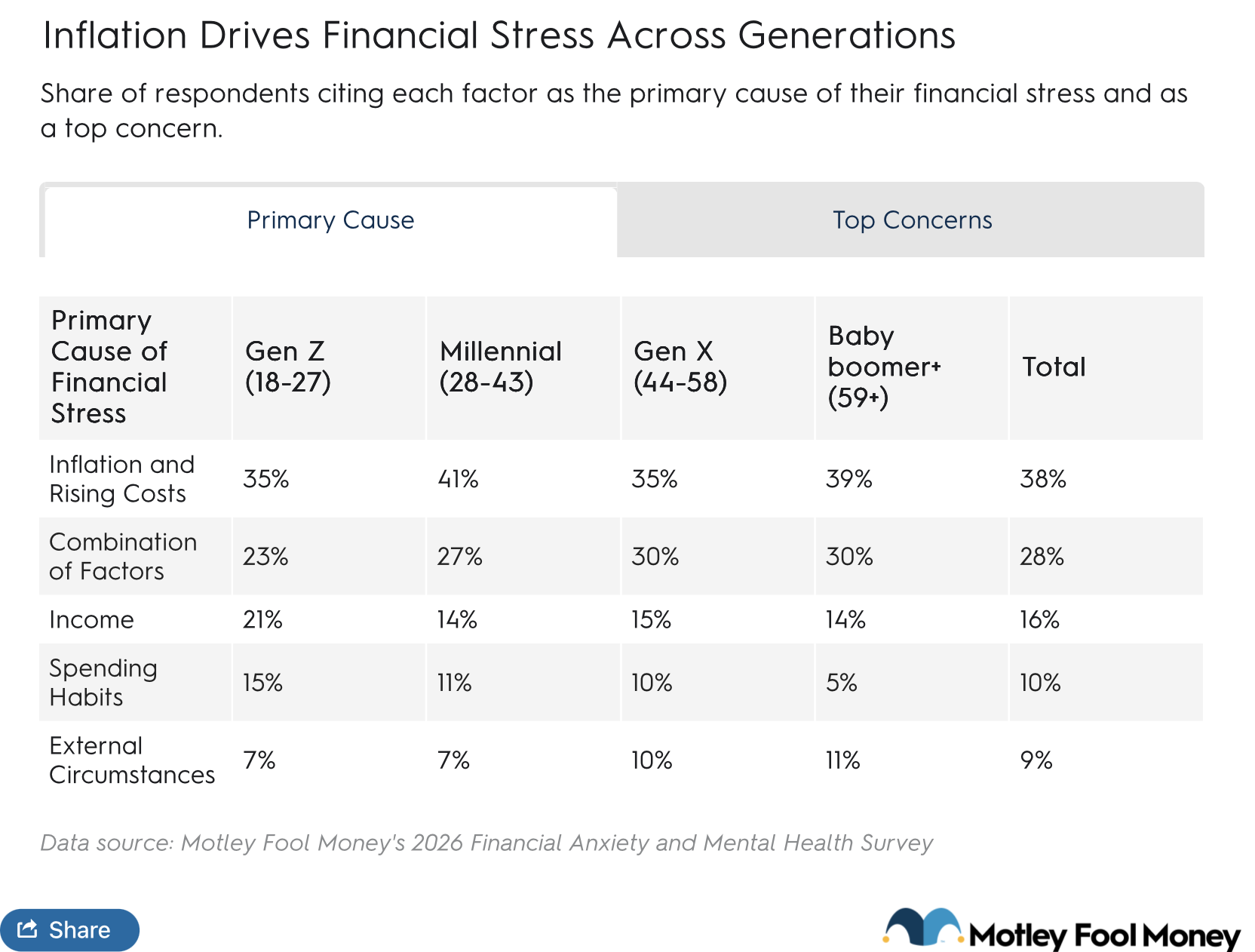
The survey identified inflation as the leading source of financial stress for 38% of Americans, while 28% cited a combination of factors and 16% pointed to income levels.
Concerns by Age Group
Additional concerns varied by age group:
- 40% of millennials and 36% of Gen Z respondents cited housing costs as a major financial concern.
- 30% of Gen X respondents said retirement savings were a top source of stress.
- 28% of baby boomers cited healthcare and insurance costs as a leading concern.
- 27% of millennials and 25% of Gen Z respondents pointed to recession fears.
Tariffs and trade wars also emerged as an added concern. Among respondents who said inflation was a primary stress factor, 81% said they worried tariffs and trade disputes would increase the cost of goods.
Credit Card Debt Leads the Way
The survey found credit card debt remains the largest debt-related source of stress among Americans carrying debt.
- 33% said credit card balances caused the most stress.
- 14% cited mortgage debt.
- 11% pointed to medical debt.
- Among Gen Z respondents, student loan debt and credit card debt were tied as the leading source of financial stress at 21% each.
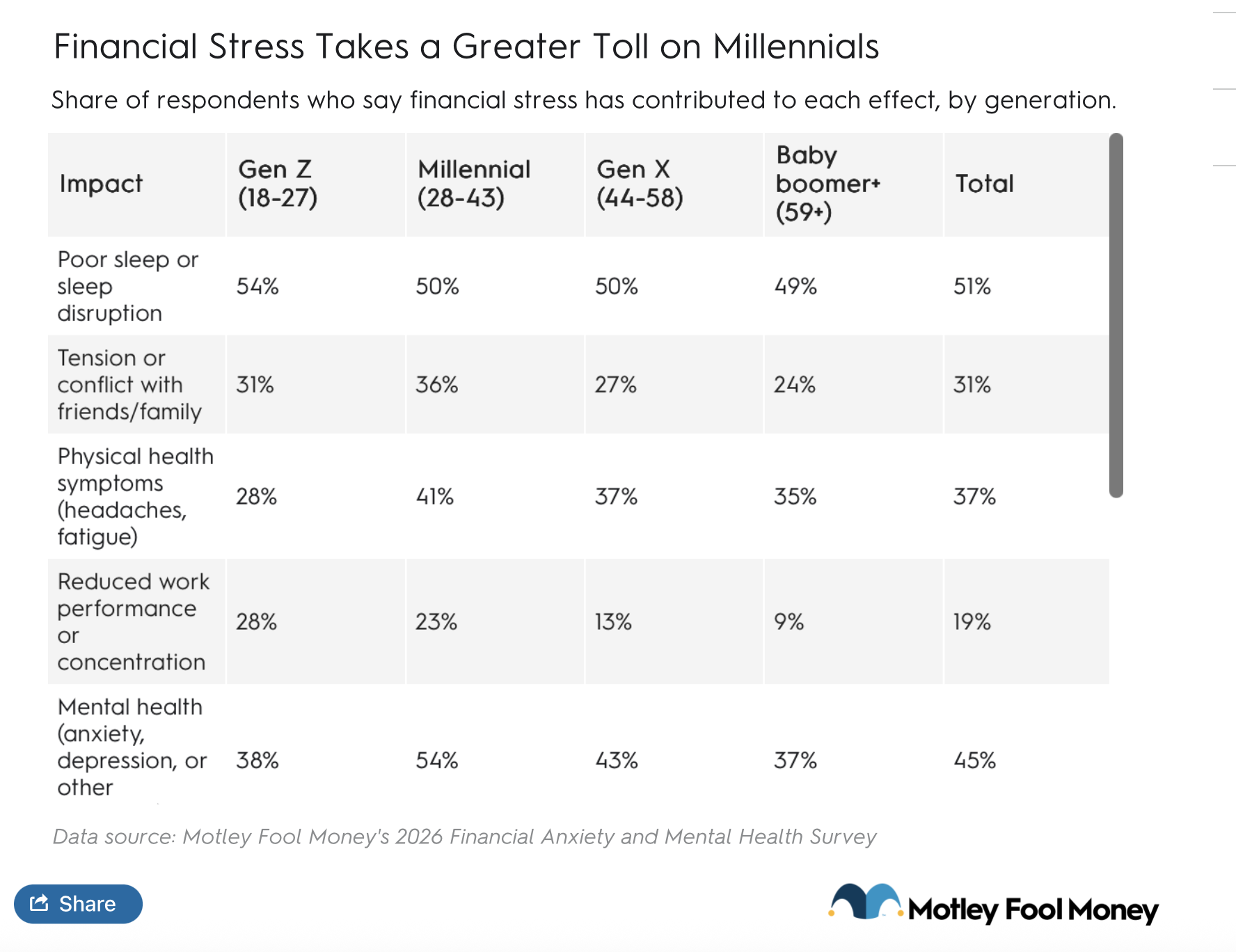
Financial anxiety also was linked to health and lifestyle impacts, according to the survey.
- 51% said financial stress caused poor sleep or sleep disruption.
- 45% said it contributed to anxiety, depression or another mental health condition.
- 37% reported physical symptoms such as headaches or fatigue.
- 41% said financial stress reduced their ability to enjoy daily life.
Budgeting as Coping Strategy
Motley Fool said budgeting was the most common coping strategy, cited by 47% of respondents, while 35% reported working side jobs or other extra-income opportunities. Another 37% said they use exercise, meditation or similar activities to manage stress.
Only 16% said they sought professional financial advice or counseling, while 15% said they ignore the problem and hope it improves. Among Gen Z respondents, avoidance rose to 22%.
The survey also found many Americans grew up in households where money was rarely discussed.
- 48% said finances were rarely discussed in their household growing up.
- 22% said money was a source of stress or conflict in the home.
- Only 23% said their parents discussed money openly and calmly.
Respondents who described their childhood finances as “struggling” were nearly twice as likely to report high or extremely high financial stress as adults compared with those who grew up financially comfortable, according to the survey.
The full survey can be found here