
NEW YORK — Financial anxiety is causing many Americans to avoid monitoring their bank accounts, while a large share remain unaware of the interest rates they earn on savings and continue to keep deposits at institutions they have no plans to leave, according to a new survey by U.S. News & World Report.
The survey of 1,200 U.S. adults, conducted May 26-27 by PureSpectrum on behalf of U.S. News, examined banking habits, savings behavior and customer attitudes toward financial institutions.
Among the most notable findings, nearly one-third of respondents said they regularly avoid checking their bank account balances because doing so causes financial stress.
The survey found financial anxiety is particularly prevalent among younger consumers, with more than 44% of respondents under age 45 saying they avoid looking at account balances due to concerns about their finances.
Low Balances Common
The survey found many Americans maintain relatively modest amounts in their bank accounts:
- 47% said they keep less than $5,000 across all bank accounts.
- About 11% reported holding more than $100,000 in bank deposits.
- More than 30% said their account balance would need to reach zero before triggering immediate financial concern.
- Another 24% said they would not panic unless balances fell below $100.
Despite those concerns, more than 40% of respondents said their current bank balances provide them with peace of mind.
Mobile Banking Leads, But Branches Still Matter
Digital banking continues to dominate day-to-day banking activity, according to the survey.
- 56% said they most frequently conduct banking through a mobile app.
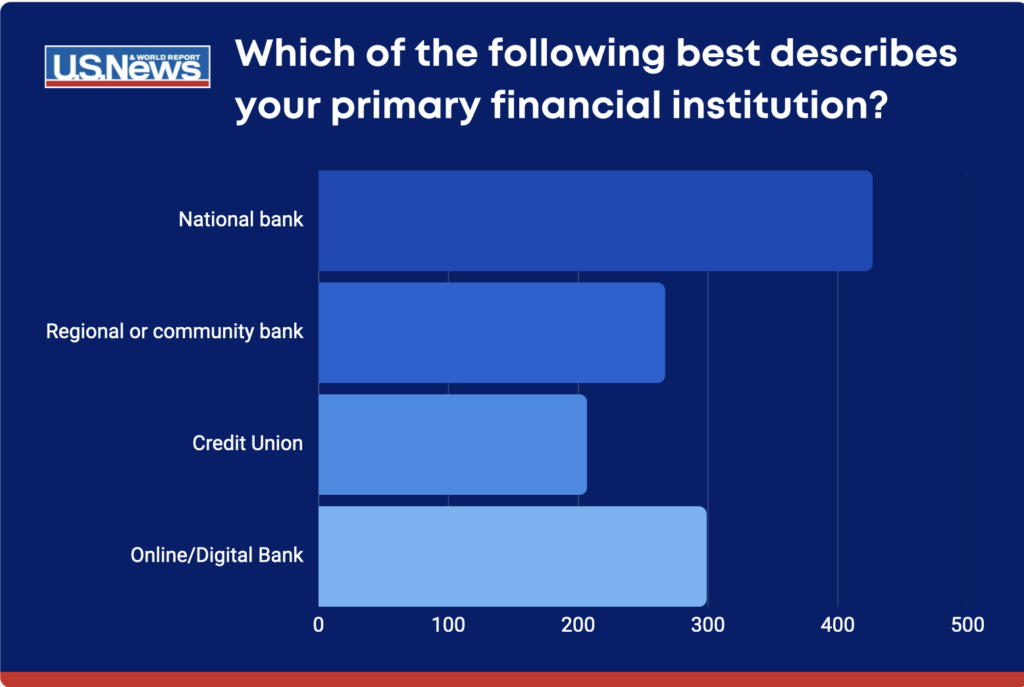
- 25% identified a digital bank as their primary financial institution.
- Among consumers under age 45, 34% said their primary account is with an online-only bank.
At the same time, physical branches remain important to many consumers.
- 73% said proximity to a branch is important.
- 43% described branch location as “very important.”
Savings Rates Remain a Mystery
The survey suggests many consumers pay little attention to the interest earned on their deposits.
- More than 42% said they do not know the interest rate on their savings account.
- Another 30% said they only have a rough idea of their rate.
- Fewer than 28% said they know the exact yield they earn.
U.S. News reported that nearly two-thirds of respondents have never opened a new bank account to obtain a higher interest rate or promotional offer.
The findings align with research cited by U.S. News indicating that most depositors leave funds in the same accounts year after year, even when higher-yielding alternatives are available.
Most Customers Aren’t Looking to Switch
Despite concerns about savings yields and financial stress, most respondents expressed satisfaction with their financial institutions.
- 77% said they are satisfied with their primary bank and do not want to switch.
- Nearly 60% said their institution makes them feel like a valued customer rather than simply an account number.
Respondents frequently cited fraud prevention efforts and customer service as reasons for their loyalty. Others pointed to personal relationships with branch staff.
One respondent who has banked with the same credit union for 18 years told U.S. News that employees know the customer’s name, ask about family members and continue providing personalized service even after the customer moved away from the area.
Couples Often Keep Separate Accounts
The survey also found many couples continue to maintain separate finances.
- More than 36% said they do not have a joint bank account with their partner.
- Approximately 17% said they maintain both joint and individual accounts.
- Overall, 53% of couples said they keep at least some of their money in separate accounts.
Respondents cited a variety of reasons for maintaining separate accounts, including differing approaches to spending, financial independence and relationship dynamics.
According to U.S. News, the findings illustrate a banking landscape in which consumers increasingly rely on digital tools while continuing to value personal relationships, even as many remain disengaged from key aspects of their finances, including savings rates and account monitoring.