GAINESVILLE, Fla.–A new study finds that poor credit is increasingly preventing Americans from reaching both major life milestones and basic necessities, with nearly half saying their credit score has held them back.
According to the survey of 1,000 U.S. adults conducted by BadCredit.org, 48% of respondents said their credit score has stopped them from “living the life they want,” including milestones such as buying a home, getting married or starting a family. The impact is even more pronounced among expecting parents, where 73% reported being held back by bad credit.
The findings point to what BadCredit.org described as a growing affordability crisis, where rising costs and constrained access to credit are colliding.
Cars, traditionally considered more accessible than homes, have now become the most commonly blocked purchase due to poor credit, the study found.
Top Blocked Purchases
Top purchases blocked by bad credit include:
- Buy or lease a car: 54%
- Buy a house: 51%
- Move to a better home: 32%
- Travel more: 32%
- Refinance debt: 26%
- Take career risks: 15%
- Get married: 6%
- Have a child: 5%
- Own a pet: 3%
The near parity between cars and homes reflects a shift, as rising vehicle prices and higher monthly payments—now exceeding $800 on average—have made car ownership less attainable, particularly for borrowers with weaker credit profiles, according to BadCredit.org.
What Expecting Parents Said
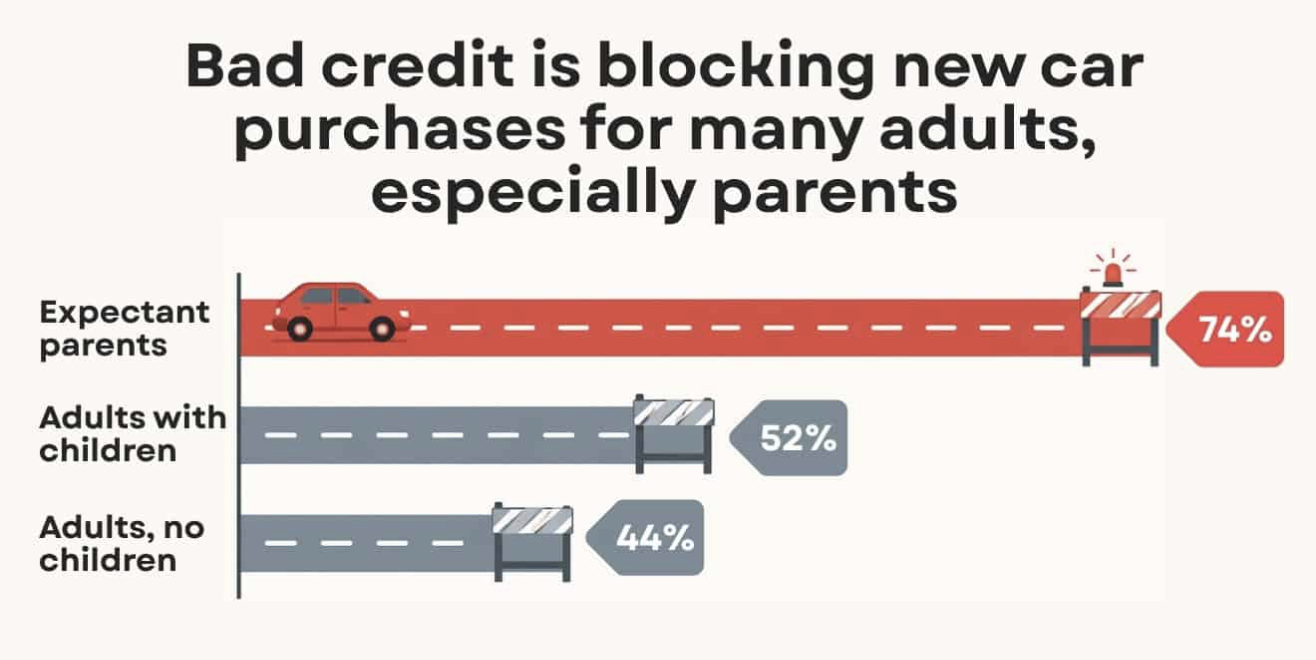
Meanwhile, expecting parents reported the greatest challenges. Among that group, 74% said bad credit had prevented them from buying or leasing a car, compared with the national average of 54%.
BadCredit.org said additional findings for expecting parents include:
- Buying or leasing a new car: 74%
- Moving to a better apartment or neighborhood: 37%
- Refinancing existing debt: 37%
- Traveling more: 26%
BadCredit.org said the data suggest credit constraints are affecting not just long-term financial goals, but also immediate needs such as transportation. For many families, access to a vehicle is essential for work, medical appointments and daily life.
The study also found that parents overall are more affected than non-parents, with 52% of adults with children reporting credit-related limitations, compared with 44% of those without children.