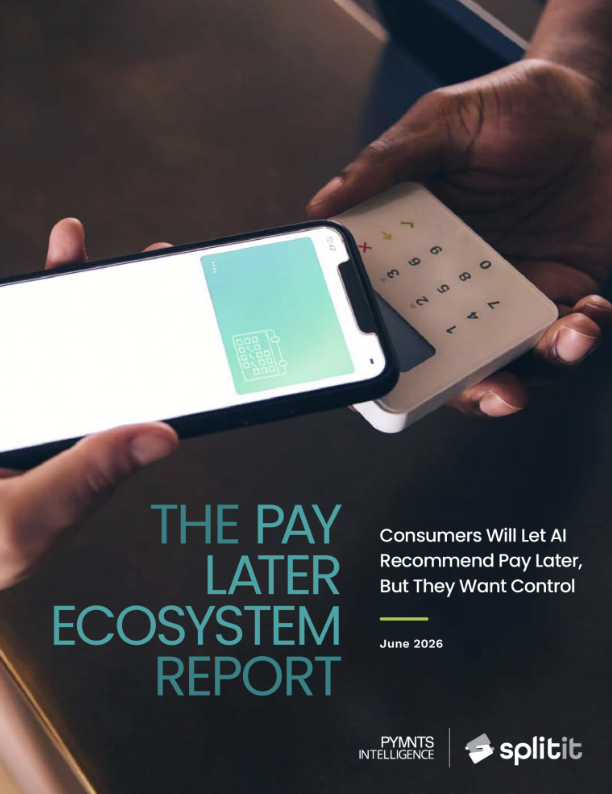
BOSTON — Buy now, pay later products are increasingly being used by consumers as tools for managing household cash flow rather than simply financing retail purchases, according to a new analysis from PYMNTS Intelligence.
The findings, published in the 2026 edition of the Pay Later Ecosystem Report, suggest the most significant changes in the buy now, pay later (BNPL) market are taking place beyond the checkout page and deeper within consumers’ broader financial lives.
According to PYMNTS Intelligence, the original BNPL model was largely merchant-focused, with providers driving growth by embedding installment financing options into online and in-store shopping experiences. Success was typically measured by factors such as checkout conversion rates and the number of retail partnerships secured.
Today, however, consumers are increasingly turning to installment financing as an ongoing cash-flow management tool, the analysis found.
What’s Prompting Consumers
PYMNTS Intelligence said economic uncertainty, persistent inflation and rising living costs are prompting consumers to integrate pay-later products into their monthly budgeting strategies. Rather than using installment plans only for discretionary purchases, many consumers are employing the products to smooth income fluctuations, manage expenses and preserve liquidity.
The shift reflects broader changes in consumer financial behavior, according to the report.
Traditional credit products have historically focused on borrowing capacity, but many consumers are now more concerned with managing cash flow. As a result, the key financial question has evolved from whether a purchase can be afforded to how payments can be structured to fit within a monthly budget, the analysis said.
Following a Pattern
PYMNTS Intelligence noted that the evolution of BNPL follows a pattern seen across the financial technology sector, where companies often begin by solving a specific consumer problem before expanding into adjacent financial services.
The report pointed to examples including digital wallets that evolved into broader payment ecosystems, peer-to-peer payment platforms that became financial “super apps,” and neobanks that expanded beyond checking accounts into lending, investing and savings products.
BNPL providers appear to be pursuing a similar strategy, according to PYMNTS Intelligence. Many are adding budgeting tools, spending insights, financial planning features, savings products and account-management capabilities designed to increase engagement beyond individual transactions.
The ultimate goal, the report said, is to transform BNPL providers from financing companies into daily financial companions that play a larger role in consumers’ overall money management.