

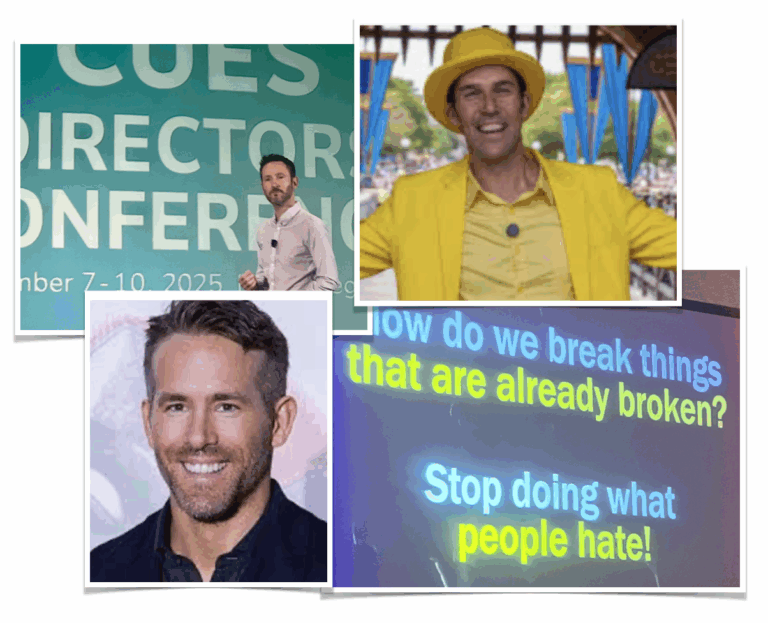
SAN DIEGO–Looking to drive improvements in your credit union, or even your own life? One person suggested you take some advice from the actor Ryan Reynolds, before offering some keen insights on the mistakes every leader makes, three basic psychological needs everyone shares, and more..
Beyond acting, Reynolds has built a portfolio of successful and diverse businesses, including an ad agency, and he has acquired and sold Aviation American Gin (sold to Diageo) and Mint Mobile (sold to T-Mobile).
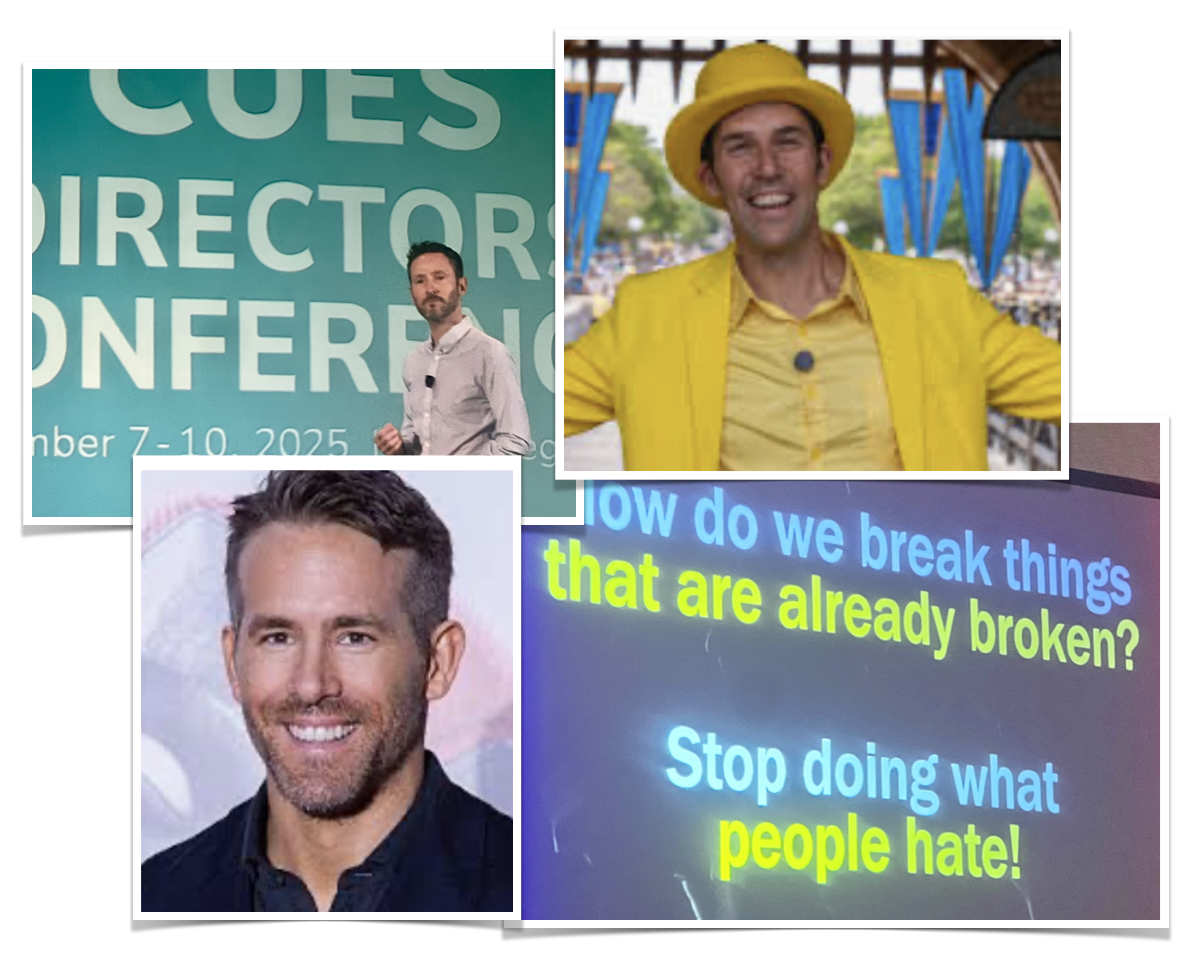
“He told me he didn’t know anything about business at the very beginning of that and he was actually very intimidated by it,” Jason Feifer told the CUES Directors Conference here. “What he told me is that ‘You can’t be good at something unless you’re willing to be bad.’”
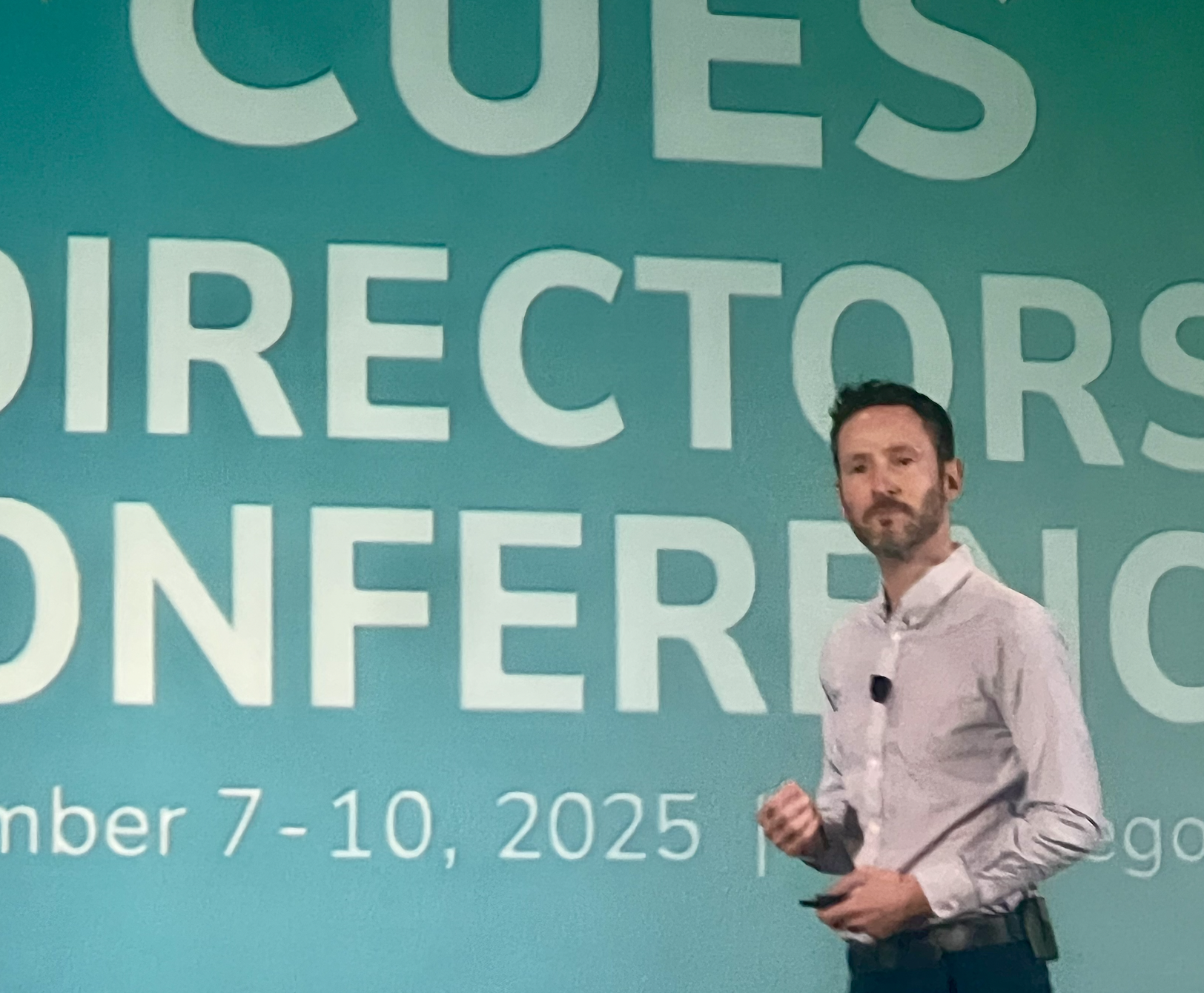
Feifer, the editor in chief of Entrepreneur magazine and host of the podcast Problem Solvers, said that with all the change facing credit unions as organizations—and CU leaders themselves—the common mistake made by so many is to tell themselves, “I must be good at this new thing at the very beginning.”
An Unfair Question
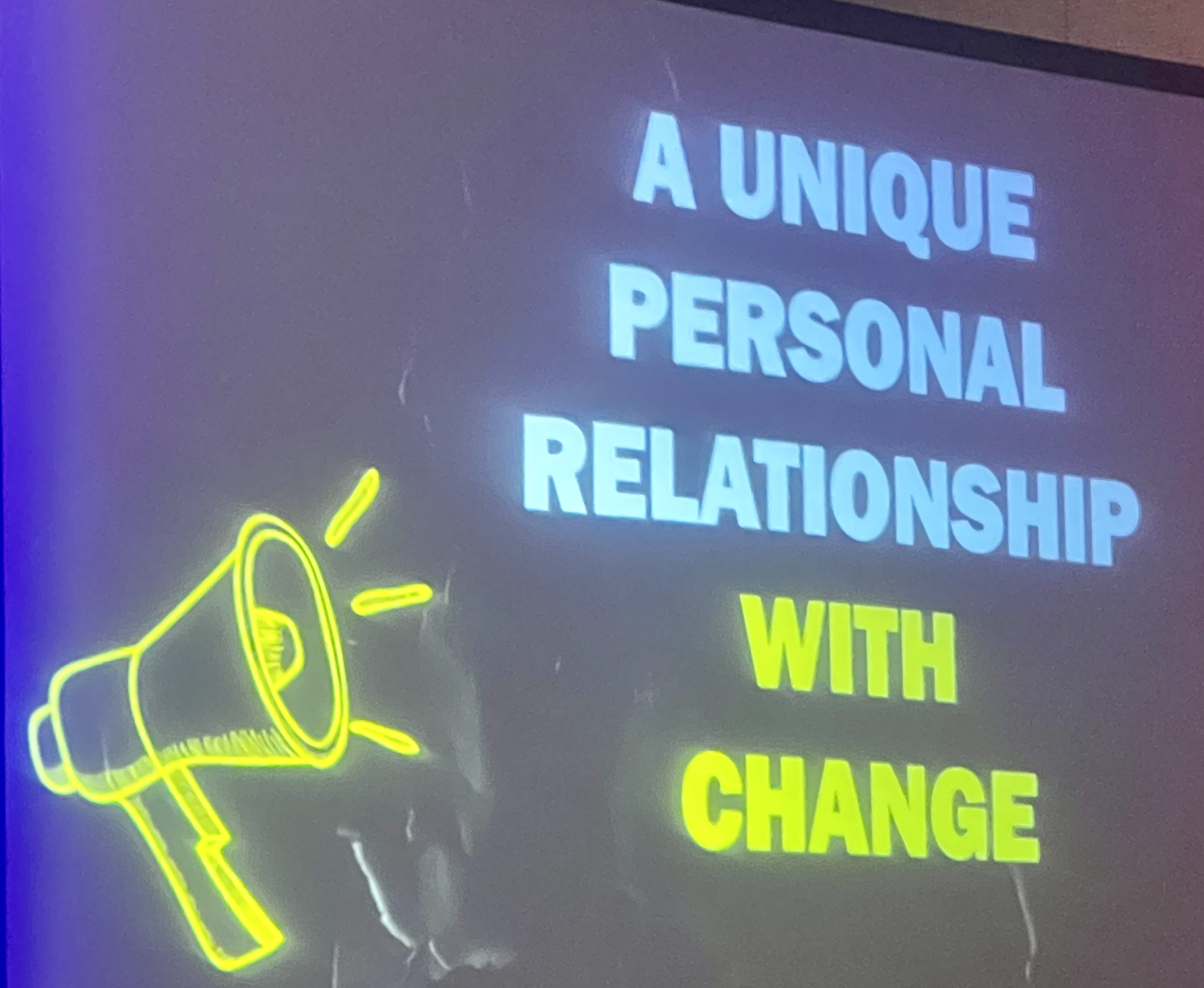
“That’s not true and that’s not fair. In fact, the thing that separates successful people and organizations from unsuccessful people and organizations is not whether you’re good at something new at the very beginning, but rather, whether you are willing to tolerate being bad long enough to get to good,” said Feifer. “The most successful people are the most adaptable, and here’s how they do it: they all develop a unique personal relationship with change…that enables them to grow and build in ways that others can’t.”
Feifer said people and organizations often “panic” when faced with change because the human brain is programmed to protect against loss more than to seek gain. To effectively respond and not panic, Feifer said four things need to be rethought: Your Identity, Your Needs, Your Reactions and Your Process.
Your Identity
“Everyone in this room, myself included, makes the same mistake and that is that we tie our identities too closely to the output of our work or the roles that we occupy,” said Feifer, asking his audience how they respond when asked what they do for a living. “It’s probably some version of ‘I do blank at blank at a credit union.’ There’s nothing wrong with that except that that statement is so changeable. When change comes to our work, our identity is tied directly to the role and the tasks that we perform. Then that change doesn’t just feel like change to our work, it feels like a challenge to who we are, and that’s scary. It forces us to want to hold on to what came before instead of being about what comes next.”
Feifer urged people to reorient themselves toward the things that do not change. As an example, he shared the story of a baker who said, “I don’t sell baking mixes, I bring joy to people with sweet baked goods,” and the president of a cosmetics company who told him, “I don’t sell cosmetics, I help people reclaim their sense of self.”
Things That Don’t Change
Those are things that in times of change do not change, as they are a “core transferable value,” he said.
“If you can identify that and live inside of that then the world opens up to you because you get to realize that every change that comes is actually just a new opportunity to do the thing that you already do best,” Feifer said.
Feifer challenged the audience to answer the question about what they do for a living without naming a job title and instead creating a mission statement.
Your Needs
The core insight behind self-determination theory, a psychological concept popularized in the 1980s that revolutionized the understanding of human motivation and happiness, according to Feifer, is that people have the same three basic psychological needs.
“By understanding what they are and how they work we give ourselves a road map to finding them when we need them the most,” Feifer said.
The three psychological needs can be summed up as ARC:
• A is autonomy — you need to feel ownership over the decisions that you make
• R is relatedness — you need to feel good relationships with those around you
• C is competency — you need to feel good at what you do
“If these three needs are not met productively, we will go somewhere else, even if not productive, to fulfill them,” Feifer said.
‘Incredible Tool’
Feifer shared that he asked himself the three ARC questions after being fired from a job and realized he did not have any of those needs fulfilled. In his case, he said he ended up turning to a Twitter obsession, where he was able to fulfill all three needs.
“From the people I work with this is an incredible self-diagnostic tool,” he said. “Sometimes, you just start waking up and it feels a little funny. You’re not really sure what the problem is but you know you’re not as motivated as you used to be…This gives you a checklist…If you don’t solve for it, people just seek the fulfillment elsewhere.
“Change will continue to come, but our needs do not change,” he said.
Your Reactions
When things go wrong the instinct is to react and recover as quickly as possible to show people you’re confident, which Feifer said is “actually where we make the foundational reaction mistake, because we don’t understand the true point of the reaction.”
To illustrate, Feifer shared a story of speaking to an audience when he was given the wrong information on the time he had remaining, and he panicked and eventually apologized to the audience for losing track of his remarks and for the presentation going poorly.
Afterward, he said, the audience reaction was overwhelmingly positive (one person even brought him a beer).
“In those moments our deep desire is to prove our competency,” Feifer said. “But the thing is that’s not possible and it’s not what people are looking for. The only thing that is controllable is the way we turn to and show up for other people. People don’t want to think you have it all under control, but that you will be there for them.”
Your Process
Feifer offered a different take on what the effect of AI is going to be on business. Instead of viewing AI as technology that will have negative effects, he called AI “our generation’s greatest forcing function. I love that phrase—forcing function—the event that compels action.”
Urging everyone to take a step back, Feifer said there is great concern AI will destroy jobs, companies and communities and “undercut everything that makes us human.”
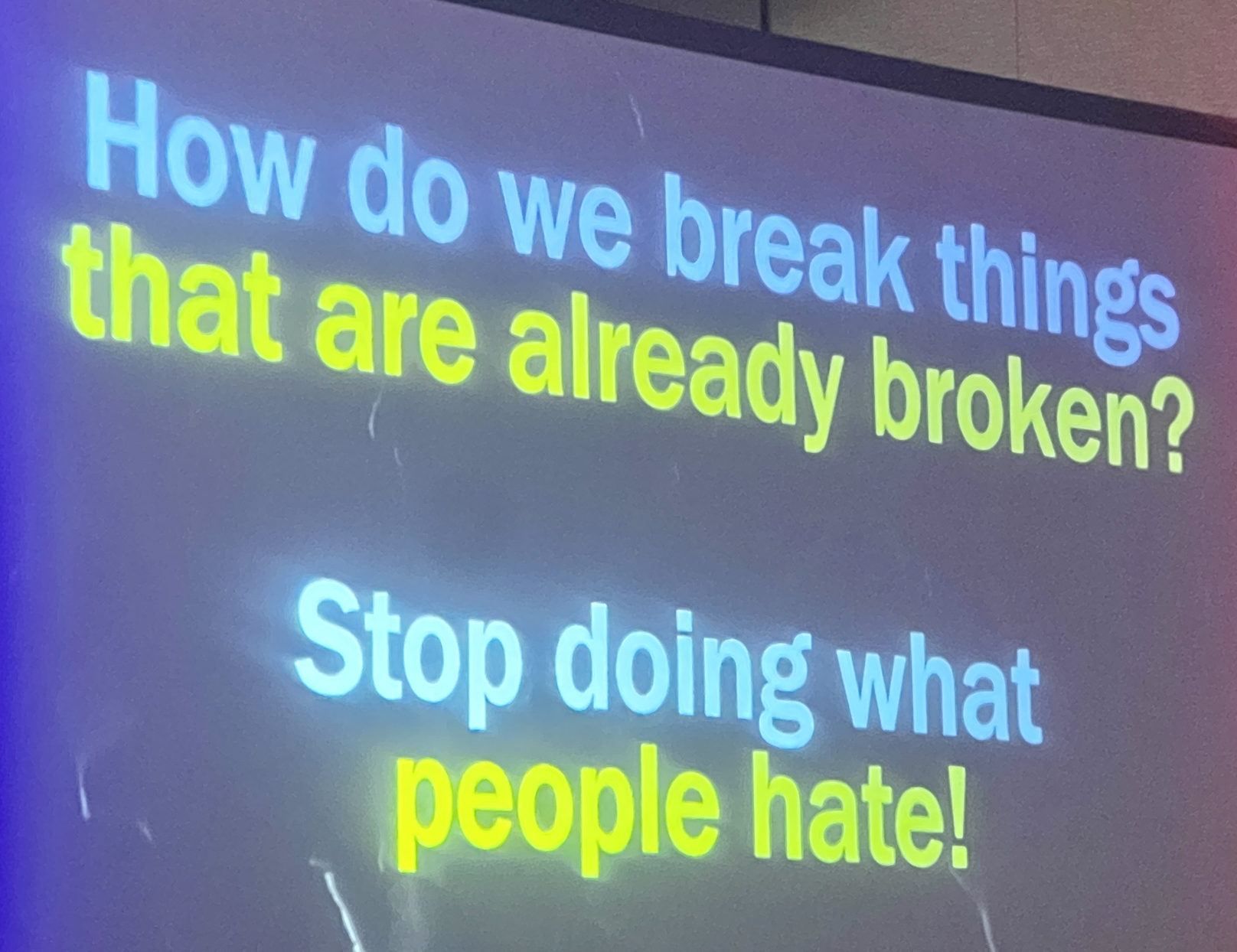
Where Feifer said he sees good news in AI is that it won’t break things that are working, but instead will break things that “are already broken.”
“If something breaks in our home we throw it away. If something breaks in our business we tend to keep it,” Feifer observed. “We do that because we don’t often have the incentive to make the change. AI is going to break something that is already broken, and that creates an opportunity for somebody to build a solution. I am very sure in the credit union industry there are all sorts of things that we are carrying around that are broken…(that are just dying to be replaced) with something better.”
A Banana of an Example
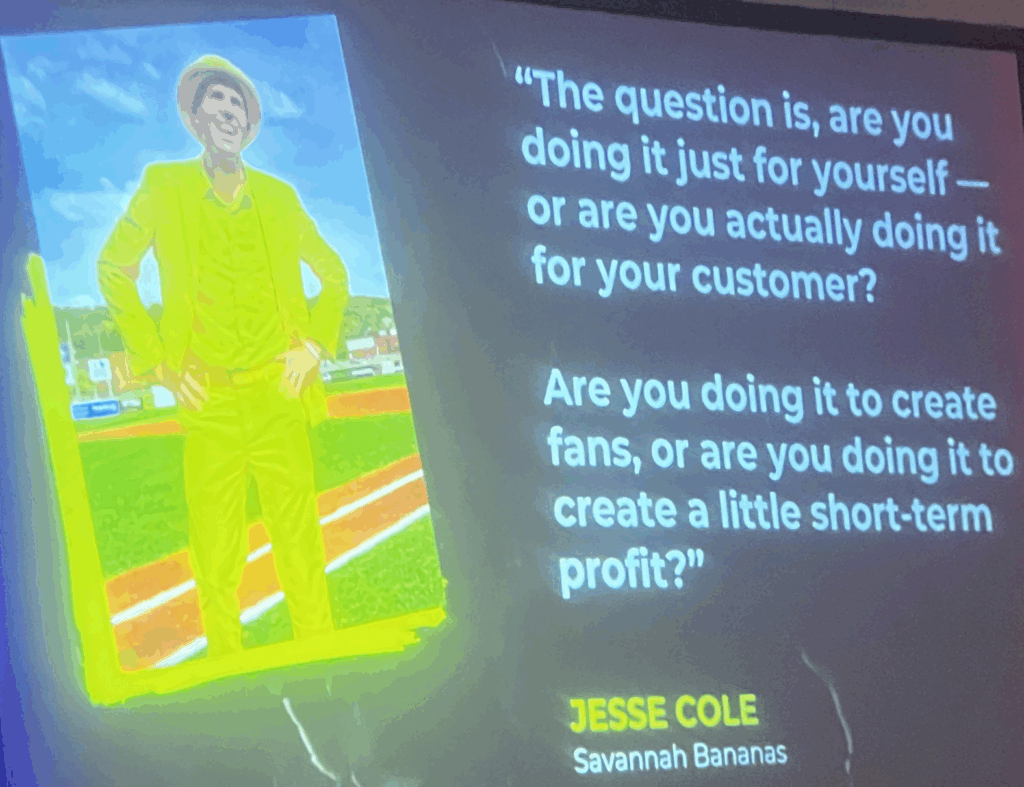
As an example, Feifer shared the story of Jesse Cole, who bought a money-losing minor league baseball team and turned it into a phenomenon: the Savannah Bananas.
“He asked himself, ‘What do people hate about baseball?’ The game is slow and boring and too expensive. He asked himself what it would mean to stop doing what people hate.”
By doing what people love, the Savannah Bananas now sell out major league stadiums.
“Nobody here thinks I uphold something that people hate,” Feifer said. “So, how do we identify the things that people hate? Are you doing something just for yourself or for your customers? Don’t just try to create a little short-term profits. We can take every process internally or externally, everything that people interact with, everything that we ask people to do, and we have to ask, who does this help? Me or the people I serve?
“Forcing functions are your friends. Is the thing we are defending the thing people actually want?” he continued. “You can ask this question and then you have to be open to addressing the answers. When you do, you will finally be able to break the thing that’s broken.”
The Wrong Question
The one wrong question often asked is “Is this perfect?” Feifer said. “It’s what we ask of every new thing. The problem here is the answer is always no. If we use ‘Is this perfect?’ as the filter for whether to engage and pursue new ideas, the answer will always be no.
“The better question is, ‘Is our new problem better than our old problem?’ When we ask this, we are making room for problems. Everyone here is here because there are problems—problems to solve, problems that require you. The best thing we can create is problems, because that is where you find the opportunity.”
A Question for Credit Unions
Feifer urged credit unions to think about everything they represent, or believe they represent.
“What are you to other people? What is your value?” he asked. “The greatest challenge in front of you is how to live up to it. What people want isn’t necessarily our services; what people want are the things your services enable. People want benefits, they don’t want solutions.”



