ANN ARBOR, Mich. – U.S. consumer sentiment improved in July, ending months of historically weak readings as Americans grew somewhat more optimistic about inflation and their personal finances, although confidence remained well below year-earlier levels.
The University of Michigan’s final July Index of Consumer Sentiment rose to 55.2 from 49.5 in June, exceeding both economists’ expectations and the preliminary July reading of 54.4. The gain marked the highest reading since February but remained about 11% below its level a year ago.
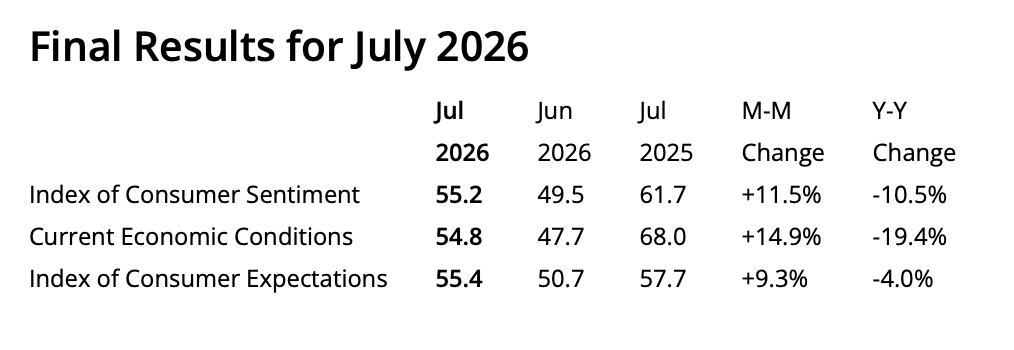
According to the university’s Surveys of Consumers, the improvement was broad-based, spanning consumers of different ages, income levels, educational backgrounds and political affiliations. Survey Director Joanne Hsu said Americans remain primarily concerned about their purchasing power and the rising cost of living, while geopolitical developments have had relatively little influence on overall sentiment.
The report also found that inflation expectations eased during the month. Consumers now expect inflation to average 4.2% over the next year, down from 4.6% in June, while longer-term inflation expectations remained unchanged at 3.3%.
Gas Prices Continue to Fuel Concern
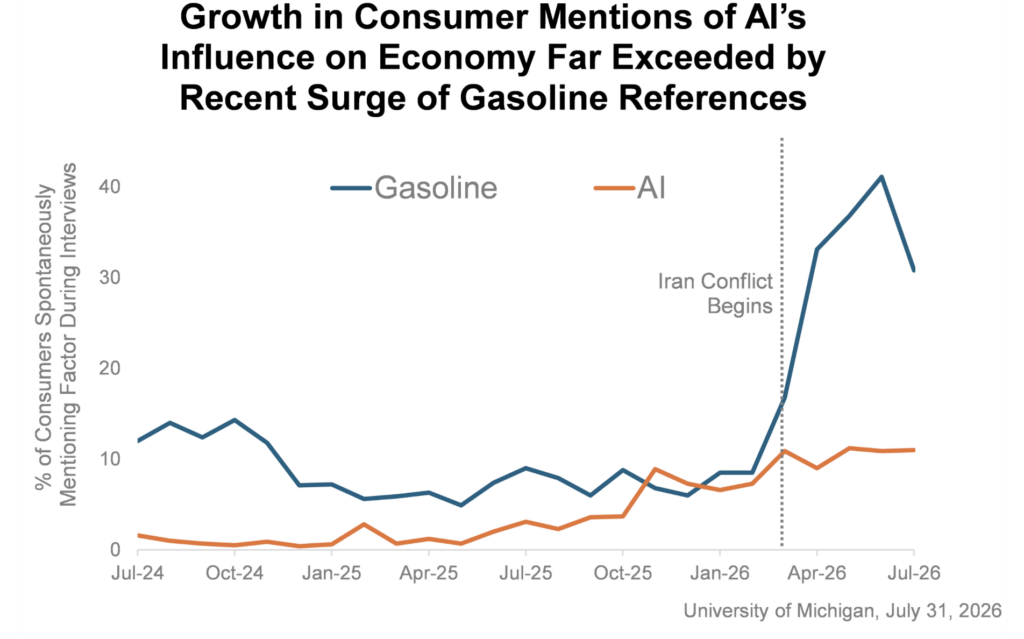
The stronger reading comes as government data have shown inflation moderating from earlier highs, although gasoline prices have remained volatile amid renewed conflict in the Middle East. Economists said easing inflation expectations likely helped improve consumers’ outlook despite continued concerns over affordability.
Even with the monthly improvement, the survey suggests households remain cautious.
Hsu said consumers continue to report that high prices are weighing on household budgets and limiting purchasing power. Everyday financial concerns continue to overshadow broader political and international developments in shaping Americans’ economic outlook.
About the Survey
The University of Michigan’s consumer sentiment survey is among the nation’s most closely watched measures of household attitudes because consumer spending accounts for roughly two-thirds of U.S. economic activity. Economists and financial markets monitor the survey for clues about future spending, inflation expectations and the broader direction of the economy.