ANN ARBOR, Mich.—U.S. consumer sentiment fell to a new record low in May as Americans grew increasingly uneasy over rising living costs, especially higher gasoline prices, and became more pessimistic about inflation and their own financial outlook, according to the latest survey from the University of Michigan.
The university’s final May Index of Consumer Sentiment fell to 44.8 from 49.8 in April, a 10% monthly decline and below the preliminary May reading of 48.2. The survey’s director, Joanne Hsu, said deteriorating views were broad-based and crossed political affiliations.
The report found Americans remain increasingly concerned about affordability and future price pressures.
The Key Findings
Among the key findings:
- The Index of Current Economic Conditions fell to 45.8 from 52.5 in April.
- The Index of Consumer Expectations declined to 44.1 from 48.5 previously, reflecting weaker views of future economic conditions.
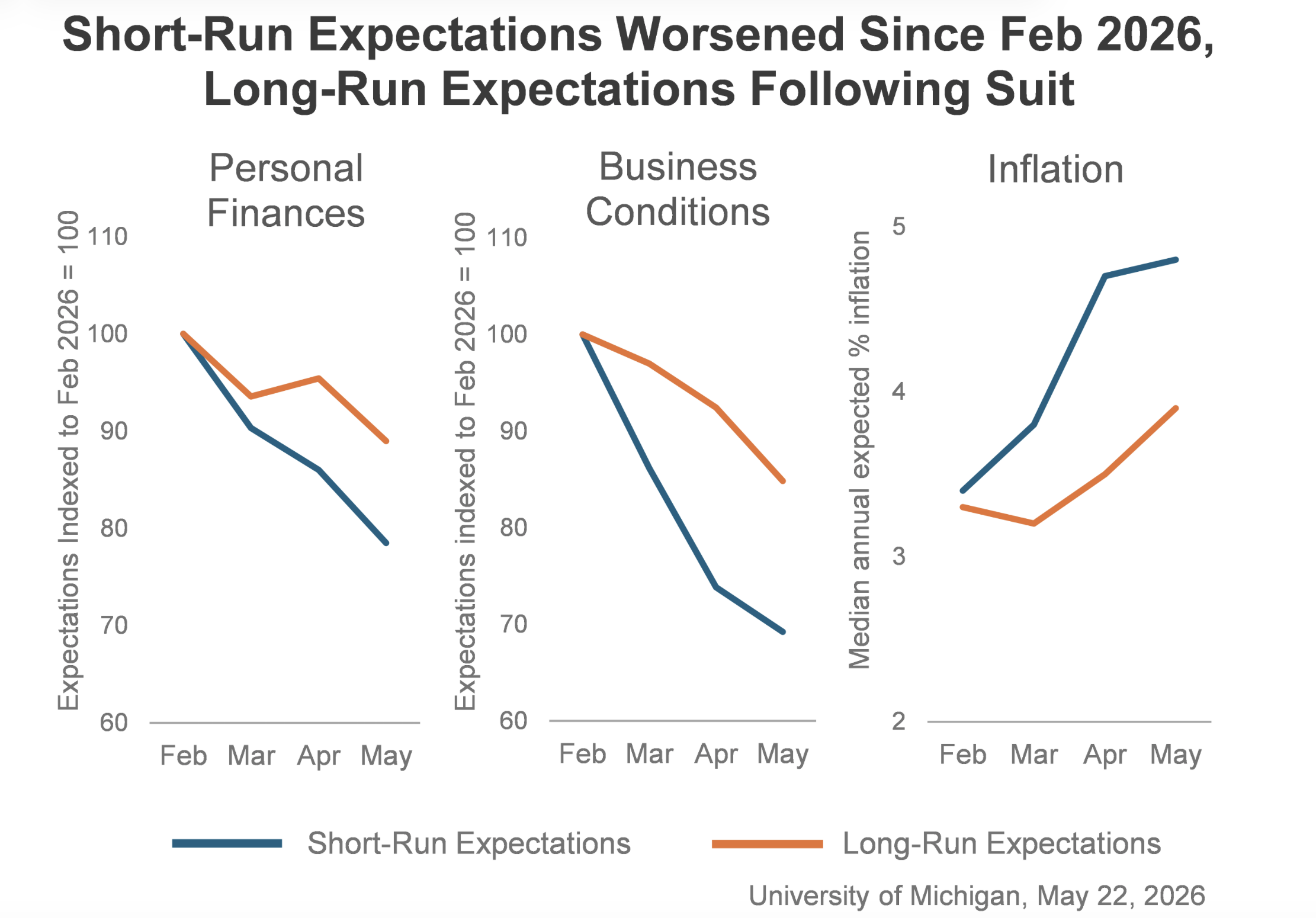
- One-year inflation expectations increased to 4.8% from 4.7% in April.
- Long-run inflation expectations rose to 3.9% from 3.5%, signaling growing concern that inflation pressures could persist.
According to Hsu, 57% of consumers spontaneously mentioned that high prices were hurting their personal finances, up from 50% in April. Lower-income households and consumers without college degrees reported particularly sharp declines in sentiment.
‘Continuing Disconnect’
Economists said the latest data underscore a continuing disconnect between consumer attitudes and broader economic indicators. While stock markets have remained strong and consumer spending has not yet shown a comparable collapse, households appear increasingly focused on day-to-day costs and worried that inflation could worsen.
The consumer sentiment survey is closely watched by policymakers because expectations for future inflation can influence spending behavior and complicate decisions by the Federal Reserve System on interest rates.