TAMPA, Fla.—Consumer spending remained resilient in March despite rising inflation and geopolitical uncertainty, with growth in both debit and credit card activity, according to the latest Payments Index from Velera.
Velera reported that transaction and purchase volumes increased across key sectors, including goods, services and money services, even as gasoline prices surged following the onset of the war with Iran. The company said higher income tax refunds and temporary easing of travel disruptions during a partial government shutdown helped support spending.
“Consumers are still showing up and spending, even with many factors weighing on how they feel about the economy,” Denise Stevens, EVP and chief product and technology officer at Velera, said in a statement. “Surging gas prices, elevated inflation and overall uncertainty have not stopped spending activity—but they are changing behavior.”
Key Findings
Among the key findings cited by Velera:
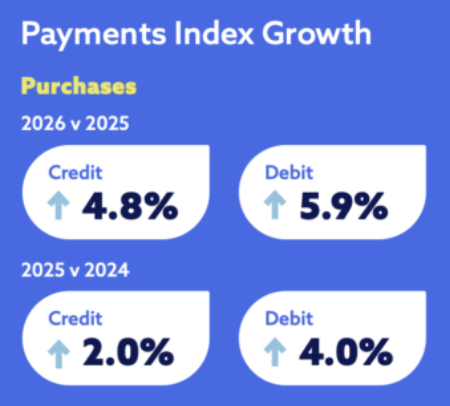
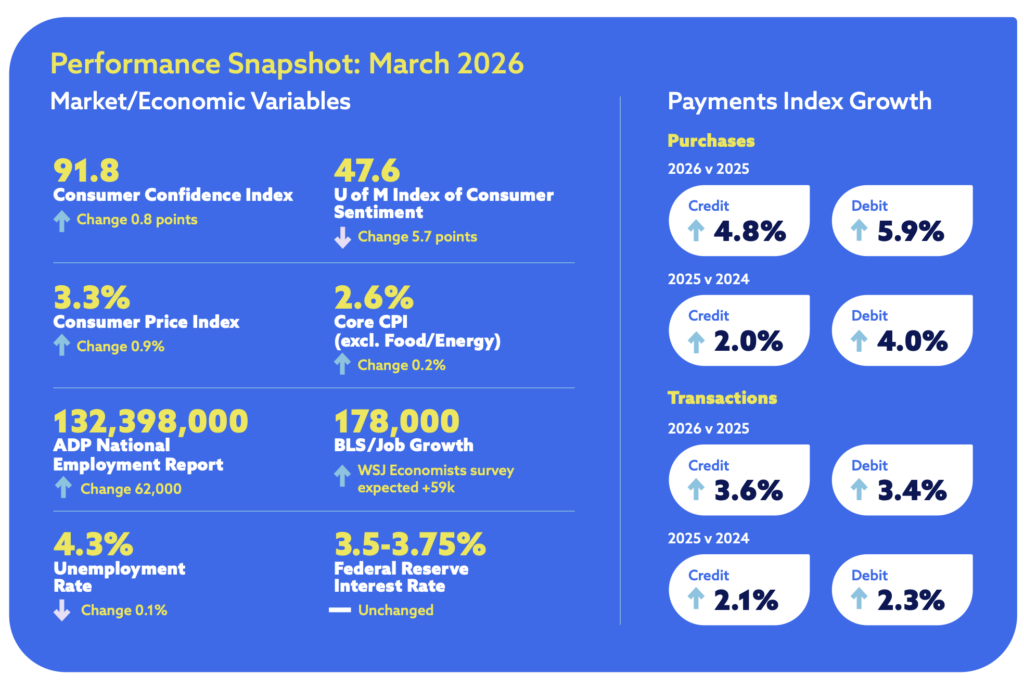
- Debit purchases rose 5.9% year over year, while credit purchases increased 4.8%, driven largely by goods and services spending.
- Debit transactions climbed 3.4% and credit transactions rose 3.6%.
- Gasoline prices, up roughly 40% since February, contributed about 15% of the growth in card purchases.
- Digital wallet usage continued to expand, accounting for 12.6% of debit transactions and 7.3% of credit transactions, both up from a year earlier.
Velera said shifting consumer behavior also includes growing use of digital wallets and buy now, pay later services as budgeting tools.
Additional Data Points
The new Velera report also noted:
- Economic sentiment weakened. Preliminary April data from the University of Michigan showed consumer sentiment falling 11% from March to 47.6, while the Conference Board’s Consumer Confidence Index edged up slightly to 91.8 but remained below levels seen in recent years, according to Velera.
- Labor market data showed mixed signals. The Bureau of Labor Statistics reported job growth of 178,000 in March, with unemployment declining to 4.3%, outperforming economists’ expectations. However, private-sector job gains tracked by ADP were more modest, rising by 62,000.
- Inflation accelerated during the month, with the Consumer Price Index rising 0.9% and pushing the annual rate to 3.3%. Energy costs—particularly gasoline, which rose 21.2%—accounted for roughly three-quarters of the increase.
- The Federal Reserve held interest rates steady in March, while U.S. GDP growth for the fourth quarter of 2025 was revised down to 0.5%, reflecting slower consumer spending and the effects of the government shutdown.
The full report can be found here.