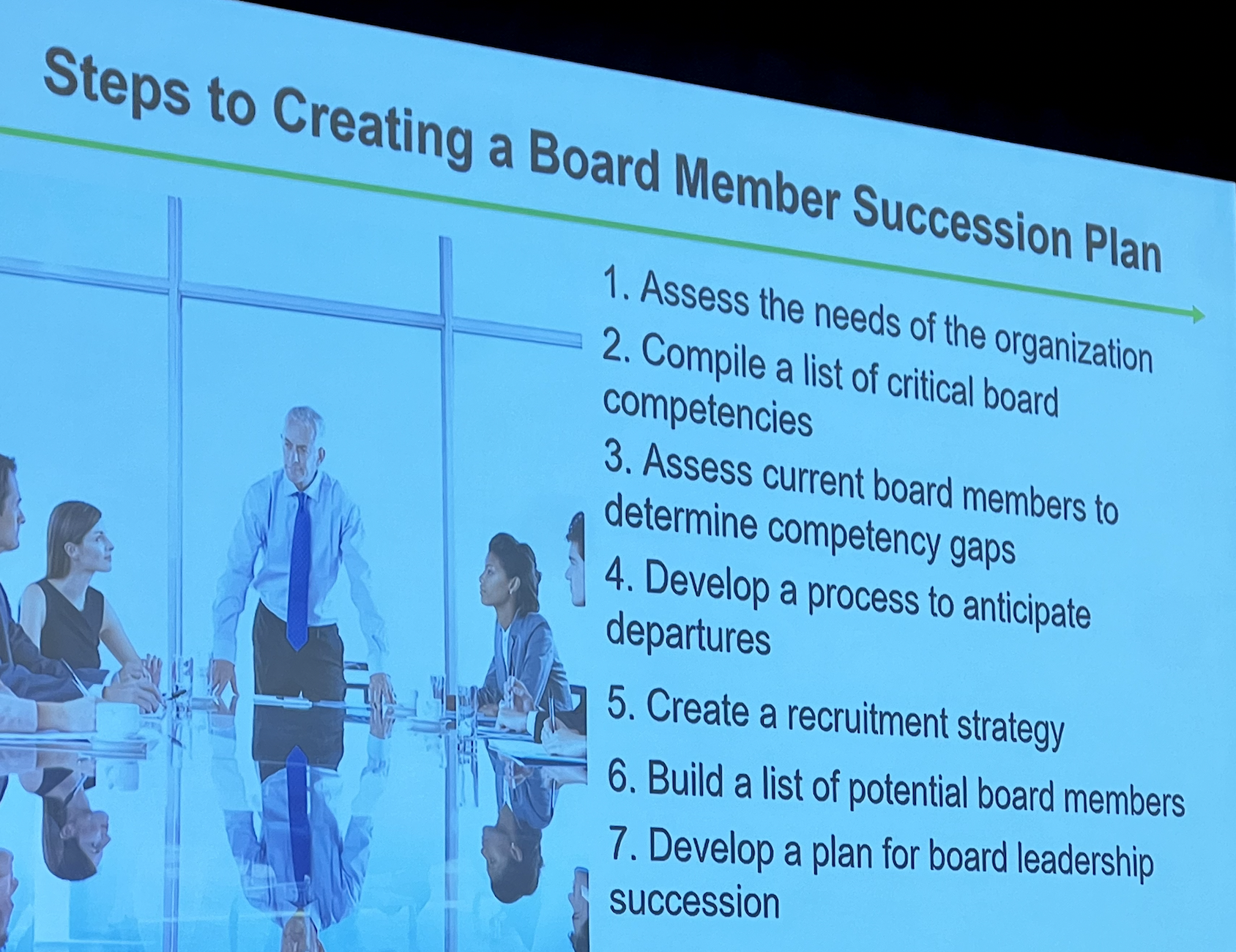
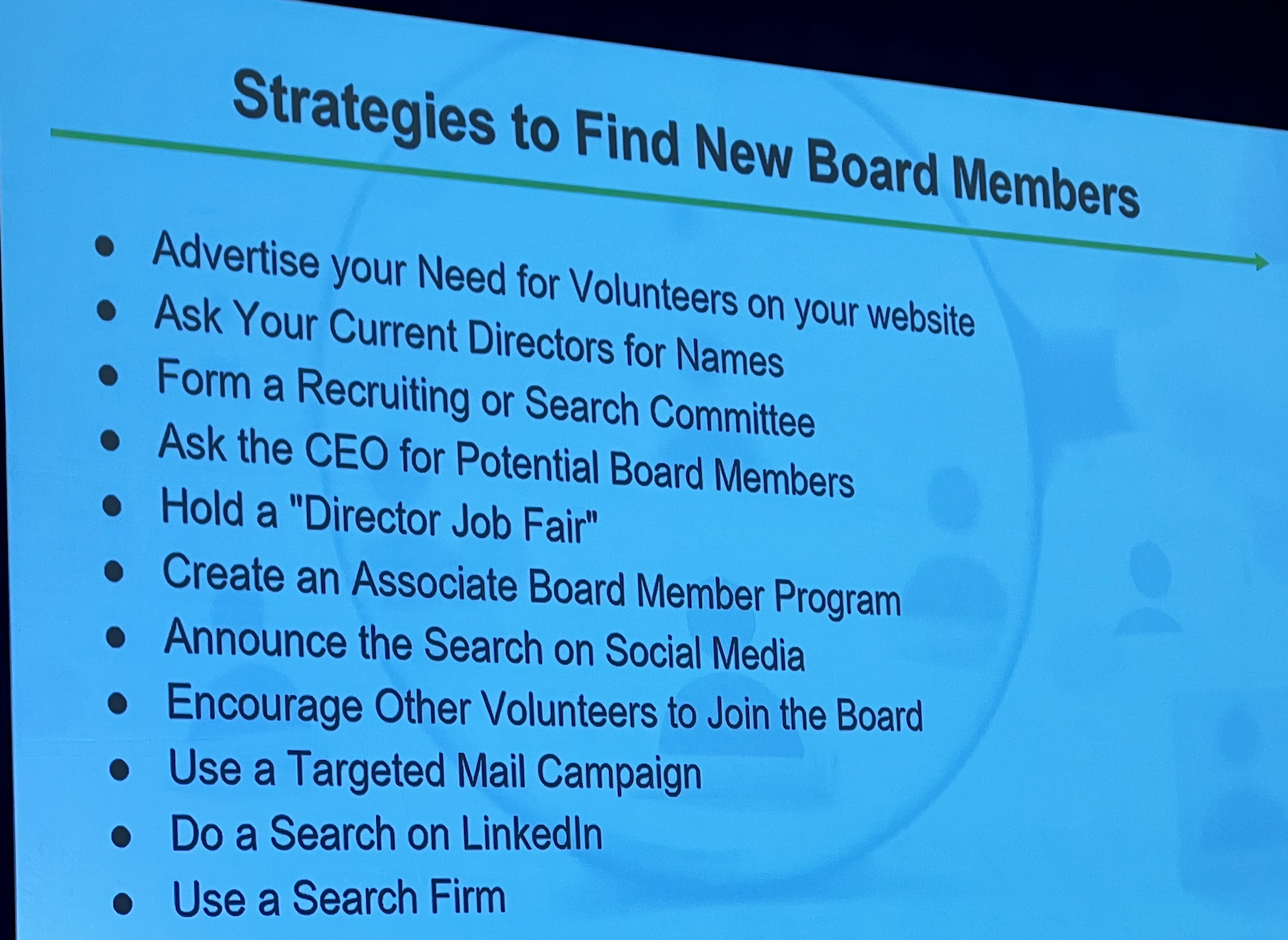
SAN DIEGO–Credit union board members gathered here were given an update — and a reminder — on complying with NCUA’s Jan. 1 deadline for having a succession plan in place for both boards and management.
Speaking to the CUES Directors Conference, Yvonne Evers, the founder and CEO of SUCCESSIONapp, an online tool that provides succession planning and other services,
The SUCCESSIONapp tool came out of Evers’ own experience as a board member, including a term as chairman, at UWCU in Madison, Wis. During the 20 years she was on the board it developed its first-ever succession plan for directors.

Nearly four years after NCUA approved the new rules for succession planning — the agency had expressed concerns over the number of mergers taking place because no successor management or board members were in place — FCUs will have to have their plans mapped out effective with the new year.
Evers noted throughout her remarks that NCUA has yet to provide much guidance this year on the plans, and that many CUs may not get direction until their 2026 exams.
‘Really Good Practice’
“I have found succession planning to be a really good practice, and not just in credit unions,” Evers said, adding that creating a succession plan does not have to be an onerous undertaking. “We can get a board succession plan done in 2.5 hours. NCUA doesn’t just want to have a succession plan for an emergency, but also for developing people over time.”
With a “silver tsunami” washing over many in CU leadership, there are “lots of retirement parties” taking place in the industry, Evers noted. “You want to ensure you have bench strength, for management and the board,” she said. “You want to give people motivation to stay and grow.”
Reasons for the Lack of Planning
Why do CUs fail to have succession plans? According to Evers:
• There is no clear understanding of who is responsible for developing them. She said it is also part of the CEO’s job to develop potential successor(s) and to identify gaps and keep the board informed. “It’s also the CEO’s job to make sure the candidates are working their plan” to move into the CEO position, Evers said, adding she has seen the top candidate for a CEO role not work his plan and not get the position.
• The CU may have young/newer executives and board members. Younger board members may not stay for even their first full term due to other demands in life.
• The CU may have an emergency plan in place and believe that is enough.
• Executives/directors are not held accountable.
NCUA Requirements
Evers said the key is to have a written plan for the following positions:
• Board members. It’s not a plan for each individual board member, but for the board itself and the skills that may need to be replaced.
• Management officials and assistant management officials. Evers said the positions covered under these terms depend on how complex the credit union is, and NCUA is allowing the credit union to define its own complexity.
• Any other personnel the board deems critical (such as IT).

She reminded attendees that newly appointed members of the board must have a working familiarity with the credit union’s basic finance and accounting practices and succession plans no later than six months after appointment. She added that some credit unions have their CFO give a presentation to the board to educate them on the balance sheet.
Who to Include
“I’ve been telling people if you are a large credit union, you want to make sure you are doing the board and at least the CEO and the executives, and if you are very large, the next level down. At a small CU it may be just the CEO and board and an assistant manager, if there is one.”
Succession Plan Contents
NCUA’s new requirements are for written succession plans to contain the following information, Evers said:
• Title for each covered position
• Expiration of the incumbent’s term or anticipated vacancy date
• Plan for permanently filling vacancies. (This can be associate directors, supervisory committees for boards. For the CEO, it can be all potential successors.)
• Strategy for recruiting candidates
• An estimate of the budgetary impacts of executing the succession plan. It does not need to be an exact figure.
Evers also shared this advice and additional information, below.