
AVENTURA, Fla. — Credit unions risk losing their competitive advantage if they continue chasing technology instead of focusing on member “primacy,” according to two people who addressed the Defense Credit Union Council’s annual conference.
During a session titled, “Like Vinyl Records, What’s Old is New Again,” Brian Scott, co-founder of RAI Partners, and Sumeet Bhalla, senior vice president and chief consumer lending officer at PenFed Credit Union, argued that long-term success depends less on adopting the latest technology than on reclaiming ownership of the member relationship.
Scott said credit unions are competing in a marketplace that has fundamentally changed.
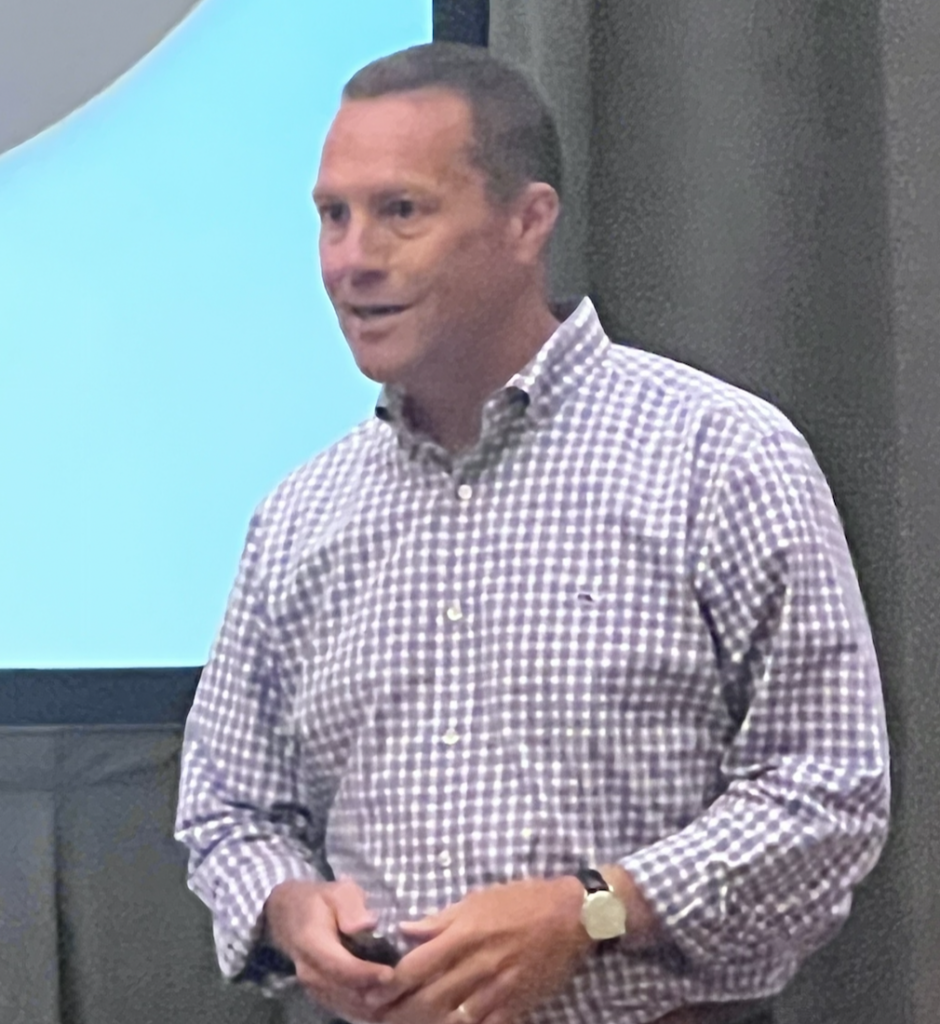
“Credit unions are now playing a game that has changed,” Scott said. “How do we change it back to a game we know? That’s relationships. Strategy is far more important than the technology you use to execute the strategy.”
A Lost Distinction
Scott said credit unions were created to guide members through their financial lives but have gradually lost that distinction.
“We exist to help people along on their financial journeys,” he said. “We talk about relationships, but we’ve lost that.”
He pointed to industry data showing that while aggregate credit union membership appears healthy, much of the recent growth has been concentrated in a handful of institutions.
According to Scott, Navy Federal Credit Union accounted for approximately 900,000 of the industry’s 2.5 million new members last year. Overall membership grew 1.7%, slightly below U.S. population growth, while the median credit union experienced a 0.5% decline in membership.
He also warned that many institutions underestimate “silent attrition,” in which members gradually stop using accounts without formally closing them.
Peeling Back the Numbers
Scott said lending trends also raise concerns. He called core lending the primary measure of a credit union’s success but noted that loan-to-share ratios slipped to 81.5% in the first quarter from 81.8% a year earlier. Credit card penetration also fell from 19.78% to 17.88%.
“When you own payments, you own the relationships,” Scott said. “When you know how people pay, you know how people behave.”
Behavioral changes, such as reduced card usage, can provide early warning that a member is shifting business elsewhere, he said. Credit unions that respond within about 10 days have a chance to retain those relationships, while waiting a month often means losing them permanently.
The Focus on ‘Primacy’
Bhalla said PenFed has rebuilt lending growth by focusing on what he called “credit union primacy” — knowing members, understanding their needs and serving them responsibly.
He challenged several common assumptions, including that fintech partnerships automatically produce sustainable growth, that technology alone wins, that digital lending is sufficient by itself or that strong products market themselves.
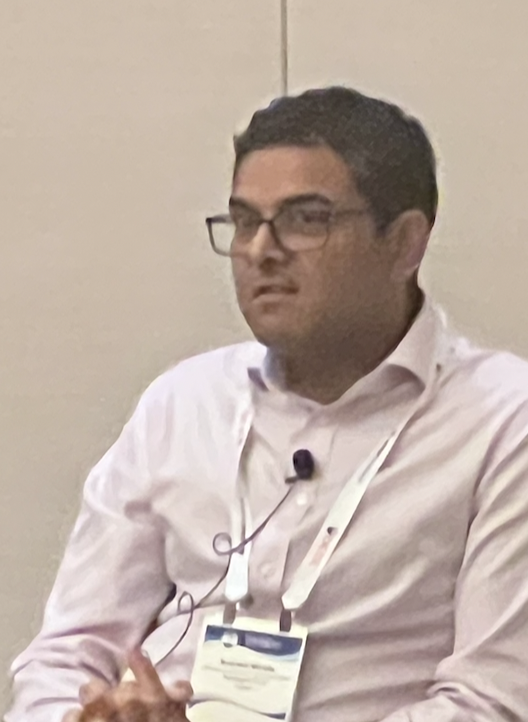
“Capital One spends $6 billion on marketing,” Bhalla said. “You have to spend money on marketing.”
Bhalla outlined four elements of PenFed’s strategy:
- Building a streamlined technology platform.
- Hiring specialists in product development, technology, risk management and operations.
- Owning the direct member relationship and distribution channel.
- Maintaining human interaction where it creates the greatest value.
“The world is headed to digital,” Bhalla said. “But the key for us is to separate the experiences for members and really invest in the human in the loop.”
49% Growth in Auto Lending
He said PenFed has invested nearly a decade in building its digital lending capabilities after beginning the effort in 2017. The approach has helped produce 49% year-to-date growth in auto lending, for example, he said.
Scott said technology should be used to create meaningful conversations rather than replace them.
Two Examples Cited
He cited Community Choice Credit Union in Des Moines, Iowa, which developed technology that identifies members showing signs they may be shopping for loans. If a member repeatedly searches loan rates, staff members proactively reach out to discuss financing needs, resulting in significant loan growth over the past three years.
He also highlighted Municipal Credit Union in New York, which has trained call center employees to recognize when members want more in-depth conversations. The initiative has significantly improved the credit union’s Net Promoter Scores and strengthened member loyalty, he said.
Scott argued that credit unions that control member relationships gain what he called “distribution power,” allowing them to introduce additional products and services through trusted partnerships while remaining the primary financial institution.
The discussion also focused on the growing buy now, pay later (BNPL) market, which Scott described as a modern version of traditional layaway.
Rather than viewing BNPL solely as another lending product, Scott said consumers increasingly use it as a budgeting tool by selecting repayment schedules at the point of sale. He estimated the market at approximately $70 billion and said many credit unions have failed to capitalize on the opportunity.
A Lesson from Pre-FICO Days

Scott suggested traditional credit scoring models may also be limiting credit unions’ competitiveness. While FICO scores have dominated underwriting since the 1980s, many BNPL providers emphasize cash-flow analysis instead.
Companies such as Affirm and Klarna generally evaluate consumers’ ability to repay based on current cash flow rather than relying exclusively on FICO scores, he said. Consumers who fail to repay an initial BNPL loan typically are not approved for another, creating a strong incentive for repayment.
Scott closed the session by comparing the industry’s path forward to classic rock albums, encouraging credit unions to master cash-flow lending, fully commit to rebuilding relationships, own the member relationship and distribution channel, and differentiate themselves instead of simply copying the latest fintech trends. He said lasting success will come from combining technology with trusted human relationships rather than allowing technology to replace them.