

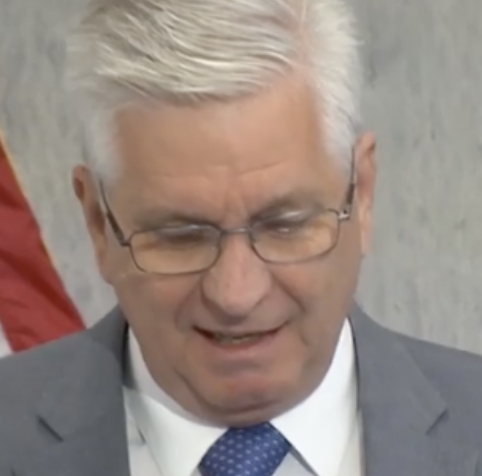
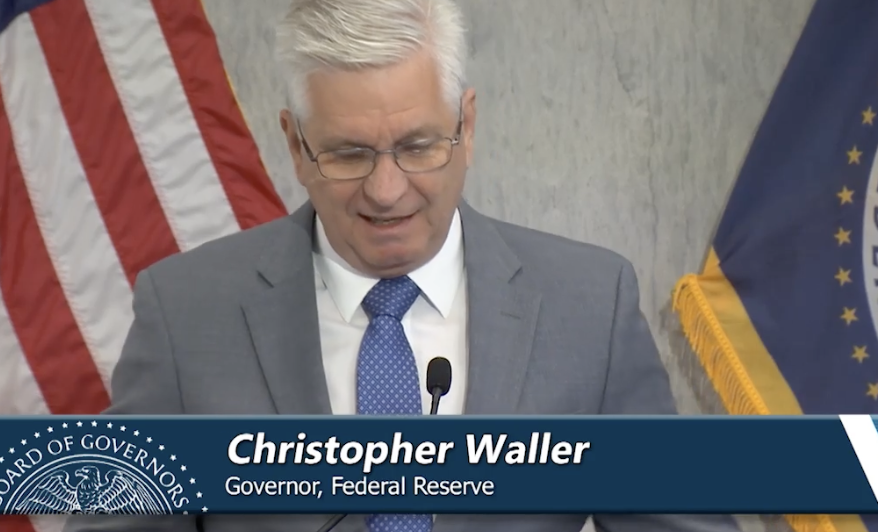
WASHINGTON — Federal Reserve Gov. Christopher Waller said this week that financial innovations, particularly stablecoins and other digital assets, are reshaping how the U.S. dollar is used around the world, even as the currency’s dominant global position remains rooted in the strength of the U.S. economy and financial system.
Speaking at the Federal Reserve’s Fifth Conference on the International Roles of the Dollar, Waller said the gathering was intended to bring together a range of perspectives on the factors influencing the dollar’s role in the global economy.
“This year, we are here to discuss the implications of financial innovations, especially digital assets such as stablecoins, for the international roles of the U.S. dollar,” Waller said.
‘Longstanding Advantages’
Waller said the dollar’s status as the world’s leading reserve and transaction currency continues to rest on longstanding advantages, including the size and strength of the U.S. economy, deep and liquid financial markets, and confidence in U.S. institutions and the rule of law.
However, he noted that technological advances are rapidly changing the financial landscape. Distributed ledger technology and tokenized assets are creating new ways for dollar-denominated assets to move through the global financial system, often operating alongside traditional banking and payment networks.
“As a result, the dollar’s international role is also evolving,” Waller said. “The private sector is moving rapidly to expand access to dollar-denominated assets, innovate in new financial services, and explore potential business opportunities that perhaps did not make sense with legacy technologies.”
‘Growing Debate’
According to analysts, Waller’s remarks highlighted a growing debate among policymakers and industry participants over whether innovations such as stablecoins could strengthen the dollar’s international reach by making dollar-denominated assets more accessible worldwide, even as they transform the mechanisms through which dollars are transferred and held.
The comments come as federal regulators and lawmakers continue to evaluate the opportunities and risks posed by emerging financial technologies.
Earlier this month, Federal Reserve Vice Chair for Supervision Michelle Bowman told lawmakers that the financial system is continuing to adapt to technological advances, including the rapid development of artificial intelligence.
“The financial system continues to adapt to technological advances, including the rapid evolution of artificial intelligence capabilities and the risks and benefits of its use,” Bowman said.



