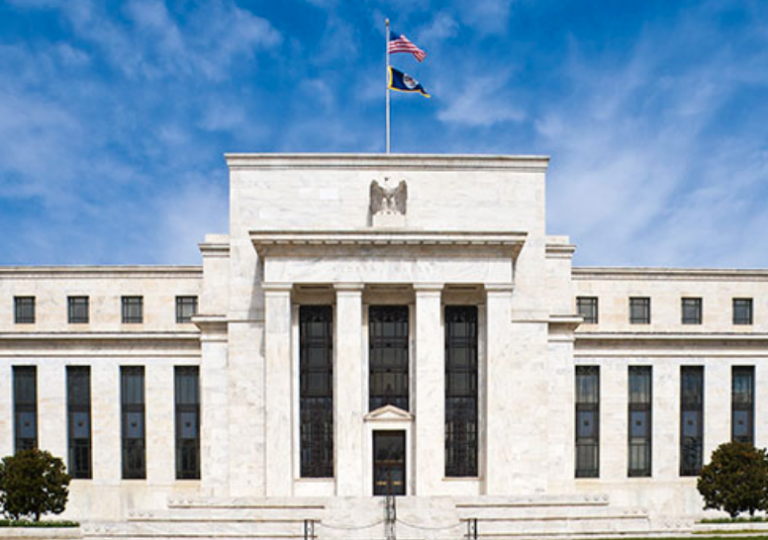
WASHINGTON — The Federal Reserve raised interest rates by a quarter percentage point Wednesday, its first increase in more than three years, as Chair Kevin Warsh said persistent inflation and relatively easy financial conditions justified removing some monetary policy support.
The Federal Open Market Committee voted 12-0 to raise its target range for the federal funds rate to 3.75% to 4%, from 3.5% to 3.75%. The Fed said economic activity continues to expand at a solid pace, domestic spending has remained resilient, productivity growth is strong and capital investment remains robust.
“Inflation remains elevated,” the FOMC said. “Today’s policy action will support a timelier return to the Committee’s 2 percent goal.”
The central bank added: “The Committee will deliver price stability.”
The rate increase marks a reversal from the cuts the Fed made last year and is the first change in monetary policy since Warsh became chair in May.
America’s Credit Unions Responds
“The FOMC raised rates for the first time in over three years and signaled that more hikes are in store. Sixteen of the 18 committee projections anticipated at least one additional increase to the fed funds rate by December as the Federal Reserve attempts to rein in inflation,” said America’s Credit Unions’ Chief Economist Curt Long. “While the committee’s statement pointed to ‘geopolitical developments’ as a partial cause, inflation has remained above the Fed’s inflation target for over five years. Rising interest rates will further dent affordability in the near term, but credit unions remain committed to offering the lowest rates in the marketplace. A typical subprime consumer stands to save $6,500 over the life of a car loan by borrowing from a credit union.”
Warsh: Financial Conditions Not Restrictive
Warsh said at his post-meeting news conference that inflation remains too high and that financial conditions do not appear tight enough to warrant keeping rates unchanged.
“I would be hard pressed to describe broad financial conditions as restrictive,” Warsh said. “This view was widely shared by the committee, so we removed a dose of accommodation.”
Warsh said the unanimous vote demonstrated policymakers’ determination to restore price stability while the economy remains near full employment.
The 12-0 vote “shows our resolve to achieve price stability on a timelier basis,” Warsh said.
The Fed said job gains have kept pace with growth in the workforce and the unemployment rate has changed little. Policymakers also acknowledged that uncertainty remains elevated, in part because of geopolitical developments.
Projections Point to Another Hike
The Fed’s updated economic projections suggest Wednesday’s increase may not be the last of 2026.
Sixteen of the 18 policymakers submitting projections expect at least one additional quarter-point increase before year-end, according to Reuters. Only two projected rates remaining at their new level for the rest of the year.
The median projection puts the federal funds rate at about 4.1% at the end of 2026, corresponding to a target range of 4% to 4.25%.
That is significantly higher than policymakers projected in June, when the median year-end federal funds rate projection was 3.8%.
The median projection also puts the federal funds rate at about 4.1% at the end of 2027, followed by 3.9% in 2028 and 3.6% in 2029.
The projections are not commitments, and individual policymakers can change their outlook as economic conditions evolve.
Inflation Forecast Raised
Fed policymakers also raised their inflation forecast while improving their outlook for economic growth and unemployment.
- The Fed now projects inflation, as measured by the personal consumption expenditures price index, will end 2026 at 3.7%, compared with the 3.6% projection issued in June.
- Core PCE inflation, which excludes volatile food and energy prices, is projected at 3.4% this year, up from the Fed’s June forecast of 3.3%.
- Headline inflation is projected to decline to 2.3% in 2027 and 2.1% in 2028 before reaching the Fed’s 2% objective in 2029. The June projections had inflation reaching 2% in 2028.
- Officials slightly raised their forecast for economic growth, projecting gross domestic product will expand 2.3% this year, compared with the 2.2% forecast in June.
- The unemployment rate is projected to end the year at 4.1%, down from the 4.3% forecast in June.
Markets Had Expected Increase
Financial markets had largely anticipated Wednesday’s rate increase, limiting the immediate reaction.
The dollar strengthened against the euro after the announcement, while Treasury yields were little changed. The benchmark 10-year Treasury yield was about 4.96% following the decision after topping 5% earlier in the week.
Stocks were modestly higher, with the S&P 500 up about 0.3% and the Nasdaq Composite up about 0.7% following the announcement, Reuters reported.
Investors also increased their expectations for another increase at the Fed’s next meeting. Futures markets put the probability of an October rate increase at about 56.5% following Wednesday’s announcement, compared with 54% beforehand, according to CME Group data cited by Reuters.
Rate Paid on Reserve Balances is Increased
The central bank also raised the rate paid on reserve balances to 3.90%, effective Thursday, and increased its primary credit rate — commonly known as the discount rate — by a quarter percentage point to 4%.
Warsh emphasized that the Fed’s focus remains bringing inflation back to its target.
With employment conditions remaining relatively strong, he said, policymakers have greater latitude to concentrate on price stability — and Wednesday’s unanimous decision signaled that the Fed is prepared to tighten policy further if inflation fails to improve.
TransUnion Responds
“The Federal Reserve’s decision today to raise interest rates by a quarter percentage point reflects its continued focus on addressing persistent inflation. While inflation has moderated from peak levels, it has remained elevated enough to prompt additional action from the Federal Open Market Committee.” Michele Raneri, vice president and head of U.S. research and consulting at TransUnion, said in a statement. “At the same time, labor market conditions have remained relatively resilient with unemployment rates holding steady in recent months, providing the Fed the confidence to raise rates at this time.
“For credit card consumers, the rate increase is expected to result in minimally higher borrowing costs as lenders adjust variable-rate products to reflect the higher interest rate environment. For instance, a consumer carrying the average Q2 2026 credit card balance of $6,610 at a 22% APR could see an increase of $1.38 minimum monthly payments as those higher rates are passed on. While the near-term impact on minimum monthly credit card payments may be relatively small, higher borrowing costs can add up over time, particularly for consumers carrying larger balances or making only minimum payments. As a result, reducing revolving debt remains one of the most effective ways to limit the impact of rising rates.
“The implications for mortgage borrowers may be less immediate, as mortgage rates are influenced not only by Federal Reserve policy but also by movements in the bond market. Given that bond yields continue to face many of the same pressures that drove this latest rate increase, we will be closely monitoring how that market responds in the coming weeks and whether mortgage rates see an uptick as well,” Raneri continued. “For perspective, a borrower financing the average new mortgage amount of $389,367 at an average APR of 6.78% could see monthly payments increase by approximately $65 if mortgage rates were to move one quarter point higher.”
Raneri added, “Consumers should focus on paying their credit card balances in full each month when possible, or on keeping credit card balances as low as possible. Even modest rate increases can become significantly more costly when applied to larger balances or compounded by future hikes. Maintaining on-time payments and protecting a strong credit score remain critical steps for securing the best available borrowing terms. These habits can also help preserve opportunities to refinance existing debt into lower-cost products should interest rates moderate in the future.”