

By Frank J. Diekmann

Louis Hernandez, Jr. is a smart man with a long track record of successful business launches under his belt, many of which are familiar to credit unions. But he admits he has more than a few questions that baffle him, such as why credit unions invest in fintech with no expectation of any return, why CU execs tolerate such” punitive” contracts from vendors, and why leaders don’t see the bigger picture beyond technology?
And yet despite that, he is quite optimistic about the value credit unions represent, a value he calls “trusted intimacy” that he believes is being enhanced by an increasingly digitized and AI-driven world and putting CUs in a better place and not at a competitive disadvantage.
Hernandez is founder, managing partner, CEO, and major investor of Black Dragon Capital, a venture capital firm founded in 2013 that more recently created a fourth fund for credit unions to invest in fintech. Many in credit unions know him for founding Open Solutions and Paveris and for other ventures.
I spoke with Hernandez while he was in Palm Desert, Calif. for the company’s annual Investor Forum, which was being held in conjunction with Origence’s Lending Tech LIVE Conference.
It would turn out to be a far-ranging discussion, with Hernandez challenging CU leaders and the status quo.
Black Dragon’s all-day event reviews the company’s strategy, its portfolio, and how it’s driving value, and hears presentations on what’s occurring in other industries and countries to offer broader viewpoints to attendees. This year’s meeting, for example, included remarks from Black Dragon’s media group,
Avoiding the Echo Chamber
“We’ll be talking about what’s happening in micropayments in India, for instance, or microlending in Brazil,” Hernandez said. “We’re talking about global issues, because I feel that when you go to a lot of these events, you hear a lot of the same echo chamber. We’re trying to provide a different perspective to help people think about their businesses.
“Then we talk about how those developments help us think more sharply about what to do for credit unions in the United States. We have ‘mission moments’ and talk about our foundation, and then we close it up.”
One Unique Investor
Black Dragon is a global company with an international portfolio and employees in about 40 countries. It is now investing through a fourth fund, a dedicated fintech CUSO for credit unions. Black Dragon’s other funds include investors, “a couple of billionaires,” some family offices (private wealth management firms or dedicated corporate structures established by an ultra-high-net-worth families) and one other unique investor: Hernandez himself.
“One thing that’s unique is that I currently represent about 40% of all committed capital. Most funds might have a (general partner) contributing 1%. I’m a substantial portion of all my funds,” he said. “My philosophy is that if it’s good enough for my friends, it’s good enough for me. I’m right there with them.”
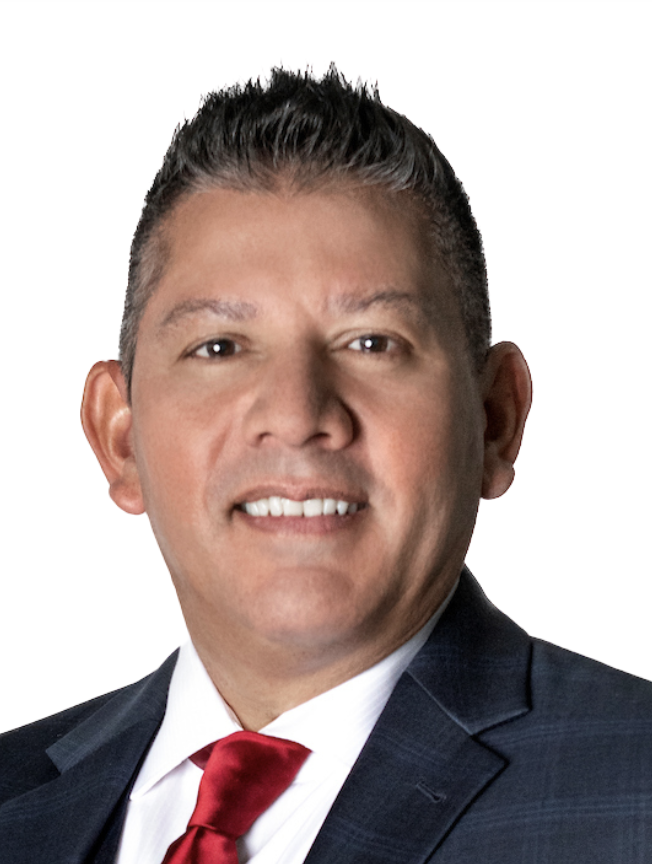
Hernandez said Black Dragon’s assets have “grown considerably” due to something unique to its operation.
“The big thing about Black Dragon is that we’re all operators, like myself,” he said, meaning everyone has boots-on-the-ground experience. “The difference is that our value really shows when things don’t go as expected, which they never do. Since we run companies ourselves and have created multiple billion-dollar companies, we can help.. That’s when we really drive value.”
A ‘Most Interesting Issue’
But when it comes to credit unions themselves, do they also invest seeking a return, or is it about resolving a problem?
“That’s been the most interesting issue with us. People want to debate that as though you have to do one or the other,” Hernandez said. “In our other funds, the way it normally works is that investors are primarily investing behind an investment manager to drive returns. They don’t necessarily know what the end-market wants. They invest because we’re going to do early-stage investments and we want certain return thresholds relative to risk. Those decisions have nothing to do with the end-markets.
“In this case, the virtuous circle is that the credit unions are also potential customers. They can tell us the issues they face, and they can weigh in on whether the companies we’re looking at can solve those issues,” Hernandez continued. “Our role is that we know how to grow companies, make them sustainable for the long term and drive value. The interesting thing when we came here was that…people said, ‘We don’t really care about the returns. We just want to serve and collaborate.’ I said, ‘Well, we’re not going to knowingly lose money. I don’t know what you’re asking of me. I think you can do both.”
Hernandez pointed to one company on his resume as an example.
“I created Open Solutions to serve a community problem and provide returns. You don’t have to choose one or the other,” he stressed again. “You shouldn’t be putting your money into a professional investment manager unless they’re providing returns. That’s what they’re supposed to do.
A Landscape Flush With Money
Black Dragon is hardly alone in the credit union space in acting as a venture capital fund. There are hundreds and hundreds of millions of dollars that have been pooled by credit unions and invested through other funds, such as those managed by Curql and TruStage Ventures, and then there are individual credit unions investing on their own.
So, is there more capital than opportunity actual opportunity for investment? Hernandez said it’s just the opposite.
“Fintech is the largest single investment category. It always has been. From IBM and Motorola, where my dad worked, to today, it’s still the biggest consumer of technology,” Hernandez explained. “We need another event just to look at more companies. That’s actually part of the problem…There are a million ideas every day.
“Part of the challenge is that there is so much deal-flow. Someone who isn’t trained to evaluate it can easily be overwhelmed. This is why, as bright and effective as credit unions are, and despite some exceptional successes like what Velera has done, there have also been a lot of losses. Some funds eventually started saying, ‘Well, we collaborated and exposed you to new ideas, and that’s good enough’.’’
‘Almost Too Many Ideas’
Hernandez stressed that why’s credit unions need investment managers to filter through all the ideas to identify those that are “economically sustainable, what will work, and where the technology can solve the problem.
“The market is there. In fact, it’s so large that there are almost too many ideas. You can fall in love with all of them,” he told me. “It takes discipline, and it takes operational knowledge to determine which ideas are actually feasible. Everybody has a great idea and can tell a great story. It’s only when you’ve gone through as many mistakes as our CEOs have gone through that you develop judgment. You can’t teach judgment. Judgment comes from experience. If you look at our executives, you’ll notice there aren’t a lot of kids here. These are seasoned executives who have built businesses before.
“When we make investments, I want to know these people have already been through the battle. They don’t panic when things don’t go as planned. Good people find a way to win. That’s why we value the operational aspect. When we look at deals, we look for companies where operational excellence can make a difference and where we can contribute.”
‘I Expect it to Work’
Hernandez said he doesn’t view investing as simply being about placing bets across a platform and hoping some of them work out.
“We don’t do it that way. We don’t plan on 80% of our investments failing and 20% succeeding,” he said. “Every time I put money into something, I expect that company to work out…We build strategies for a long-term investment horizon. We’re not short-term flippers. We’re not passive investors. We get involved.
‘I couldn’t imagine having the attitude that we just want to solve the problem and collaborate, and it’s OK if we never make money. Then why do you have me?’
Hernandez said he is accustomed to being held accountable for delivering results to clients. “I want to be held accountable. Otherwise, what’s my role?
An ‘Interesting Question’
Asked whether Black Dragon prefers to invest at the start-up stage or when companies have circled the track a few times, he said it’s an “interesting question,” as Black Dragon is a “multi-phase fund.”
“The truth is that I look at each opportunity differently,” he said. “We could have invested in Mambu or Nymbus, but their valuations were expensive. In my view, there was enough experience in the sector that we could have pursued other options…That flexibility allows me to enter a sector in the most economically feasible way while weighing all the risks. That’s what I like about our model.”
Hernandez said he believes it’s better to buy an existing company that’s struggling but has good technology at a lower price, and then to transform that company.
“If it’s an early-stage company that has stumbled and our entry point makes sense and we believe we can help fix it, I’d rather do that,” he explained. “And if none of those opportunities exist, as was the case (with some companies) because valuations were so high, then let’s do our own thing. Now, that’s risky. But relative to the premium we would have paid, it’s actually lower risk because we know how to execute.”
Back to School
Hernandez reminded that as many start-ups, entrepreneurs and investors have painfully learned after enrolling in the School of Hard Knocks, “The challenge is that it’s very expensive to be too early. A lot of organizations moved too early and spent enormous amounts of money…At the same time, you can’t be too late, although it’s better to be too late than too early. That’s our challenge. How do we balance short-term performance with long-term disruption? One answer is trust. Another is collaboration. Those building blocks will allow us to move faster.”
Where Credit Unions are Being ‘Punished’
As competitive as is the fintech marketplace, Hernandez makes clear he’s a big fan of the collaborative nature of credit unions, something he believes “the industry really deserves to be rewarded for.”
And yet the reality is 180 degrees away, he suggested, saying credit unions are often punished, he added.
“I don’t know of a more collaborative industry. Remember, I’ve worked in several industries all over the world, and yet we have one of the most punitive vendor communities I’ve seen anywhere,” Hernandez observed. “I didn’t realize that until I worked in other industries. As you get older, you reflect and ask yourself why this niche group, which collaborates more than anybody I’ve ever seen, isn’t rewarded for that collaboration. This group should be the beacon for the most strategic, collaborative and commercially friendly vendors in the world. Yet we have the opposite. Why is this group being exploited for its strength instead of rewarded for it?”
Looking to Change the Terms
For that reason, he said one of the things Black Dragon is seeking to achieve beyond creating great companies and returns is to change the way business is done between CUs and vendors.
“Our companies have to operate under commercially friendly terms. We call it ‘We Are for Credit Unions’,” Hernandez said. “They have to sign on to pricing principles that include no termination fees, no combative contract language and the ability to leave whenever you want without penalties. Other industries demand these kinds of standards. We need the flexibility to adopt whatever technology will make us successful. We can’t be held back by punitive agreements. That’s another thing I’m trying to do.
“I’ll tell you one thing: If I can accomplish just that, I know we’ll make money, I know we’ll perform well,” Hernandez added. “…That alone would make this fund worthwhile.”
Getting Ripped Off ‘A Little Bit’
The punitive language buried in many vendors’ contracts is no secret, Hernandez observed, pointing to the cottage industry of vendors and consultants that has emerged to help CU execs to negotiate their deals. “It’s almost become an industry designed to make sure credit unions only get ripped off a little bit,” he said. “There’s no reason we shouldn’t have a powerful, collaborative vendor community fighting for credit unions every day and being rewarded for it. Credit unions do their part. They spend money. They invest. They support these companies…I don’t understand why we’re always willing to be second-class citizens.”

That Other Topic That Can’t be Avoided
You don’t need Claude or ChatGPT today to tell you that any conversation about what’s taking place in credit unions is required to address artificial intelligence (AI), and my conversation with Louis Hernandez, Jr. checked this compliance box.
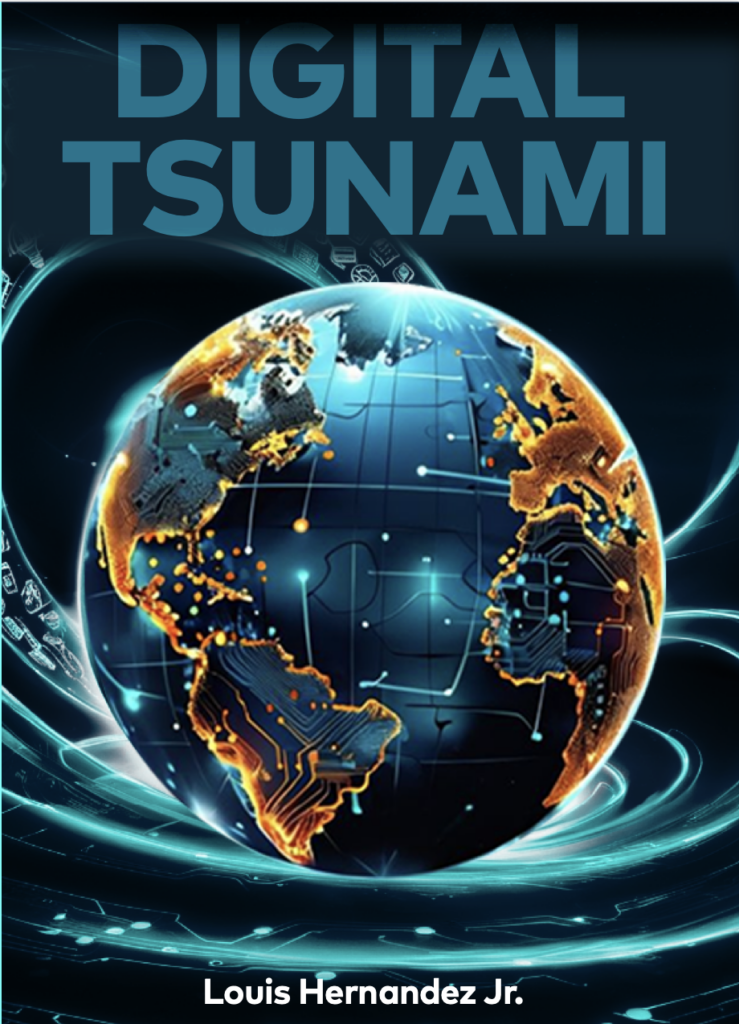
Hernandez, who has written a number of books, including “Digital Tsunami” about the acceleration of digitization, said he and Black Dragon staff often discuss how fintech, e-commerce and media technology are all digitizing and converging into a single digital ecosystem.
Yet as new and omnipresent as AI has become, Hernandez believes it has actually strengthened some old-fashioned values around credit unions.
“Long term, brands are going to compete for your lifetime value,” he said. “The key to competing for lifetime value is what I call trusted intimacy. That’s what credit unions should be all about. I tell them this is actually playing to their strengths. They may not see it that way because the definition of service is changing as it’s moving away from branches and call centers. But long term, trusted intimacy is how you gain lifetime value.
“The second issue is trust,” he continued. “Trust is under pressure. In our AI presentations, one of the things I discuss is that what we’ve lost in this age of digitization, data and algorithms, is trust. We don’t know whether to trust a news story, an image or even basic information.”
‘Think About What That Means’
Hernandez, who has investments in other media properties such as Grass Valley, which provides technology to the live media, sports production and entertainment industries, noted an emerging line of business is the use of AI to rate the accuracy of information—that is often created by AI itself.
“What’s fascinating is how central trust becomes,” he said. “The broader issue is that many traditional institutions of trust are being challenged…Today, we don’t rely on trusted gatekeepers as much as we rely on crowdsourcing. That’s how we increasingly validate information. We no longer value things primarily through trusted sources. We value them through collective opinion.
“Think about what that means for financial services,” he continued. “The reason I bring this up to credit unions is that I believe trust and intimacy are the primary ways to overcome this dilemma. Credit unions never abandoned those values. They never abandoned what worked. They risked being seen as outdated or replaceable, but they stayed true to their model. I think that in a world where trust is increasingly under attack, this may become one of credit unions’ greatest strengths. Not more branches. Not bigger call centers. Trust and intimacy.
“As products become increasingly digitized and workflows become more automated, people will increasingly ask which source they trust. And I believe credit unions may emerge, perhaps unintentionally, as some of the strongest advocates for trust and intimacy in the marketplace.”
When it comes to AI, Hernandez said the first thing he attempts to do is “show people that AI isn’t some mysterious or frightening concept. Then we talk about what it means for their business. That’s where the disruption becomes real. The challenge of balancing near-term issues with long-term disruption is what will test leaders and where we need to remain focused.”
After discussing the history of computing and AI in greater detail, Hernandez said that “at the end of the day, all of this is simply the next step in technology. The real question is whether it allows you to serve your community better and more sustainably. I don’t even like to use the word profit. I prefer sustainability. If you can’t sustain your business, you’ll eventually be out of business. That’s the real question. The simplest approach is to first understand the issues and needs. Forget the technology for a moment.”
What’s a CU Leader to Do
At that point, what a credit union leader needs to do, according to Hernandez, is:
- Understand the problem first.
- Determine which technology—whether AI or something else—is appropriate.
- Establish governance.
- Maintain oversight over how it’s deployed.
- Use it to create value for your communities and, in our case, generate returns.
“I believe we’re standing on the doorstep of the complete digitization of our lives,” Hernandez said.
The CU Perception Paradox
Much of what Hernandez had to say about credit unions’ Old School strengths in a New School landscape sound encouraging, I told him, before pointing out that credit unions’ perception of themselves is almost the opposite. They feel they aren’t relevant, they aren’t positioned for the future, and they’re worried about it.
“It is a legitimate concern,” he responded. “That’s why you have to be involved in these conversations. The reason is that every part of our business is being challenged. The question is whether we’re equipped to fight back.
“That’s why I bring up vendors. That’s why I talk about the changing definition of service,” he continued. “Big banks are being rated higher now because the definition of service is changing. It’s no longer a seven-step process through a call center with customer service representatives. It’s an app that already understands your problem and is supposed to solve it immediately. At the same time, competitors are peeling off the most valuable parts of our business and relegating us to little more than share draft accounts, and we’re somehow supposed to be happy with that.
“We have a vendor community that often prevents us from working together and advocating for ourselves. We face intensifying regulatory scrutiny. We face cyber risks and the costs associated with them, which are rising faster than our ability to fund them. This industry was established to serve the underserved and to facilitate commerce in a safe and sound manner.
“What I advocate is that these pressures require a greater level of intimacy in our relationships. In many ways, we’re moving back toward our strengths, perhaps without even realizing it. This is one of the messages I share with credit unions.”
Frank J. Diekmann is Cooperator in Chief at the CU Daily and can be reached at [email protected].



