


CHICAGO – Consumer credit remained widely available during the second quarter of 2026 despite ongoing economic uncertainty, while borrowing continued to grow at a pace largely in line with inflation, according to TransUnion’s Q2 2026 Credit Industry Insights Report (CIIR).
According to TransUnion, nearly 262 million consumers carried at least one credit balance during the quarter, while total outstanding balances continued to increase, reflecting steady borrowing patterns rather than a sharp rise in consumer debt.
The credit reporting company said lenders continued expanding access to credit while using more conservative lending strategies, such as offering smaller credit lines, to manage risk.
“While affordability pressures continue to weigh on many households, consumers appear to be managing credit obligations with relative discipline,” Michele Raneri, vice president and head of U.S. research and consulting at TransUnion, said in a statement attributed by the company.
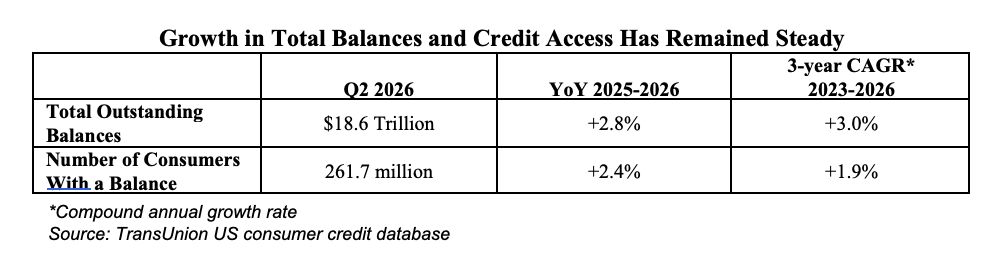
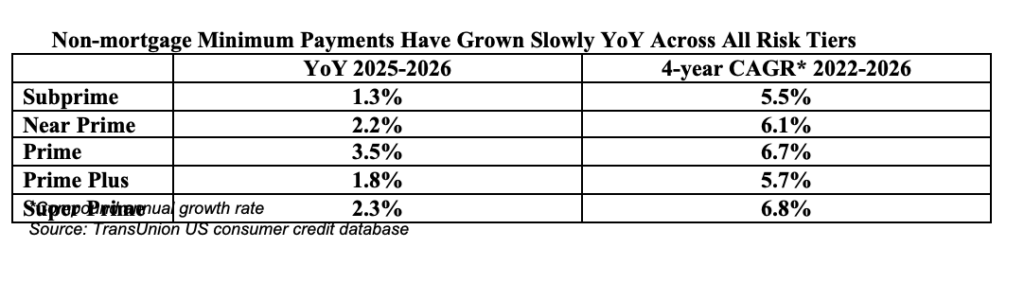
Despite an increase in borrower-level credit card delinquencies, TransUnion said balance-level delinquency rates remained essentially unchanged at 1.98%, down two basis points from a year earlier. The company also reported that average monthly non-mortgage minimum payments increased between 1% and 3% across most credit risk tiers, below the recent rate of inflation.
Jason Laky, executive vice president and head of financial services at TransUnion, said lenders are continuing to broaden access to credit while carefully managing portfolio risk.
Credit Card Lending Continues to Expand
TransUnion reported that credit card lending remained one of the strongest areas of growth.
Highlights included:
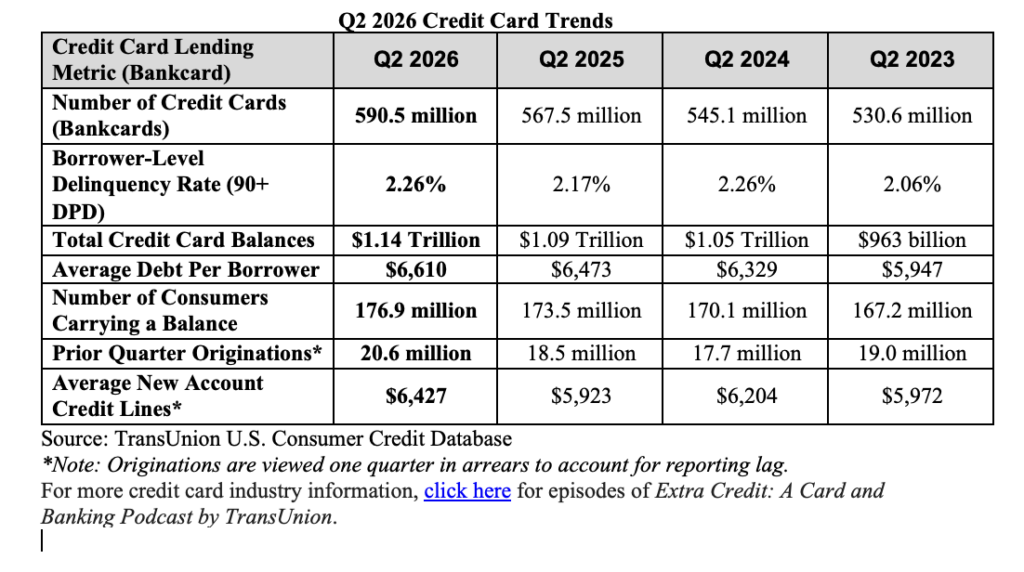
- Bankcard originations increased 11.8% year over year to 20.6 million, marking the sixth consecutive quarter of growth.
- Total credit card balances climbed 4.4% to $1.14 trillion.
- Credit lines on newly opened accounts increased 20.9% as lenders expanded both new account openings and available credit across all risk categories.
- The percentage of consumers at least 90 days past due increased to 2.26%, driven primarily by growth in the subprime borrower population.
Paul Siegfried, TransUnion’s senior vice president and credit card business leader, said card issuers have shifted from tightening credit standards to pursuing measured growth while maintaining disciplined risk management.
Personal Loan Balances Reach Record Levels
Outstanding unsecured personal loan balances reached an all-time high of $281 billion, up 9.6% from a year earlier, according to TransUnion.
The report found:
- Borrowers increased 8.3%, while the number of personal loan accounts rose 10.7%.
- Originations climbed 19.5%, led by 29% growth among subprime borrowers and 9% growth among super-prime consumers.
- Subprime lending expanded, although average new loan amounts to those borrowers declined 6.8%, reflecting tighter underwriting standards.
Josh Turnbull, TransUnion’s senior vice president of consumer lending, said lenders are reaching more borrowers while limiting risk through smaller loan sizes and disciplined underwriting.
Mortgage Activity Rebounds on Refinancing
Mortgage originations rose sharply as lower interest rates encouraged refinancing activity.
According to TransUnion:
- Mortgage originations increased 26% year over year to 1.24 million during the first quarter of 2026.
- Purchase mortgage originations rose 5.8%, supported by increased participation from Gen Z and Millennial homebuyers.
- Home equity originations increased 5.8%, driven by a 16.8% increase in home equity lines of credit (HELOCs).
- Mortgage delinquencies of 60 days or more increased to 1.56%, with Federal Housing Administration loans accounting for nearly half of seriously delinquent accounts.
Satyan Merchant, senior vice president of automotive and mortgage business at TransUnion, said the mortgage market continues to show resilience, although affordability pressures remain significant for financially vulnerable borrowers.
Auto affordability Remains a Challenge
Auto lending showed only modest growth as consumers continued shifting toward used vehicles.
TransUnion reported:
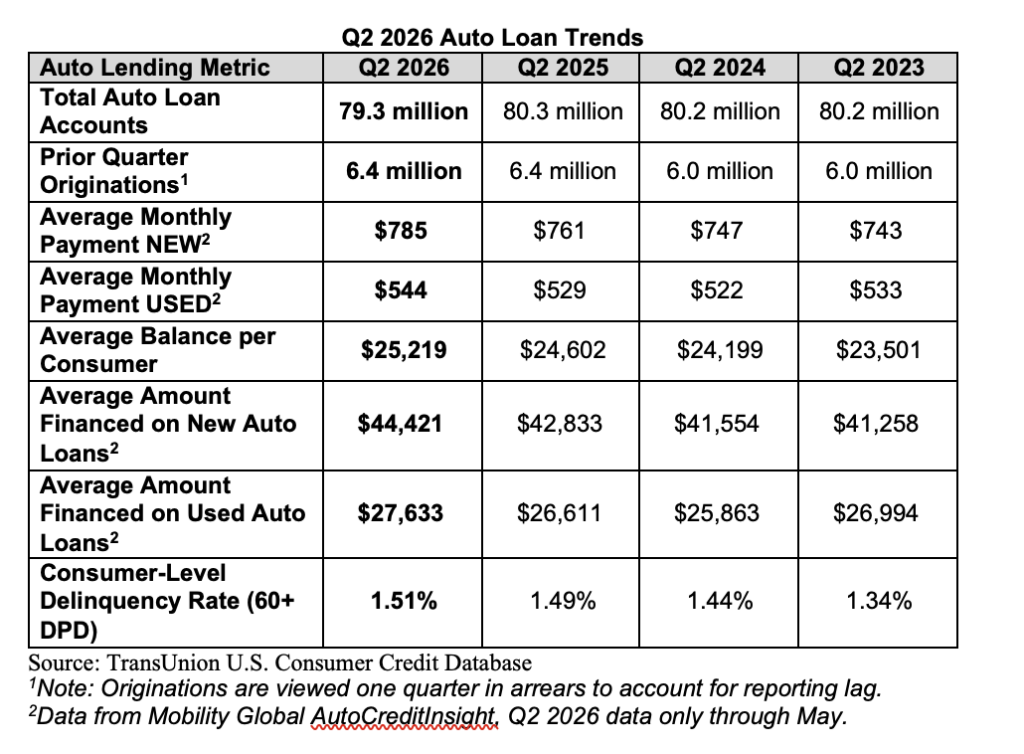
- Auto loan originations increased 1.3% to 6.4 million.
- Monthly vehicle payments have increased 38.7% for new vehicles and 39.6% for used vehicles since 2019.
- Serious auto loan delinquency edged up to 1.33%, although the pace of deterioration slowed compared with recent quarters.
Merchant said consumers remain focused on affordability as vehicle ownership costs continue to rise. He added that higher fuel prices and improving affordability continue to support demand for electric vehicles despite the expiration of federal EV tax credits.
Overall Outlook
TransUnion said the overall credit market remains stable despite persistent affordability challenges. While more consumers are using credit products and some borrower-level delinquency rates have increased, the company said balance-level performance indicates lenders have generally succeeded in expanding credit access without materially increasing portfolio risk.



