WEST DES MOINES, Iowa — The Iowa Credit Union Foundation has partnered with United Ways of Iowa and United Way of Central Iowa to support publication of the 2026 Iowa ALICE Report, which found that more than one-third of Iowa households struggled to afford basic living expenses in 2024 despite many adults being employed.
According to the Iowa Credit Union Foundation, the report focuses on ALICE — Asset Limited, Income Constrained, Employed — a term used to describe individuals and families who earn more than the federal poverty level but still cannot consistently afford necessities.
The Findings
The report found:
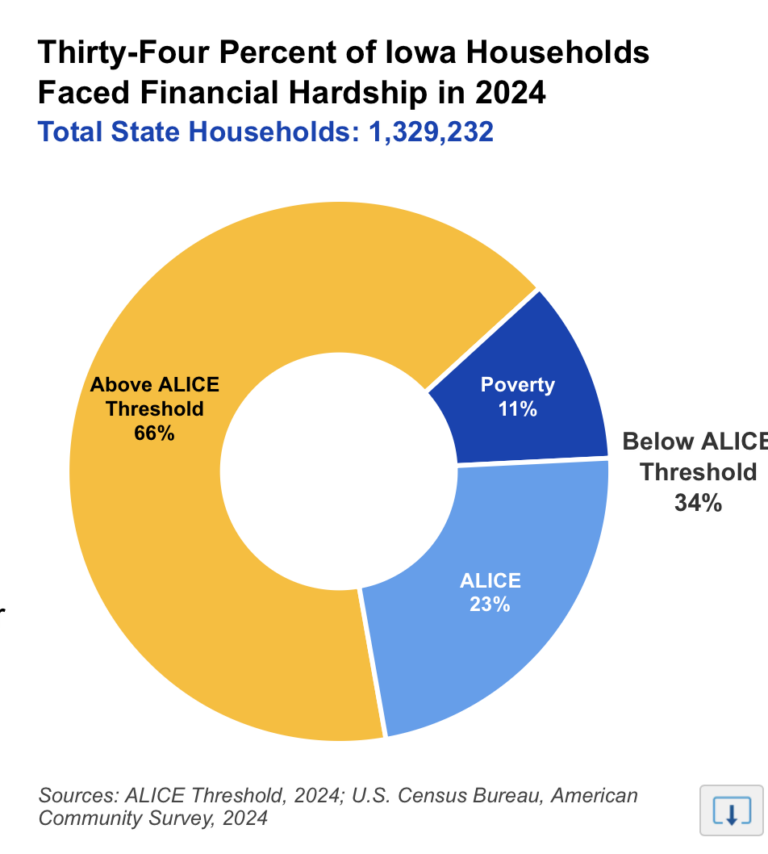
- 34% of Iowa households fell below the ALICE threshold in 2024.
- 11% of Iowa households lived in poverty.
- A family of four needed nearly $75,000 in annual income in 2024 to meet basic household expenses.
The report said many households earning above the federal poverty level continue to struggle with the costs of housing, child care, food, transportation and health care.
Shining a Light
“The ALICE Report shines a light on the reality many Iowa families face every day, and what credit unions are already seeing in their communities,” Ena Babic Barnes, executive director of the Iowa Credit Union Foundation, said in a statement. “Even with steady employment, many households are finding it increasingly difficult to cover essential expenses under persistent financial pressures. These findings can help drive important, solution-oriented conversations about strengthening financial well-being and expanding opportunities for working families.”
According to the Iowa Credit Union Foundation, the report highlights the widening gap between traditional federal poverty measures and the actual cost of living.
Reason for Support
The foundation said its support of the report is intended to provide data that can help inform community discussions, local decision-making and future efforts to improve financial well-being for working families. It also said it hopes the research will give credit unions and community organizations a better understanding of the economic pressures facing Iowa households.
For info, go here.