TROY, Mich. — Large national banks regained momentum in attracting new customers during the second quarter of 2026, reversing recent gains by fintech challengers and reclaiming the top positions across several major financial products, according to new research from J.D. Power.
The firm’s latest Signals Intelligence for Financial Services report, formerly known as the Financial Services Churn Data and Analytics Report, found that established banking brands led new account openings for checking, savings, investments, retirement accounts, credit cards and personal loans during the April-through-June period.
The report is based on more than 200,000 consumer responses collected during the second quarter of 2026.
“The advantage in new customer acquisition has shifted to the big bank brands following two consecutive quarters in which FinTechs were building serious momentum,” J.D. Power said. “The sudden swing back to the big banks suggests these legacy brands still have a great deal of strength, particularly in areas like reputation, convenience and word-of-mouth advocacy.”
Checking and Savings Accounts
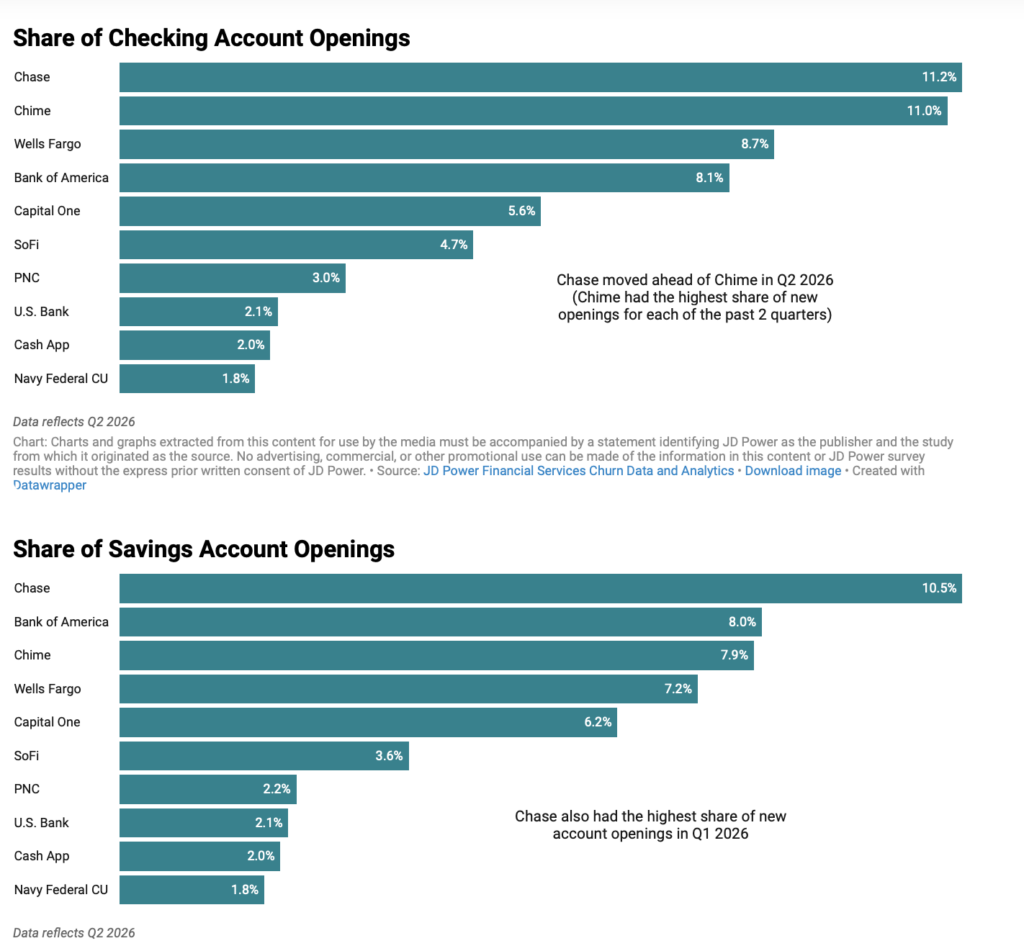
According to J.D. Power, JPMorgan Chase led all financial institutions in new deposit account openings during the quarter, capturing:
- 11.2% of all new checking accounts.
- 10.5% of all new savings accounts.
The study found the leading factors influencing consumers when selecting a checking or savings account provider were:
- Reputation.
- Promotional offers.
- Recommendations from friends and family.
J.D. Power said reputation became an even more important factor during the quarter, increasing by four percentage points compared with the first quarter.
Fintechs Post Gains
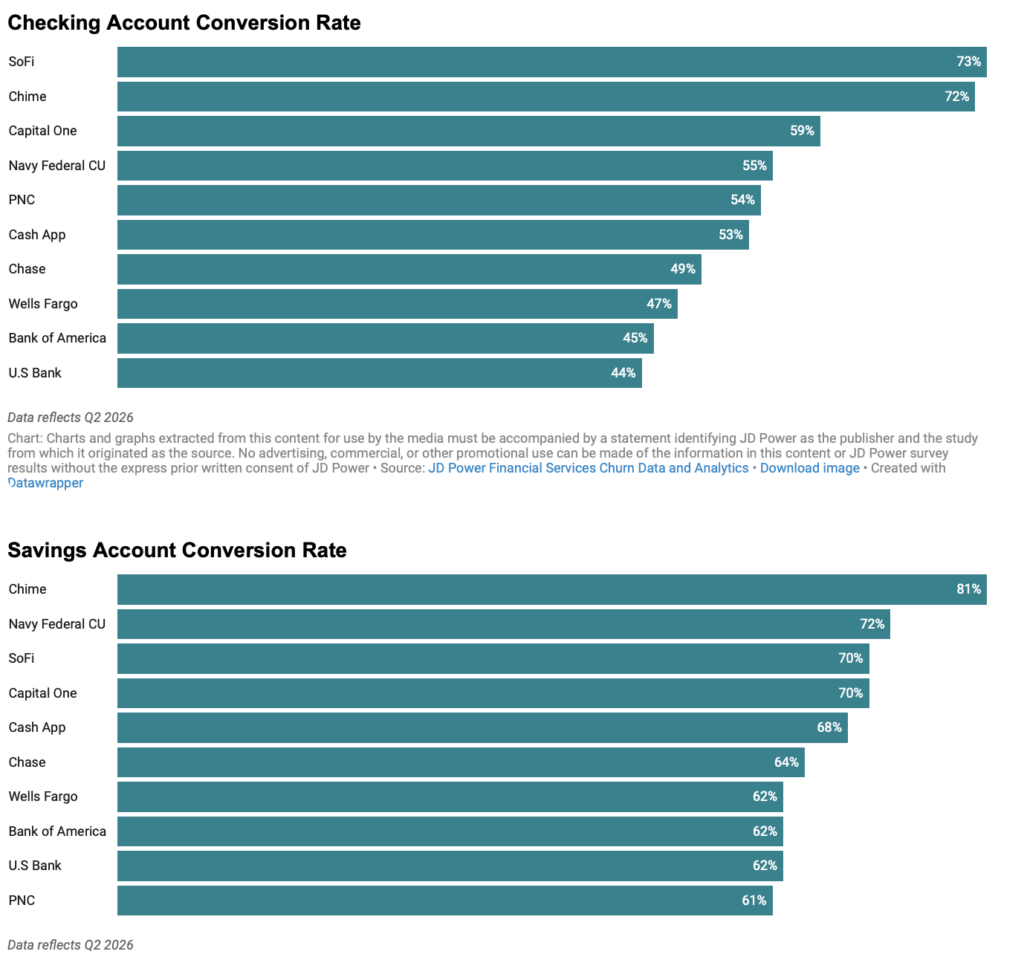
Although traditional banks led overall market share, fintech firms continued to post the highest conversion rates from customer inquiries to new accounts.
Among fintech providers:
- SoFi converted 73% of checking account inquiries into new accounts.
- Chime converted 72% of checking inquiries.
- Chime converted 81% of savings account inquiries.
Consumer preferences also varied by wealth segment.
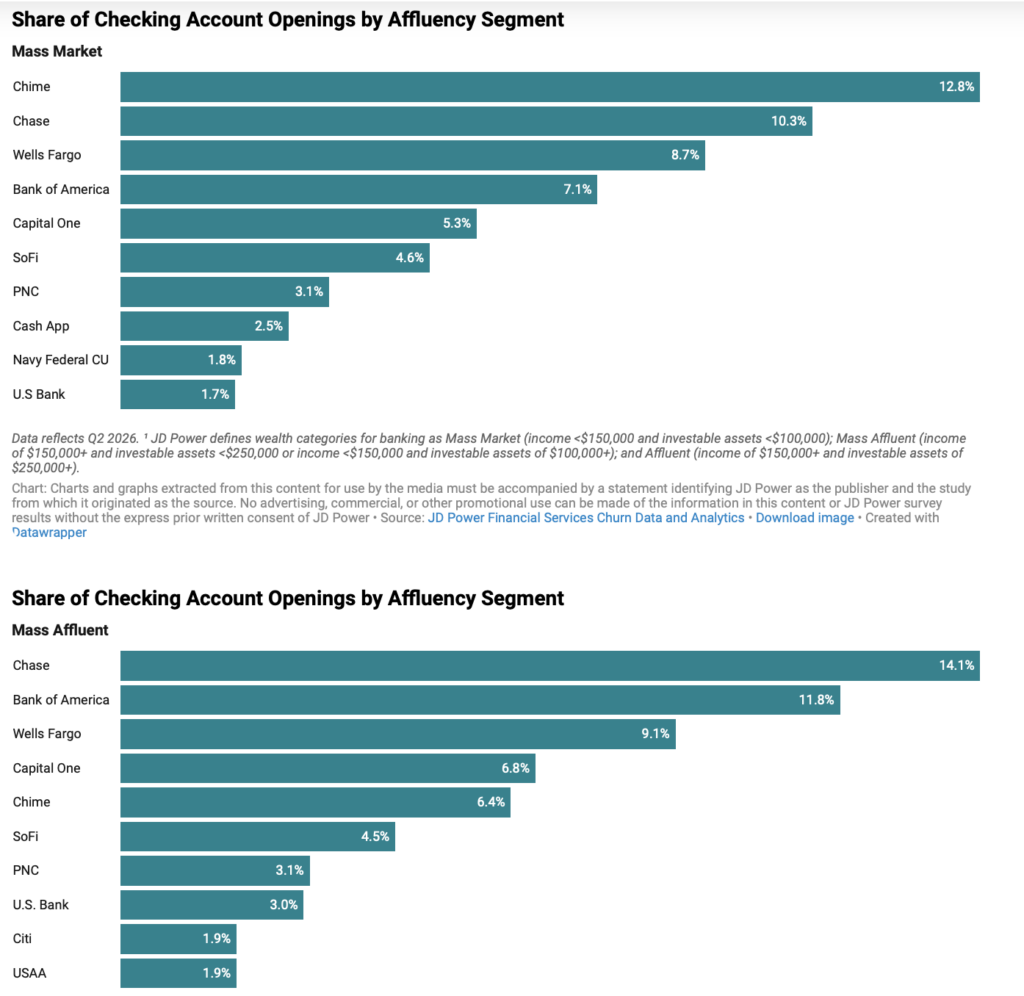
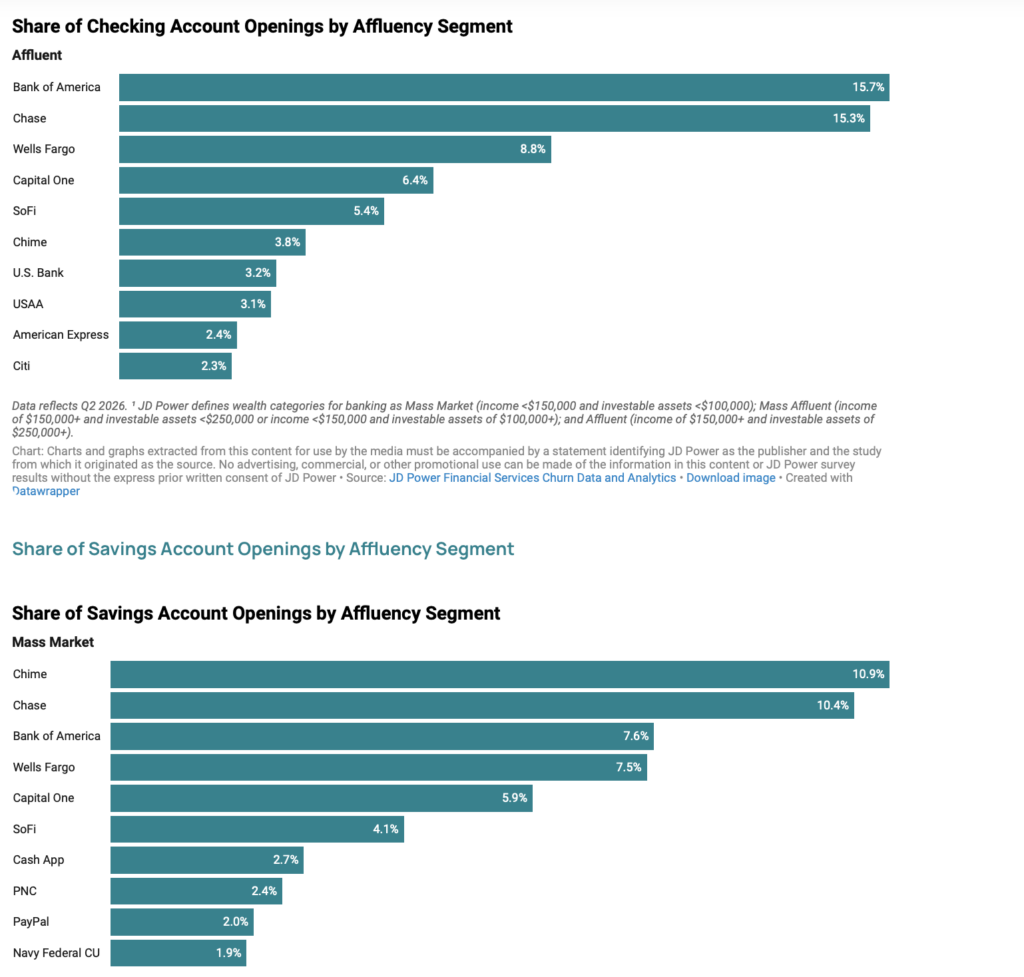
Among new checking account openings:
- Chime led mass-market consumers with a 12.8% share.
- Chase led mass-affluent consumers with 14.1%.
- Bank of America led affluent consumers with 15.7%.
Among new savings accounts:
- Chime led mass-market consumers with 10.9%.
- Chase led both mass-affluent (11.1%) and affluent (10.9%) customers.
The Definitions of Wealth
J.D. Power defines:
- Mass market as consumers with annual income below $150,000 and investable assets below $100,000.
- Mass affluent as consumers earning at least $150,000 with investable assets below $250,000, or consumers earning less than $150,000 with investable assets exceeding $100,000.
- Affluent as consumers earning at least $150,000 with investable assets of $250,000 or more.
Investment and Retirement Accounts
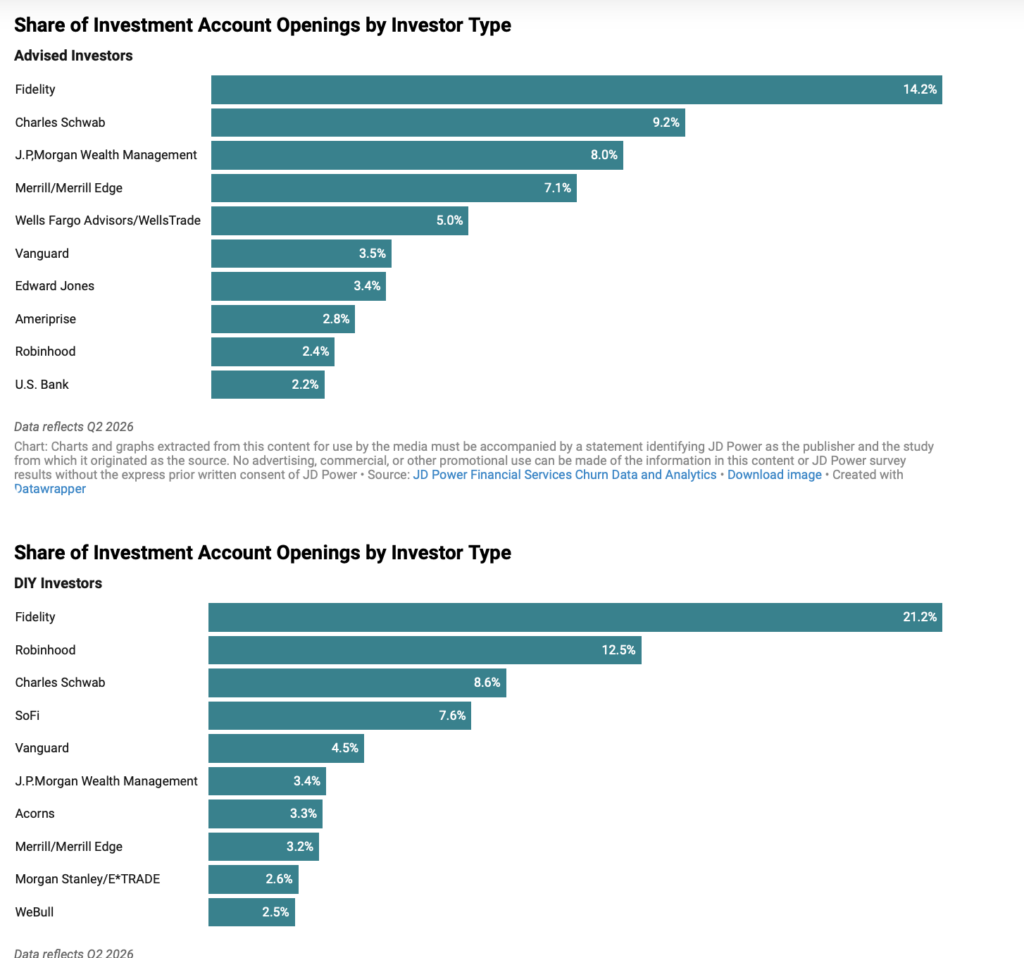
Established investment firms continued to dominate investment and retirement account openings.
The report found:
- Fidelity led all providers in new investment accounts.
- Charles Schwab ranked among the leaders in investment accounts.
- Fidelity, Bank of America/Merrill and Charles Schwab captured the largest shares of new retirement account openings.
While Fidelity remained the leading provider among both advised and self-directed investors, fintech firms continued gaining traction with do-it-yourself investors.
Those firms included:
- Robinhood.
- SoFi.
- Acorns
Credit Cards
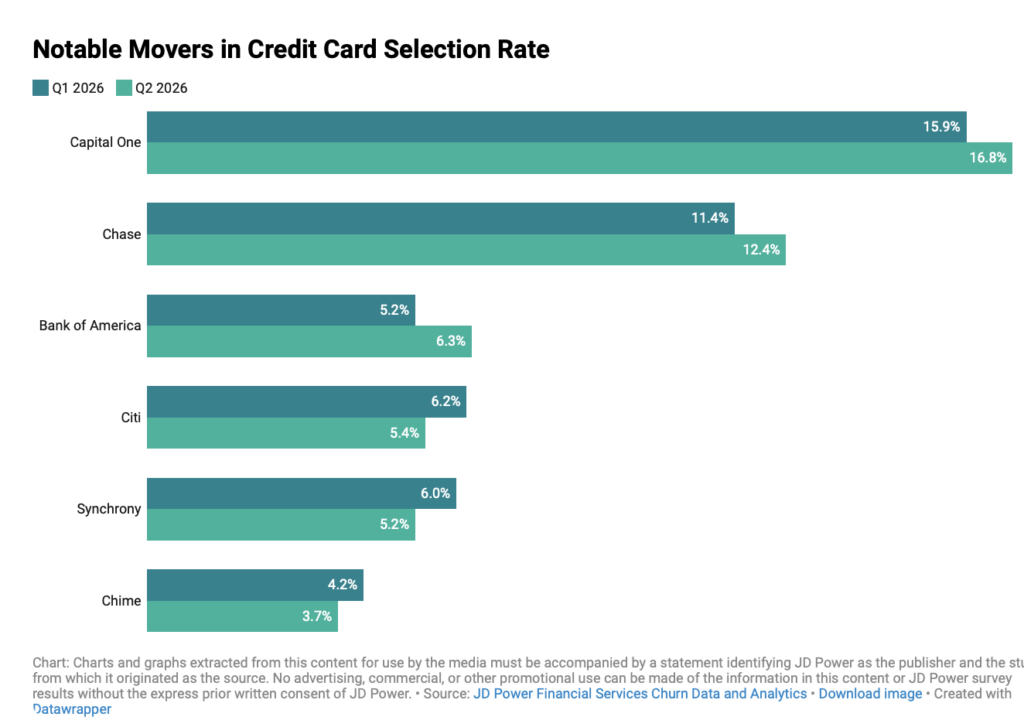
Large national banks also strengthened their position in credit cards during the quarter.
J.D. Power reported that:
- Capital One captured 16.8% of new credit card account openings.
- Chase accounted for 12.4%.
- Bank of America held 6.3%.
Consumers cited several reasons for choosing those issuers, including:
- Better rewards.
- Previous experience with the brand.
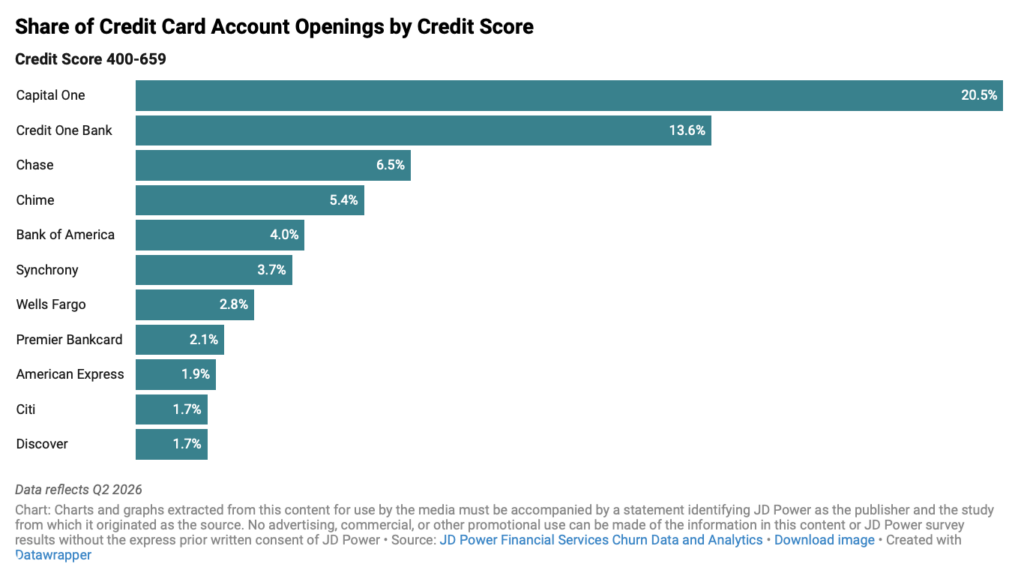
Credit card preferences also differed by credit profile.
According to the report:
- Capital One was the leading choice among subprime consumers with credit scores between 400 and 659.
- Chase led among prime borrowers with credit scores of 660 or higher.
Personal Loans
J.D. Power also added personal loans to its Signals Intelligence report for the first time.
The report found Wells Fargo led new personal loan originations during the quarter with 10.7% of new accounts, followed by:
- Upstart: 9.9%.
- SoFi: 8.5%.
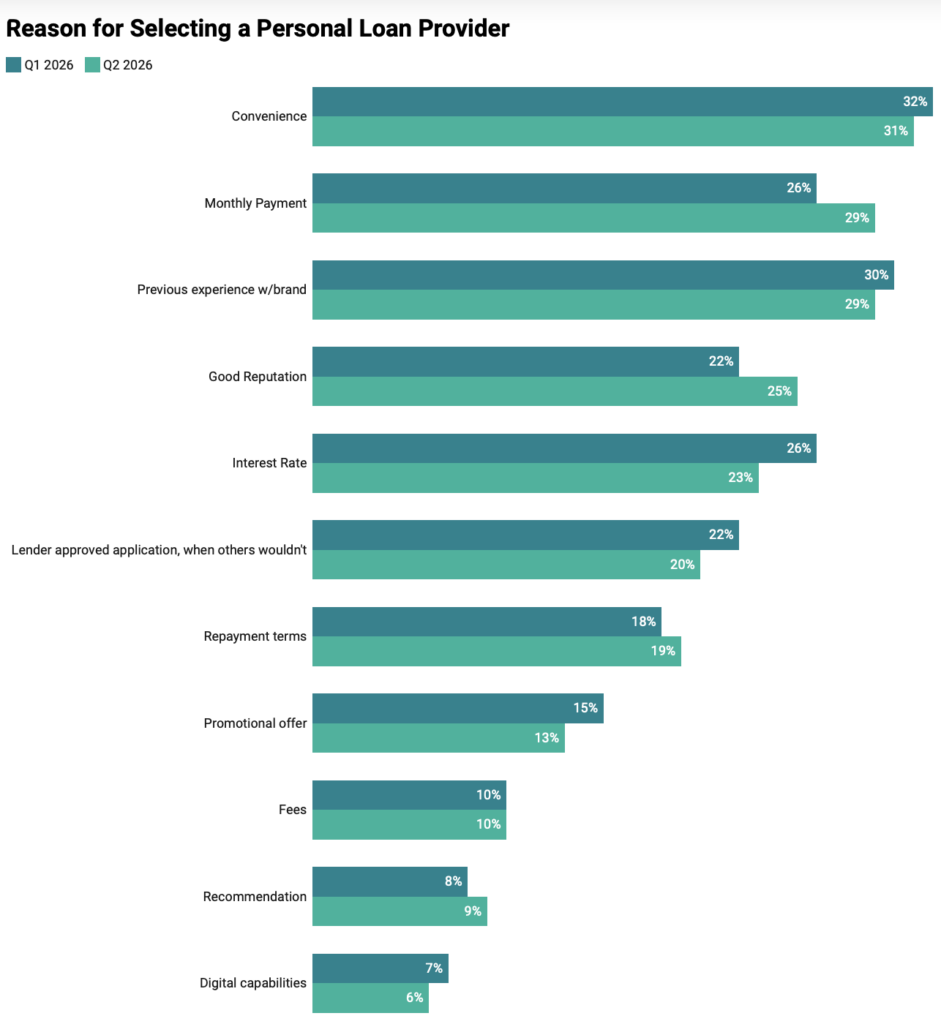
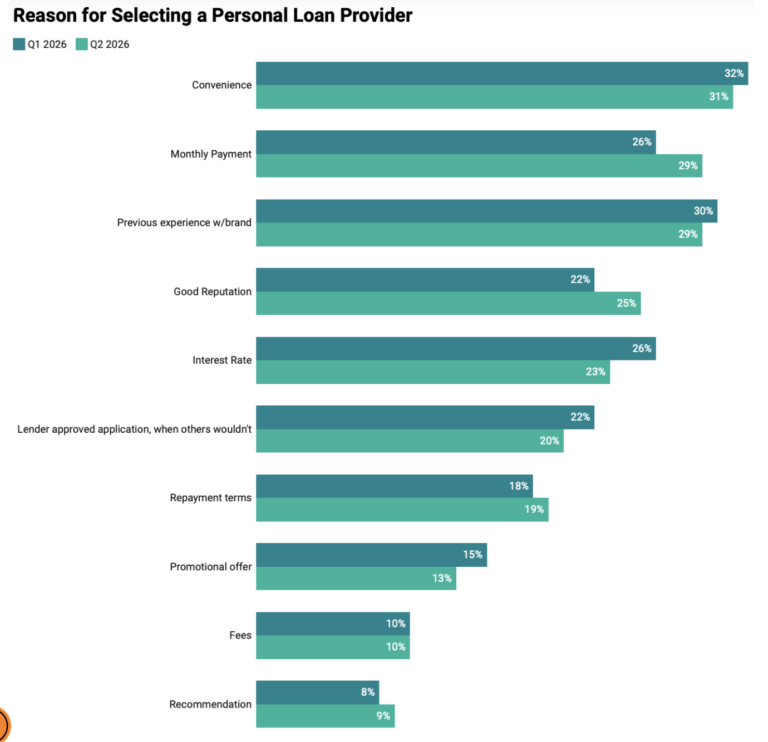
Consumers most frequently cited the following reasons for selecting a personal loan provider:
- Convenience.
- Affordable monthly payments.
- Previous experience with the institution.
J.D. Power said consumers increasingly are using personal loans to consolidate debt and better manage household finances.
Competition Intensifies
The research found consumers continue weighing numerous factors when selecting financial providers, including:
- Interest rates.
- Promotional offers.
- Brand reputation.
- Trust.
- Customer advocacy.
- Customer service.
- Convenience.
- Overall perception of the institution.
According to J.D. Power, the latest findings suggest traditional financial institutions have regained ground after fintech companies posted strong customer acquisition gains during the previous two quarters. The firm said it will continue monitoring customer acquisition and attrition trends to determine whether the shift toward large banks continues.