
WASHINGTON — Lawmakers, credit union leaders and nonprofit executives came together last night on Capitol Hill to highlight cross-sector efforts to expand financial literacy and economic mobility as part of Financial Literacy Month. The event was facilitated in partnership with Opportunity Knocks, the credit union-backed financial education program that appears on PBS.
Separately, the Defense Credit Union Council is separately pressing Congress for stronger oversight of military financial services ahead of a key budget hearing.
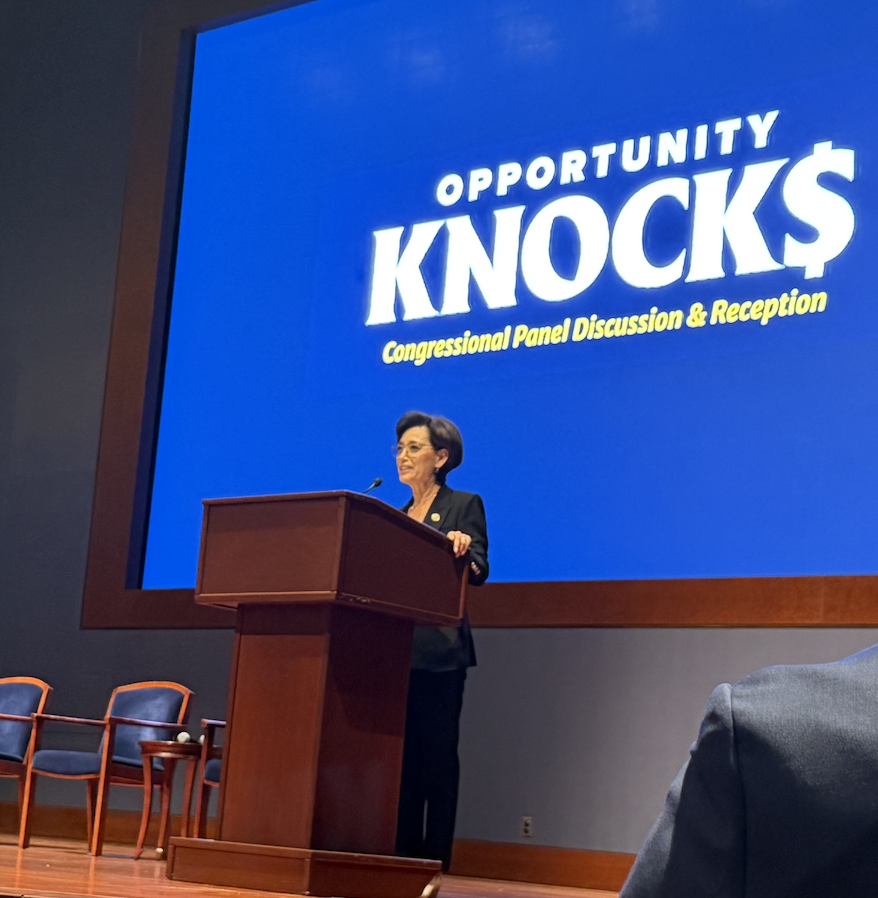
In recognition of Financial Literacy Month, Reps. Joyce Beatty D-OH) and Young Kim (R-CA), co-chairs of the Congressional Financial Literacy and Wealth Creation Caucus, served as honorary hosts of The Opportunity Knocks Congressional Panel Discussion & Reception at the U.S. Capitol Visitor Center. Reps. Ayanna Pressley (D-MA), John Mannion, (D-NY) and Marilyn Strickland (D-WA) also spoke at the event, touching on the challenges facing communities and how efforts by credit unions, CDFIs, and other financial partners provide solutions.
The event included brief remarks from Kathleen Coulombe, chief advocacy officer for America’s Credit Unions, and brought together a broad coalition of stakeholders, including leaders from not-for-profit credit unions, Community Development Financial Institutions, United Way affiliates, nonprofits and financial health organizations, organizers said.
““Opportunity Knocks does something rare in today’s media landscape. It shines a light on real families, real challenges, and real solutions, and it does so with dignity and hope,” Coulombe said during her welcome remarks. “By partnering with local credit unions, the show delivers a message that we in this movement have always believed: that no matter where you are financially, there is an institution in your community that will sit across the table from you, listen, and help you find a way forward.”
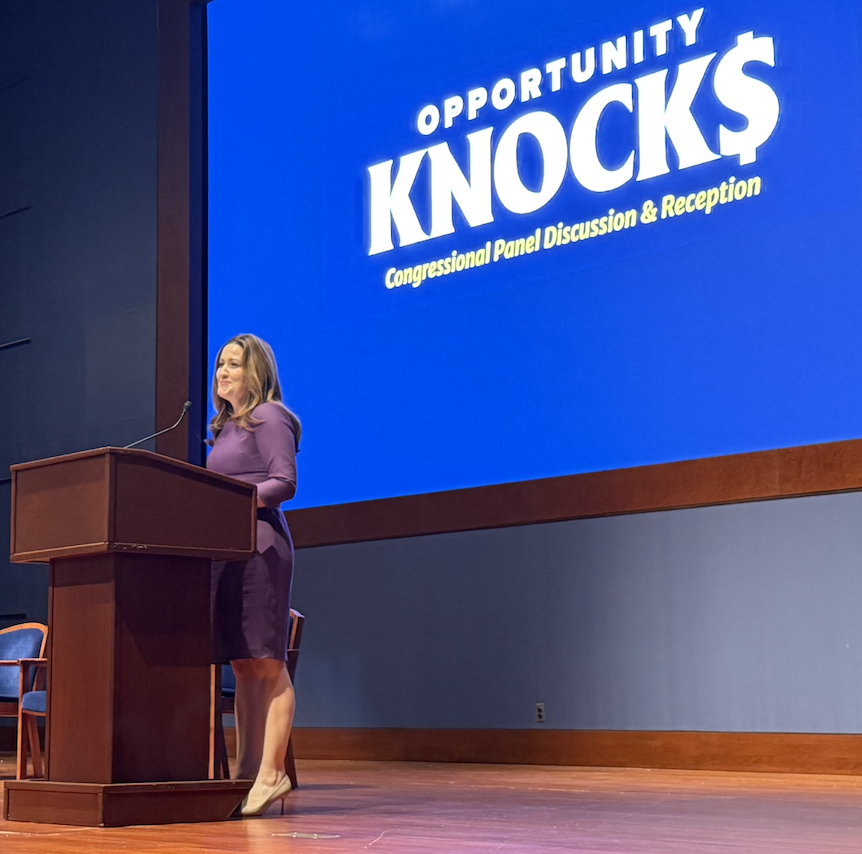
Creighton Blackwell, chief community and public affairs officer for Coastal Credit Union, emceed the event, which featured clips from the series, as well as two panel discussions on financial access, education, and coordinated support systems that help individuals and families build financial stability.
Panel Participants
Max Villaronga, president/CEO of Raiz Federal Credit Union; Courtney Moran, executive director of the Cornerstone Credit Union Foundation; Sarah Waters, chief advocacy officer of the Tennessee Credit Union League; and Dina Shultz, chief revenue officer of Telhio Credit Union, participated on the panels. Several credit unions were featured as part of the series.
Other credit union leaders at the event represented the African-American Credit Union Coalition, MD|DC Credit Union Association and Foundation, Department of Labor Federal Credit Union, Financial Partners Credit Union, GoWest Credit Union Association, Labor Credit Union, Ohio Credit Union League, Pepco Federal Credit Union, SkyPoint Federal Credit Union, Southern Security Federal Credit Union, Suncoast Credit Union, The League of Credit Unions, and Topside Federal Credit Union.
‘Cross-Sector Collaboration’
Organizers added that the program was designed to examine how cross-sector collaboration can reduce barriers to financial access, expand opportunity and strengthen pathways to economic mobility for working Americans. It featured a moderated discussion on financial access, education and coordinated support systems that help individuals and families build long-term financial stability.
Several credit union and league leaders were also expected to attend, with credit unions participating directly in panel discussions and featured in video segments as part of the program.
DCUC Sends Letter to Armed Services Committee
Meanwhile, DCUC said it has sent a letter to leaders of the House Armed Services Committee ahead of the panel’s hearing today on the Department of War’s fiscal 2027 budget request, urging lawmakers to improve coordination, transparency and oversight of financial services available to military personnel and their families.
In its letter, DCUC described financial services as a core component of military readiness and pointed to what it characterized as longstanding gaps in coordination, transparency and policy consistency within the Department of War.
“Financial readiness is mission readiness—and it must be treated with the same urgency and accountability as any other defense capability,” Jason Stverak, DCUC chief advocacy officer, wrote.
New Structure Sought
The organization reiterated its support for establishing a formal advisory and oversight structure aimed at modernizing military banking programs and improving financial outcomes for servicemembers and their families.
Other Concerns
DCUC also raised concerns about the Overseas Military Banking Program, citing uneven application of access policies and barriers that it said prevent credit unions from delivering no-cost financial education and counseling services on military installations. It further pointed to compliance and operational challenges tied to federal laws such as the Military Lending Act and the Servicemembers Civil Relief Act.
To address those issues, DCUC recommended several actions:
- Establish an Advisory Committee on Military Financial Services within the Department of War
- Require annual, installation-level reporting on financial services access
- Mandate legal-compliance certification for overseas banking contracts
- Expand integration of on-base financial institutions into financial-readiness programs
Additional Requests
In addition, DCUC encouraged Congress to preserve policies that support access to affordable credit, fraud protection and financial tools for military families and veteran-owned businesses.
“Servicemembers and their families deserve a financial system that works as reliably as the institutions they defend,” President and CEO Anthony Hernandez said in a statement. “By improving oversight and strengthening public-private coordination, Congress can ensure that military communities have consistent access to safe, modern, and affordable financial services, no matter where they are stationed.”