
BOSTON—Many consumers continue to view stablecoins and cryptocurrencies as essentially the same type of digital asset, despite their different purposes, creating an opportunity for credit unions to educate members before expanding digital currency offerings, according to a new report from PYMNTS Intelligence and Velera.
The findings are detailed in The Wallet Effect: How Credit Unions Can Close the Digital Currency Access Gap, the June 2026 Credit Union Tracker published by PYMNTS Intelligence and Velera.
According to the report, interest in digital currencies is strongest among younger consumers, particularly millennials, but understanding of the distinctions between cryptocurrencies and stablecoins remains limited. While cryptocurrencies are often viewed as speculative investments with prices that can fluctuate significantly, stablecoins are generally pegged to traditional currencies such as the U.S. dollar and are designed primarily for payments.
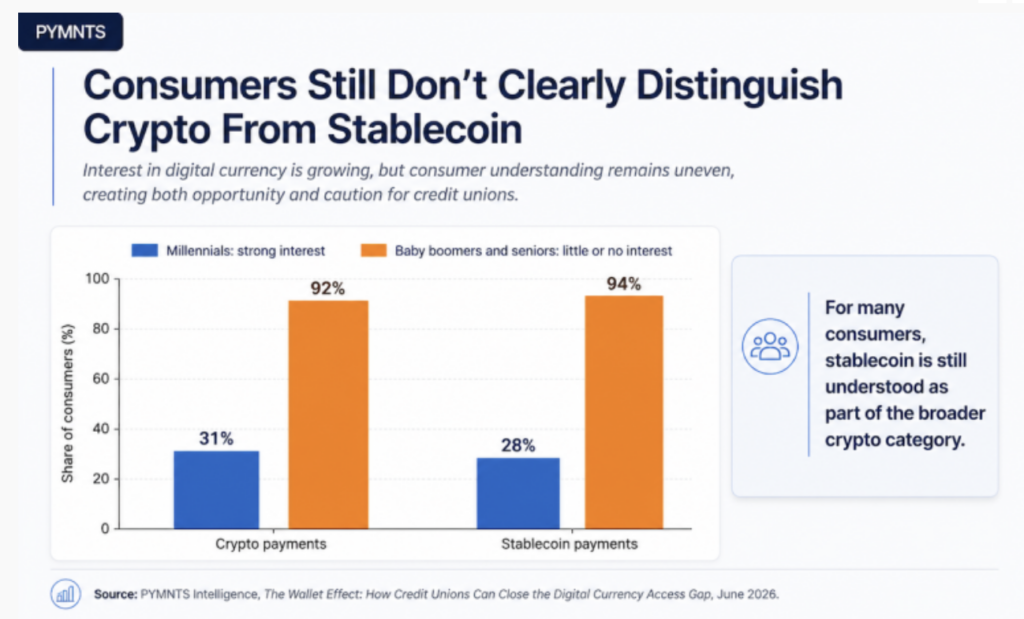
Despite those differences, the report found most consumers do not distinguish between the two categories.
The Findings
Among the report’s findings:
- Thirty-one percent of millennials expressed strong interest in using cryptocurrency for payments.
- Twenty-eight percent of millennials said they were strongly interested in making payments with stablecoins, just three percentage points lower than their interest in cryptocurrency.
- Ninety-four percent of baby boomers and seniors reported little or no interest in using stablecoins for payments, compared with 92% who expressed little or no interest in using cryptocurrency.
No ‘Distinct Identity’
According to PYMNTS Intelligence and Velera, stablecoins have yet to establish a distinct identity with consumers. Cryptocurrencies have benefited from years of media attention and widespread availability through investment apps, while stablecoins remain less familiar. As a result, many consumers continue to associate stablecoins with the price volatility commonly linked to cryptocurrencies.
The report said that presents an opportunity for credit unions to educate members on how digital assets differ, where they can be used and the risks associated with each type, rather than rushing into more complex or speculative products.
Researchers suggested that digital wallets could serve as an effective entry point because consumers are more interested in digital assets when they are integrated into payment tools they already use.
Strong Interest from Millennials
The report found that among Millennials, strong interest in using cryptocurrency for payments increased from 31% to 35% when transactions were conducted through a digital wallet. Among credit union members, strong interest in using stablecoins for payments rose from 5% to 12% when wallet access was available.
According to PYMNTS Intelligence and Velera, the findings suggest credit unions can strengthen member engagement by pairing education with trusted digital interfaces and carefully selected technology partnerships as consumer adoption of digital currencies continues to evolve.