TROY, Mich. — More than seven in 10 Americans are now considered financially unhealthy as persistent inflation continues to squeeze household budgets, prompting many consumers to cut spending on essentials, delay medical care and worry more about job security, according to a new report from JD Power.
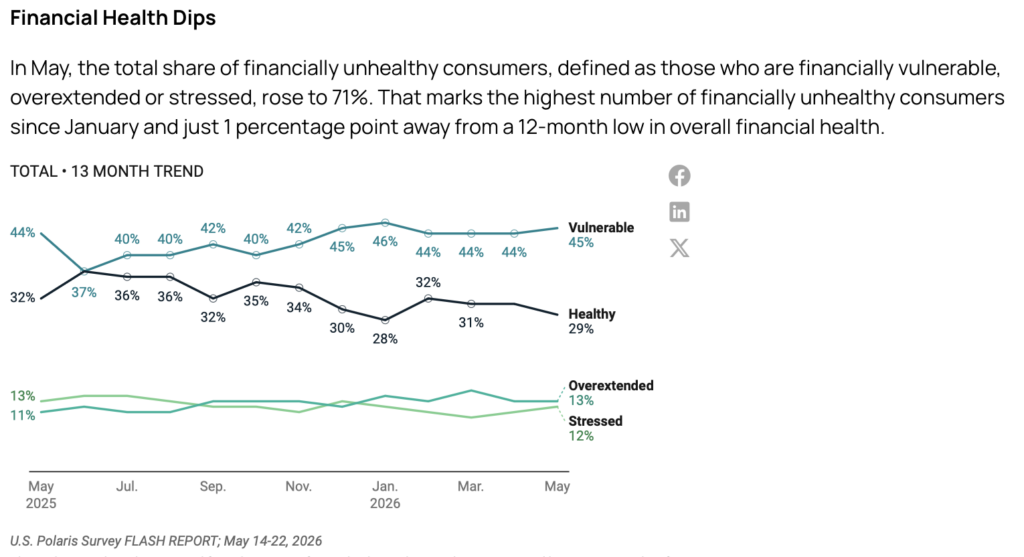
The banking and payments intelligence report, based on a May survey of 4,000 U.S. consumers, found that 71% of Americans are now classified as financially unhealthy—defined as financially vulnerable, overextended or stressed. JD Power said that represents the highest level since January and leaves overall consumer financial health just one percentage point above its lowest level of the past year.
Jennifer White, managing director of financial services intelligence at JD Power, authored the report.
Consumers Cutting More Than Discretionary Spending
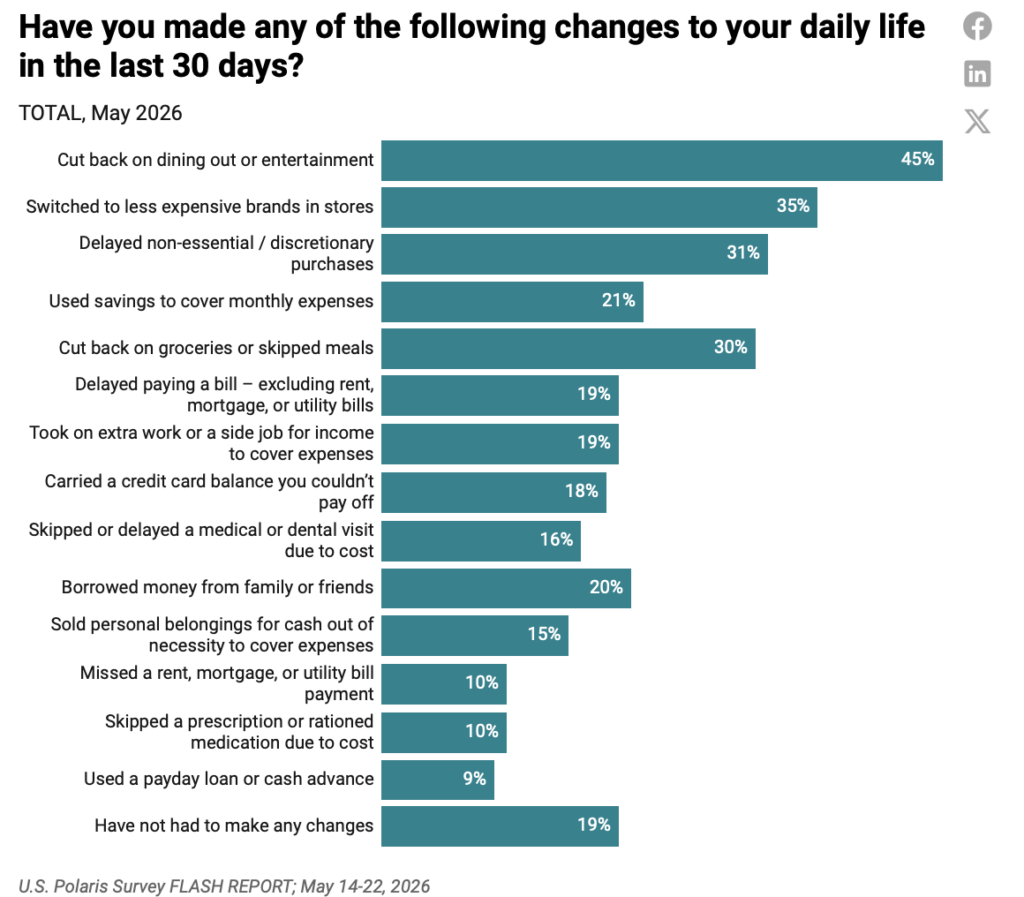
According to JD Power, 81% of consumers said they have changed their day-to-day spending habits in response to rising costs. While many have reduced discretionary purchases, an increasing number are cutting back on necessities.
Key findings include:
- 81% reported changing their spending habits to cope with higher costs.
- 30% said they cut back on groceries or skipped meals during the past 30 days.
- 19% delayed paying a bill.
- 16% skipped or postponed a medical appointment.
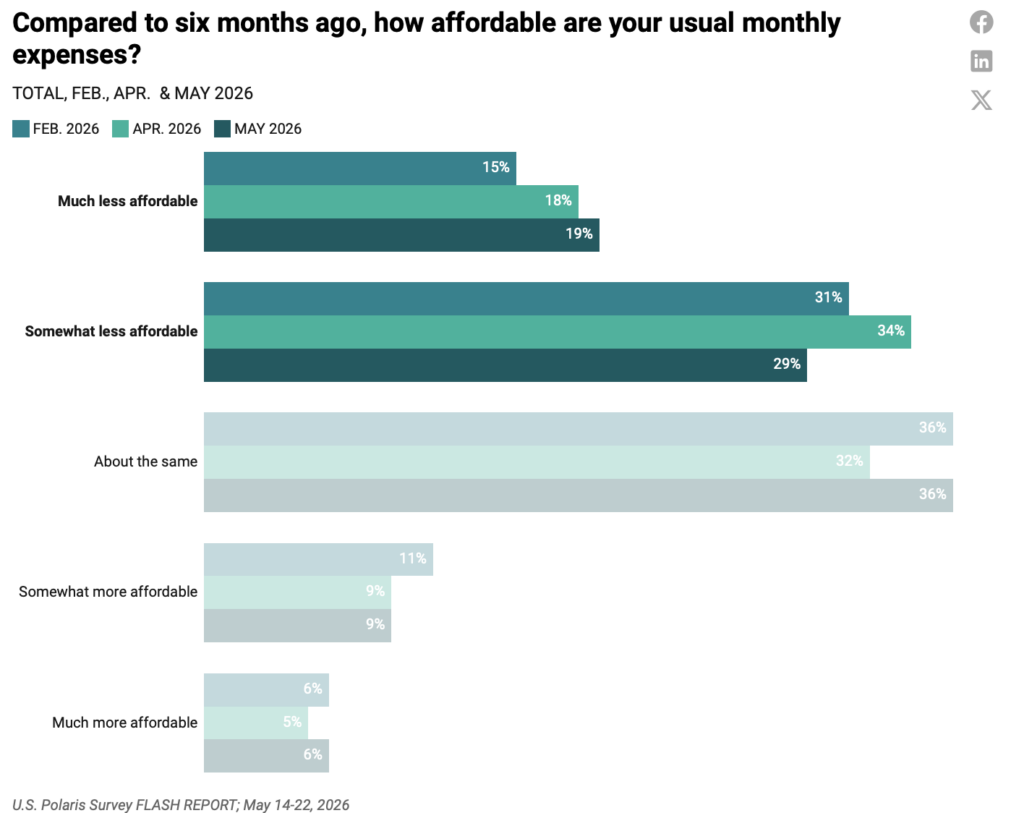
- 48% said monthly expenses feel less affordable than they did six months ago.
The report noted that while fewer consumers reported worsening affordability than in April, more respondents said affordability felt about the same, suggesting many households may simply be adapting to persistently higher prices.
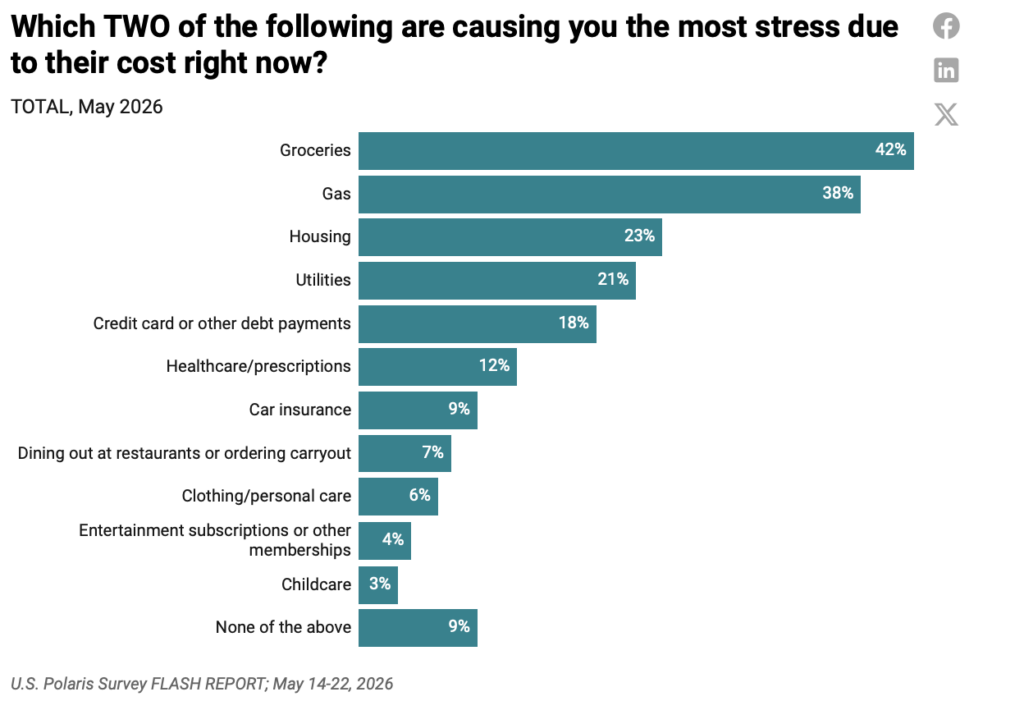
Groceries remain the biggest financial concern, with 42% of consumers citing food costs as their largest source of stress, followed by gasoline prices at 38%.
Another 18% said credit card or other debt payments are causing the greatest financial strain, a finding JD Power said suggests some consumers are increasingly relying on high-interest debt to cover everyday expenses.
Job Security Concerns Rise
Beyond inflation, consumers are increasingly concerned about employment.
According to the report:
- 39% said they are more stressed about job security than they were six months ago.
- 18% reported consistently high levels of job-related financial stress.
- Another 39% described experiencing occasional or moderate stress over job security.
JD Power said concerns were particularly pronounced among financially vulnerable consumers and adults younger than 40.
Fraud Continues to Affect Consumers
The report also found that fraud remains a significant concern.
Among respondents:
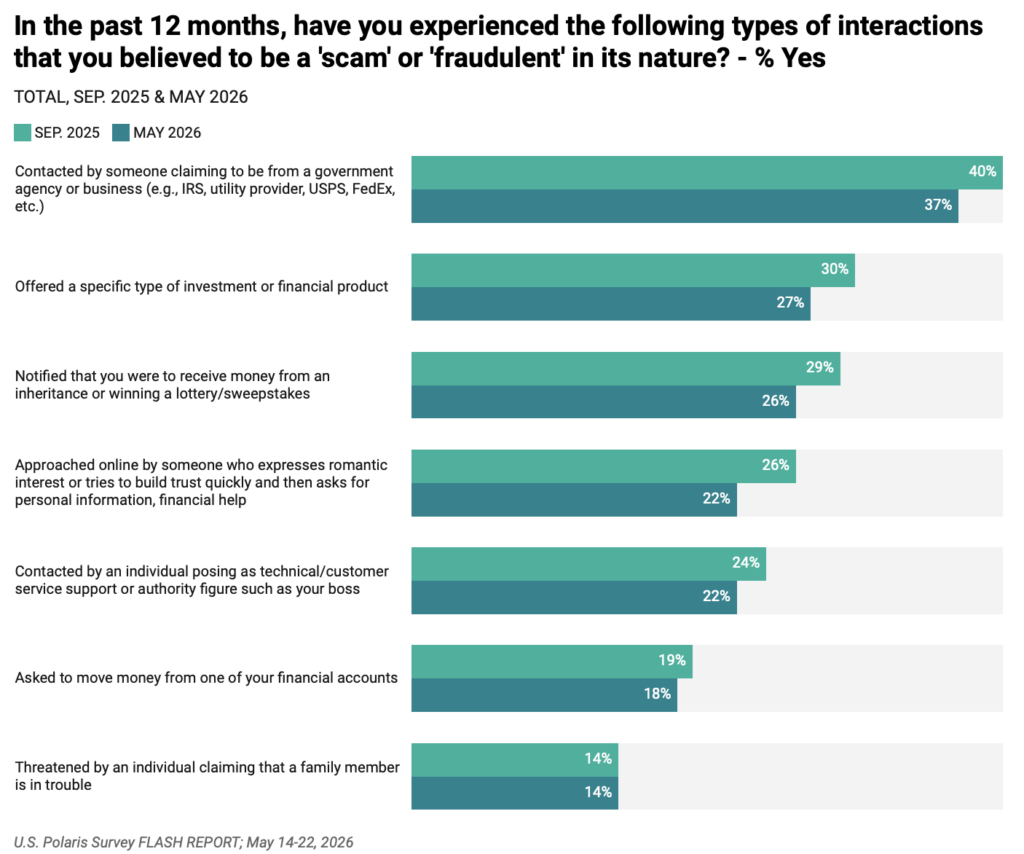
- 37% said they had encountered impersonation scams involving someone claiming to represent a government agency or business.
- 27% reported being targeted with fraudulent investment or financial product offers.
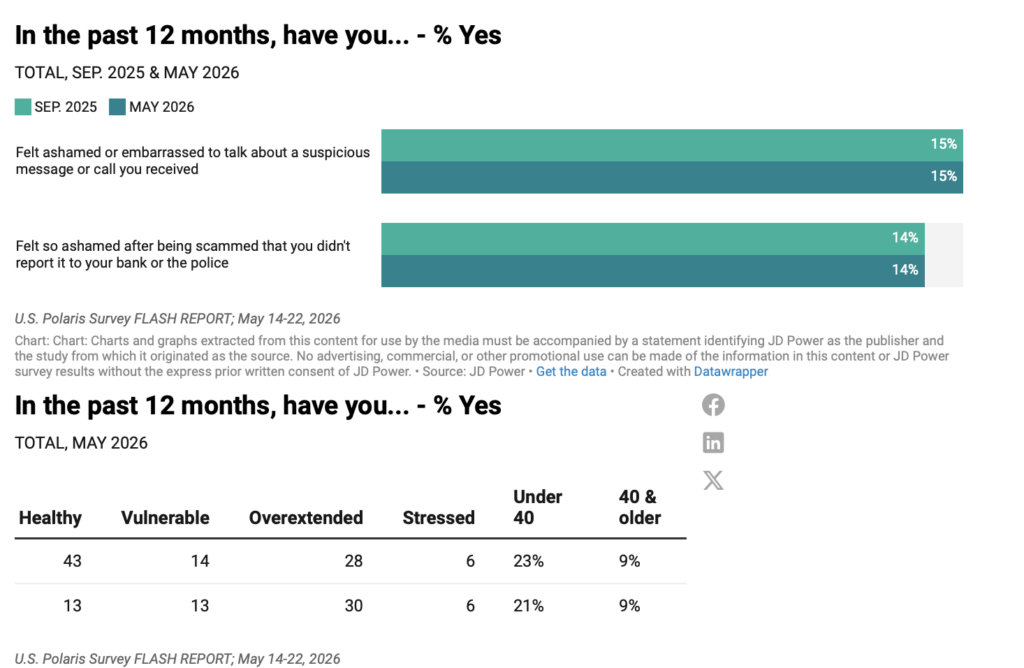
- 23% of consumers who experienced fraudulent activity said they did not report it to their financial institution or law enforcement because they were embarrassed.
JD Power said younger consumers were consistently more likely than older adults to report experiencing multiple forms of fraud.
Opportunity for Financial Institutions
According to the report, financial institutions have an opportunity to play a larger advisory role as consumers navigate rising costs, debt and fraud risks.
JD Power said consumers are seeking guidance on budgeting, borrowing, savings strategies and fraud prevention, as well as reassurance that their accounts and money are protected.
The report concluded that banks and credit unions that provide financial education, planning tools and fraud protection can help customers simplify increasingly complex financial challenges while strengthening long-term relationships.