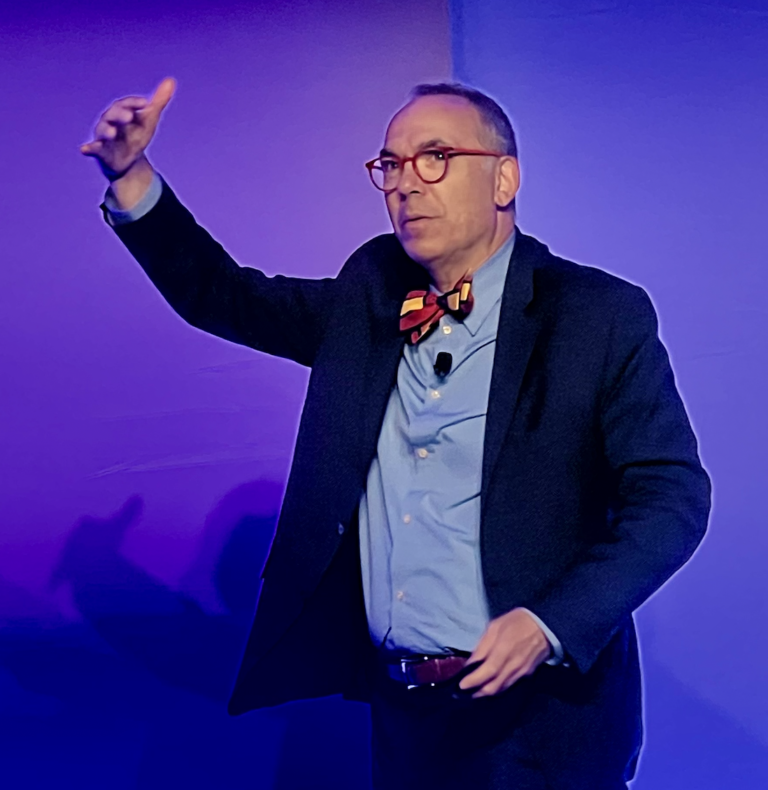
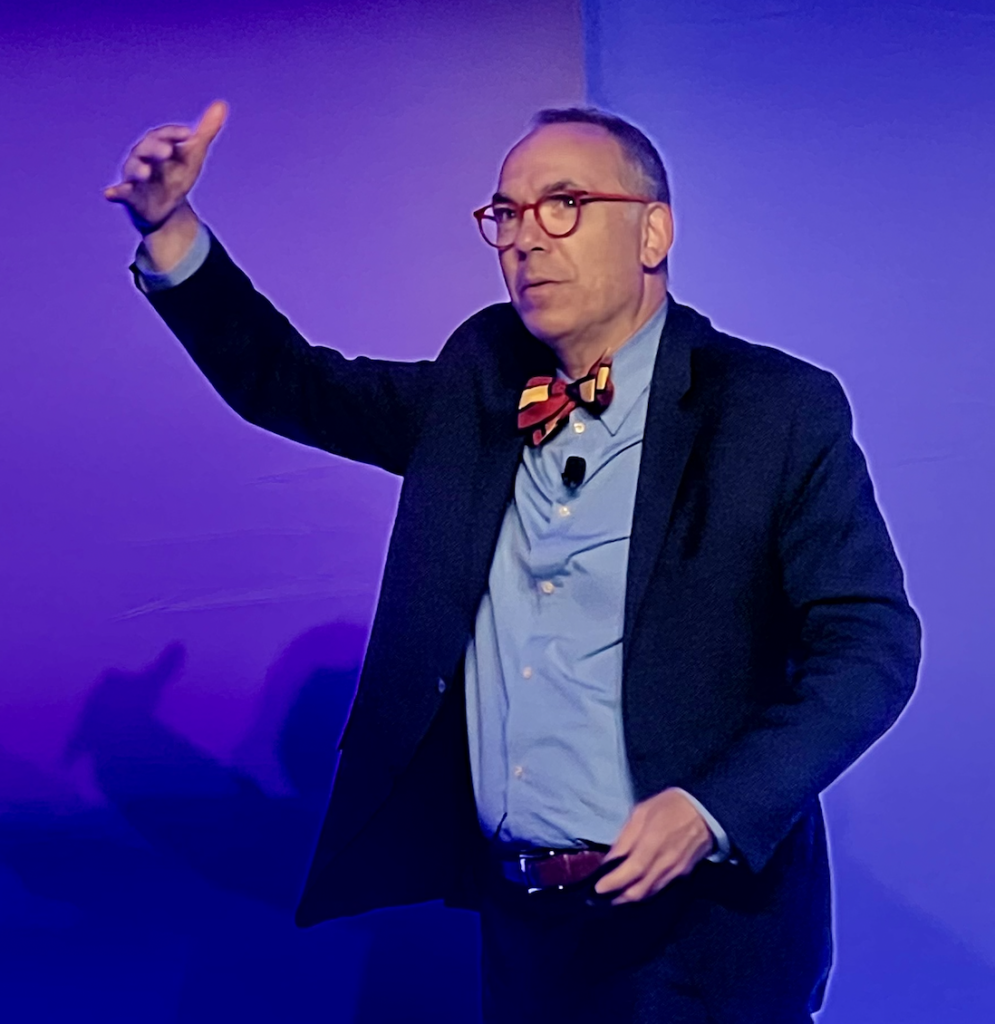
LAKE BUENA VISTA, Fla.—The U.S. economy is showing modest growth but increasingly unusual dynamics, with rising risks tied to consumer behavior, debt and policy decisions, economist Dr. Elliott Eisenberg told attendees at the NACUSO Reimagine Conference.
Eisenberg, who is well known for his entertaining style as a presenter to credit union meetings, said he expects economic growth of roughly 1.5% to 2%, but described the current environment as historically atypical.
“I am a little bit less optimistic than others, but I see economic growth of 1.5% to 2%. But the economy is really weird. We’ve never seen this before,” Eisenberg said, noting he has had to rethink how he evaluates economic conditions.
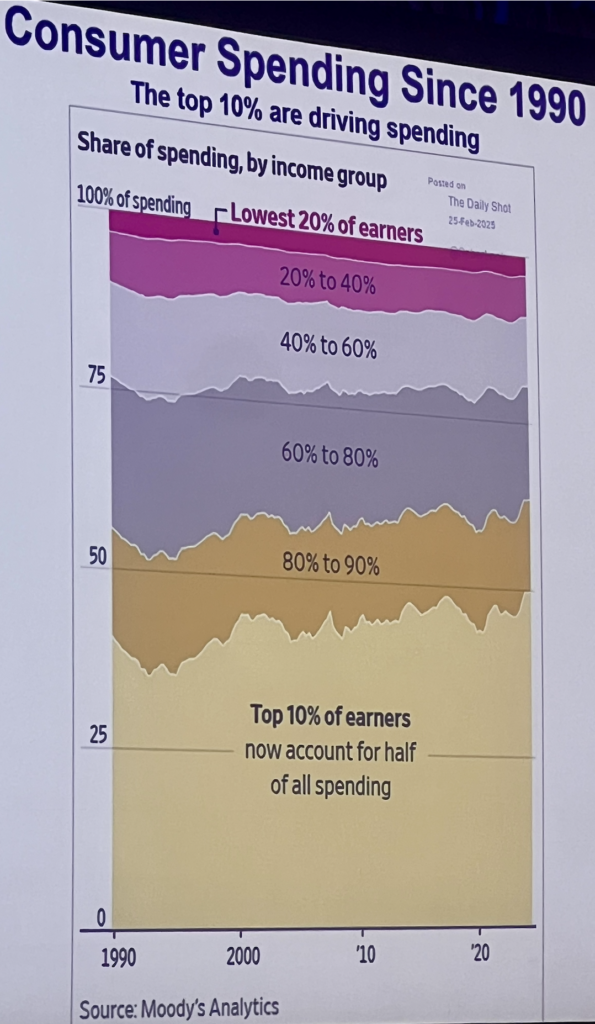
He said household consumption remains solid at a high level but is being driven disproportionately by wealthier consumers, while business investment is being fueled largely by artificial intelligence. Government spending, he added, is being influenced by major federal legislation, and trade deficits are more a reflection of savings behavior than policy.
No Evidence of Recession, But…
“There is no evidence of a recession coming on,” Eisenberg said. But he cautioned that slowing real personal consumption expenditures are a concern. “I’m not looking to buy a parachute yet, but I’m thinking of buying one…there are all kinds of weird things going on under the covers.”
Eisenberg pointed to declining savings rates and rising debt pressures, particularly among lower-income households, as underlying risks.
“You have this bad stew of student loans, credit cards, and homes they overpaid for,” he said, noting that 10 million to 12 million borrowers are behind on student loans, limiting their ability to borrow elsewhere.
At the same time, he said rising household wealth—especially in housing and equities—has been a key driver of continued spending.
“This wealth is driving us,” Eisenberg said. “It’s led by the poor, who are borrowing more, and the rich, who are spending more.”
Eisenberg identified artificial intelligence as a dominant economic force.
Other Observations
Other observations shared by Eisenberg:
- The yield curve is normalizing.
- Consumer sentiment is at record low. “Why are we so miserable? I think price levels are the problem. We’ve had shock after shock after shock. Prices are really high.”
- Labor markets are softening. Eisenberg said what he has known about labor markets is changing now—at least temporarily. When unemployment has gone up, a recession has always occurred. But that’s not happening now, he said. “The labor market is deteriorating, no question, but so slowly it’s not causing a recession. I want you to stop caring about monthly jobs numbers. Population growth is declining. Immigration is declining. Add this all up the number of jobs we need to create each month is about 20,000 people. When the number is that small, it’s going to bounce around. What I want you to look at is the unemployment rate.”
- Wage growth. Real wage growth is just about zero when measured with inflation.
- Housing. The big story is increasing inventory, said Eisenberg, which will reduce prices. He urged CUs to watch the “months of inventory” data point to know where home prices are headed.