LAS VEGAS–A forecast that was part of remarks themed “How to Navigate ‘Tariffied’ Financial Markets” turned out to be pretty upbeat when it comes to the stock market.
The forecast was shared by Gene Goldman, chief investment officer with Cetera Investment Group, with an audience at NACUSO’s Reimagine Conference here.
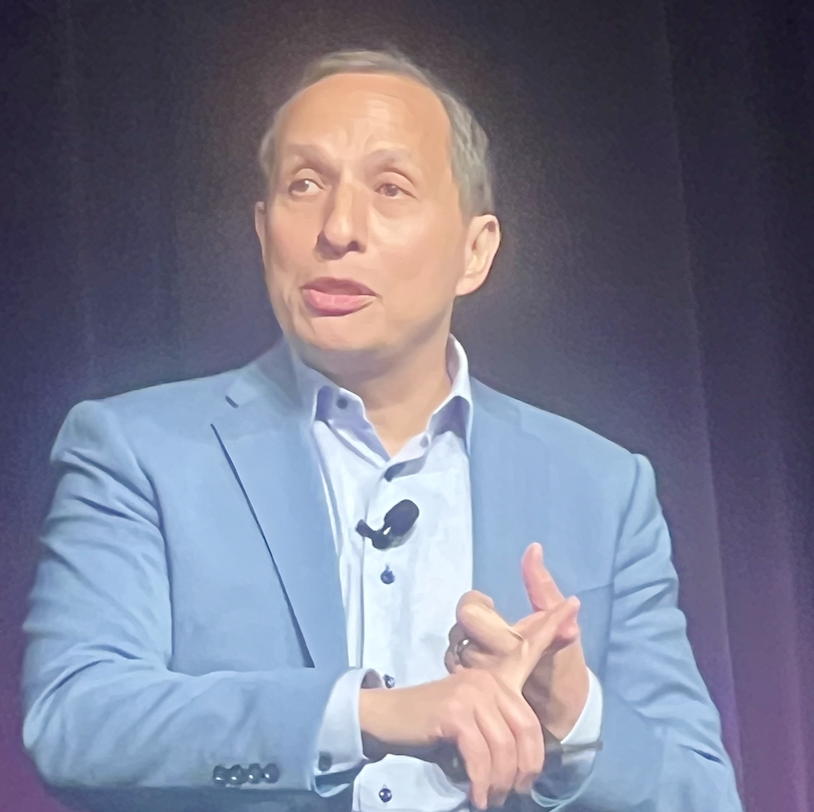
Goldman laid out three themes:
- The Great Moderation
- Fed proves to not be a good friend
- Diversification is Back
“If you look at these three they all have an air of caution,” Goldman said. “We weren’t surprised by the correction in the market this year; we were surprised it took so long.”
Given the title of the session Goldman spoke most often of President Trump’s tariffs and the effect they are likely to have on the markets, the economy, rates and more. He said Trump’s initial tariffs have come at levels that “exceeded even the most extreme expectations,” although many have been delayed or adjusted.
“If you raise taxes it has an impact on growth. If we raise tariffs it’s an impact on growth and it increases inflation,” Goldman said. “This is what the markets are worried about—stagflation—slowing economic growth with rising inflation or just a pure recession.”
What the Soft Data Show
Explaining how tariffs raise costs on consumers, the result will likely be slower economic growth, according to Goldman. He said the soft data—primarily surveys—already reveal the economic effects of tariffs. The hard data will soon likely reflect them as well, he predicted.
“And then you add on top of this the stock market has pulled back dramatically. Now, less wealth in the stock market. Right now, foreign investors own about 20% of U.S. stock, double where it was in 1990,” he said. “Foreign and U.S. investors are losing wealth. It’s a lot of bad new going on. A correction usually occurs when the stock market sniffs a recession around the curve. A bear market usually occurs when the stock market sees or predicts a recession. The stock market right now is trying to figure out where we are. The fate of tariffs will determine much of that. Tariffs are sticky; they rise fast and come down slowly. It’s going to take a lot longer to get through this tariff absurdity. There is just so much confusion coming out of the Trump administration.”
The Reasons to be Optimistic
In spite of all that, Goldman is optimistic stocks will be higher at year-end, although he anticipates much volatility.
Goldman said the Trump administration finally realizes the stock market is feeling pressure. He showed a chart showing how quickly consumer sentiment has dropped, with Americans predicting inflation will rise 6.7% by year-end.
Other reasons he is optimistic about stock prices:
- Bond Market Selloff. “What we normally see is that when stocks fall, bond yields fall. But what we’ve seen is that stocks fell dramatically and bond yields surged like crazy.” The reasons, he said, are still being debated, but when taken together the administration didn’t mind the stock market decline, but “freaked out” over the bond market.
- Valuations are Better. “The good news is valuations are much more attractive. I think this also worried the administration, because we also had a weaker currency, rather than getting stronger, which is what typically happens with tariffs.”
- Bullish Sentiment. Sentiment is bullish at near historical levels, said Goldman.
- Greater Chance of a Fed Put. “That is, if something goes bad, the Fed will step in and save things. But Chairman Jerome Powell said ‘Tariffs are going to drive inflation, and if the economy slows down we will be OK with that and we’re not going to cut rates anytime soon.’ But the markets don’t believe him. We believe the Fed is going to stay on hold as long as possible and only cut rates if it smells inflation.”
- Cash on Sidelines. “There is a lot of money on the sidelines waiting for opportunities.”
No Recession
Goldman said he does not see a recession ahead, but that will depend on how the $500-$750 billion in tariff revenue is recirculated in the economy.
He also has confidence in the cards the U.S. holds in its fight with China.
“We believe the U.S. does have advantages against China. The most significant is we have a significant consumer base, and China does not,” said Goldman.
Long Story Short
“Long story short, the trade war is going to create a lot of market volatility, but we think there are a lot of reasons to be optimistic,” Goldman said again. “The U.S. has a positive stock market bias. The stock market has been positive in 37 of the last 45 years. Volatility is a normal part of investing. The key point is to stay invested over the long term and be diversified.”