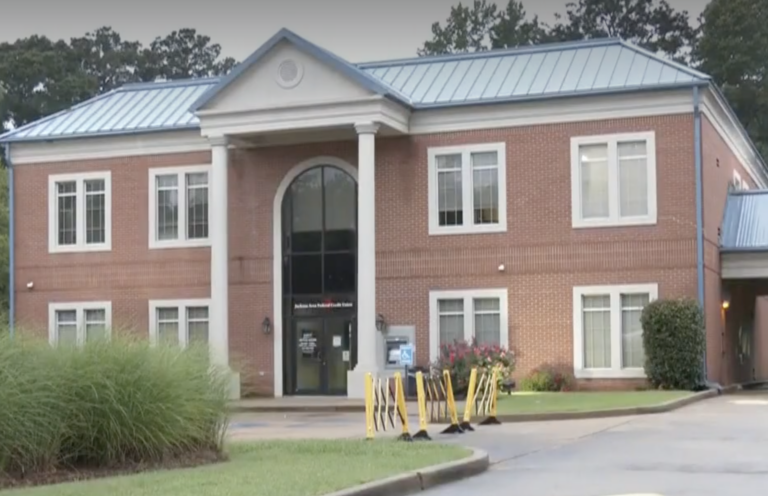
JACKSON, Miss. — The National Credit Union Administration is arguing that evidence “strongly suggests” a residence owned by former Jackson Area Federal Credit Union CEO Leigh Bridges and her husband, Chad Bridges, was purchased with misappropriated credit union funds, as the agency seeks court approval to take control of the couple’s real estate.
The assertion is contained in an Aug. 28 reply filed by the NCUA Board, acting as conservator of Jackson Area FCU, in U.S. District Court for the Southern District of Mississippi. The filing supports the agency’s request to impose a trusteeship over real property owned by Leigh and Chad Bridges.
As the CU Daily has been reporting, NCUA is operating Jackson Area FCU under conservatorship after alleging approximately $95 million was embezzled from the credit union. Leigh Bridges, Chad Bridges and Tina Funez are defendants in the agency’s civil lawsuit.
The latest filing responds to objections raised by both Leigh and Chad Bridges to NCUA’s request to place their properties under agency control while the litigation proceeds.
NCUA Points to $1.227-Million Transfer
Among the most significant new details in the filing is NCUA’s attempt to trace money allegedly taken from Jackson Area FCU to the Bridges’ Sleepy Hollow residence.
NCUA said the residence was purchased through a deed dated Sept. 28, 2018. Four days earlier, according to the agency, $1.227 million was wired from Raymond James to a real estate closing firm.
The agency said Jackson Area FCU records show numerous transfers from Chad and Leigh Bridges’ credit union account to Raymond James. NCUA has previously alleged that more than $51 million in false entries were used to conceal transfers from the credit union’s general ledger to accounts belonging to Leigh Bridges dating to 2015.
“The evidence strongly suggests that the Sleepy Hollow residence was purchased with misappropriated funds and is therefore held in constructive trust for the benefit of JAFCU,” NCUA said in the filing.
The allegations have not been adjudicated, and NCUA’s filing represents the agency’s arguments in the civil case.
NCUA also specifically disputed an assertion by Chad Bridges concerning his own conduct, stating in a footnote that it does not admit “that Chad committed no active fraud or wrongdoing.”
Chad Bridges Objects to Trusteeship
Chad Bridges has argued that transferring title to NCUA could deprive him of state-law defenses against a forced sale and could permanently divest him of legal title to his home.
NCUA countered that it is not currently seeking permission to sell the properties and said Bridges could raise those defenses later if the agency seeks a sale.
The agency also argued that transferring legal title through a trusteeship would not eliminate the Bridges’ underlying property interests. If NCUA ultimately fails to establish liability or the Bridges prevail on a defense, the court could order the agency to transfer the properties back to them, according to the filing.
NCUA said it is seeking control now because it cannot adequately protect the properties and their contents without holding title.
Agency Cites $15 Million in Property
The dispute also involves the cost of protecting personal property at the Sleepy Hollow residence.
NCUA said Leigh Bridges previously estimated the value of items at the property at $15 million, although the agency said the actual value could be higher. After Bridges gave NCUA permission to take custody of the items, the agency said it determined security was necessary because of their value, insufficient insurance and publicity surrounding the case.
NCUA said it cannot discontinue security because it does not have access to security codes or the property’s Ring cameras and therefore cannot remotely monitor the residence.
Leigh Bridges has said there is $2.1 million in insurance covering the Sleepy Hollow residence, according to the filing. NCUA said it has not seen the policy and cannot determine whether it adequately covers the personal property or whether the residence being vacant affects the coverage.
The agency said it has obtained its own insurance for the items at Sleepy Hollow and intends to obtain coverage for the residence.

Dispute Also Involves Legal Fees
NCUA said it has offered to allow Leigh Bridges to remain at the couple’s Eastbrooke condominium throughout the litigation and to manage payment of bills, maintenance and insurance for the Bridges’ properties.
The agency said the arrangement also would allow it to prepare the Sleepy Hollow residence for a potential sale, something NCUA said Leigh Bridges had previously indicated she wanted to do.
But NCUA said negotiations with the Bridges have broken down over issues that include living expenses and attorneys’ fees.
“In the end, their dispute appears to be about attorneys getting paid,” NCUA told the court, noting that Chad Bridges has separately sought to unfreeze retirement accounts to pay his attorneys. NCUA said it will respond to that request in another filing.
The agency also said unpaid condominium fees on the Bridges’ Alabama property provide an independent justification for seeking a trusteeship under the terms of an existing preliminary injunction.
NCUA is asking the court to place all real property owned by Leigh and Chad Bridges into trusteeship while the case continues.