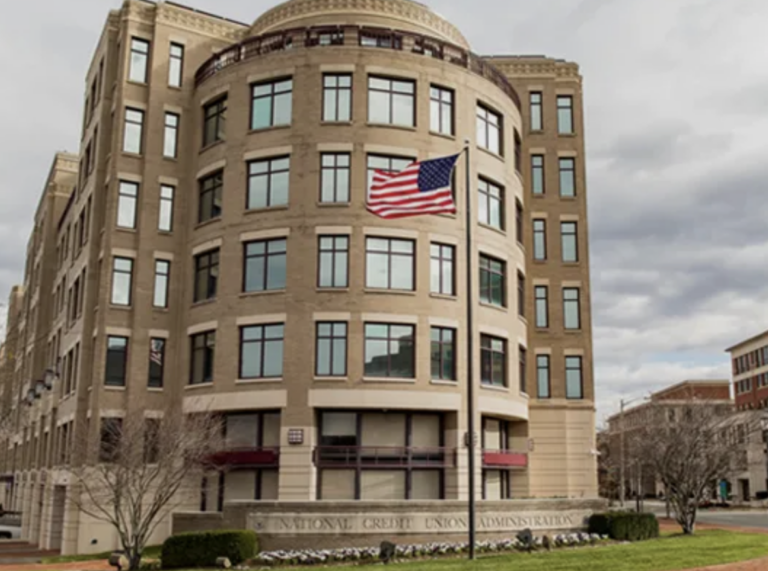
ALEXANDRIA, Va.―As anticipated, NCUA has published an Interim Final Rule to clarify federal credit unions’ (FCUs) power to charge non-interest charges and fees, including interchange fees, under the Federal Credit Union Act.
The new rule comes in the wake of an OCC rule related to Illinois’ Interchange Fee Prohibition Act (IFPA) in which the federal bank regulator said there is federal preemption of the IFPA. That, in turn, led a court to grant a permanent injunction preventing Illinois from enforcing the IFPA’s interchange fee prohibition against certain banks, federal savings associations, and payment networks.
But that ruling did not apply to credit unions
Now, NCUA, which noted in a statement it has “exclusive authority over FCUs’ ability to charge non-interest charges and fees,” said its Interim Final Rule is intended to preempt any state law affecting the non-interest charges and fees related to payment card services.
Seeking to ‘Avoid Disparity’
“Although NCUA believes that its preemption rules already allow FCUs to impose fees that are set by a third party without state interference, NCUA is adopting this Interim Final Rule both to clarify FCU authority and to avoid any disparity between FCUs and national banks in light of a recently issued interim final rule on the same subject by the Office of the Comptroller of the Currency,” NCUA said. “As the NCUA’s Interim Final Rule makes clear, state rules regulating FCU activity related to non-interest charges and fees, including interchange fees, are not applicable to FCUs. “
The Interim Final Rule takes effect June 30, 2026.
DCUC Responds
“DCUC commends the NCUA for taking proactive action to provide regulatory clarity regarding federal credit unions’ authority to assess non-interest charges and fees, including interchange fees,” DCUC President and CEO Anthony Hernandez said in a statement. “This rule helps ensure credit unions can continue delivering critical services to their members, including servicemembers, veterans, military families, and Department of War personnel.”
Added DCUC Chief Advocacy Officer Jason Stverak in a statement, “Today’s action by NCUA is a meaningful win for regulatory certainty, payment-system stability, and the military communities served by defense credit unions. DCUC has consistently urged the agency to prevent a patchwork of state interchange mandates from disrupting federally chartered credit unions and their members. By clarifying that federal credit unions may charge and receive non-interest charges and fees, including interchange fees, NCUA has provided the clarity our members need to keep investing in fraud prevention, cybersecurity, rewards, and reliable digital payments. We appreciate NCUA’s timely action and look forward to supporting a strong final rule that preserves parity, uniformity, and safe, sound service for military and veteran communities.”
During a call with the media, Stverak added he is also hopeful the NCUA rule will help quell some of the discussions around interchange legislation in other states beyond Illinois.
Stverak reminded, however, that the NCUA ruling does not solve the potential problems faced by state-chartered credit unions in states beyond Illinois (Illinois has a wild card statute that means the federal law applies to its state-chartered credit unions) should their members use cards in the Prairie State.
Illinois recently delayed implementation of the IFPA until July 1 of 2027.
“We hope the Illinois legislature will see the folly of the law that was passed and vote to repeal it in in its next session,” Stverak said.
America’s Credit Unions Responds
“Americans rely on the electronic payments system every day for its stability and predictability. The Illinois law, driven by mega-retailers, would disrupt that system, create confusion for millions of consumers, and encroach on federal law,” America’s Credit Unions President and CEO Scott Simpson and Illinois Credit Union League President and CEO Libby Calderone said in a joint statement. “We appreciate Chairman Hauptman and the NCUA for their leadership in preventing a patchwork of state laws by reaffirming that credit unions are exempt from state regulations affecting non-interest charges and fees, including interchange fee prohibitions. With this federal preemption confirmed, we will continue our relentless advocacy to protect the safety and stability of the national payments system for our credit union members and the 146 million Americans who depend on them.”