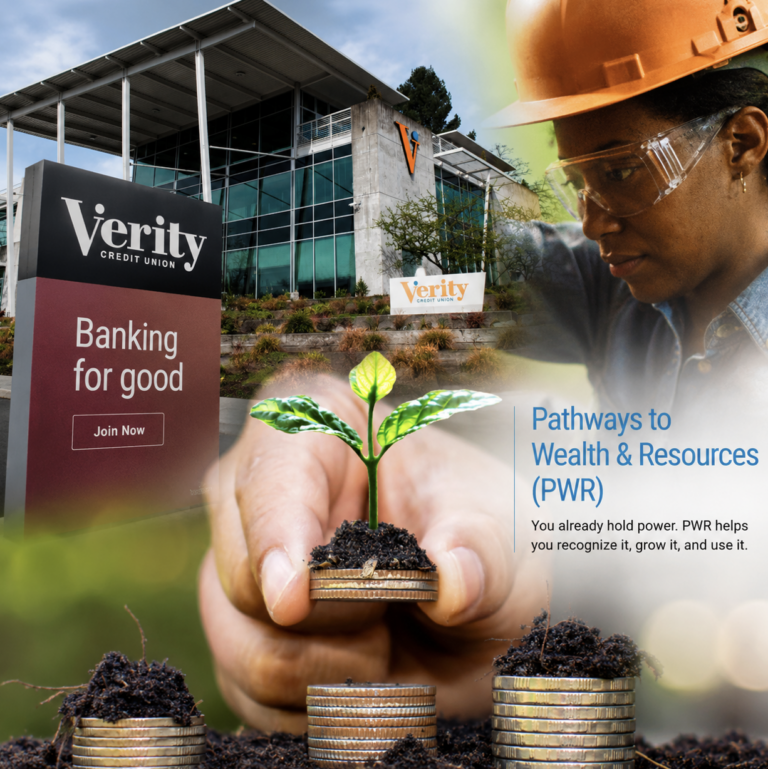
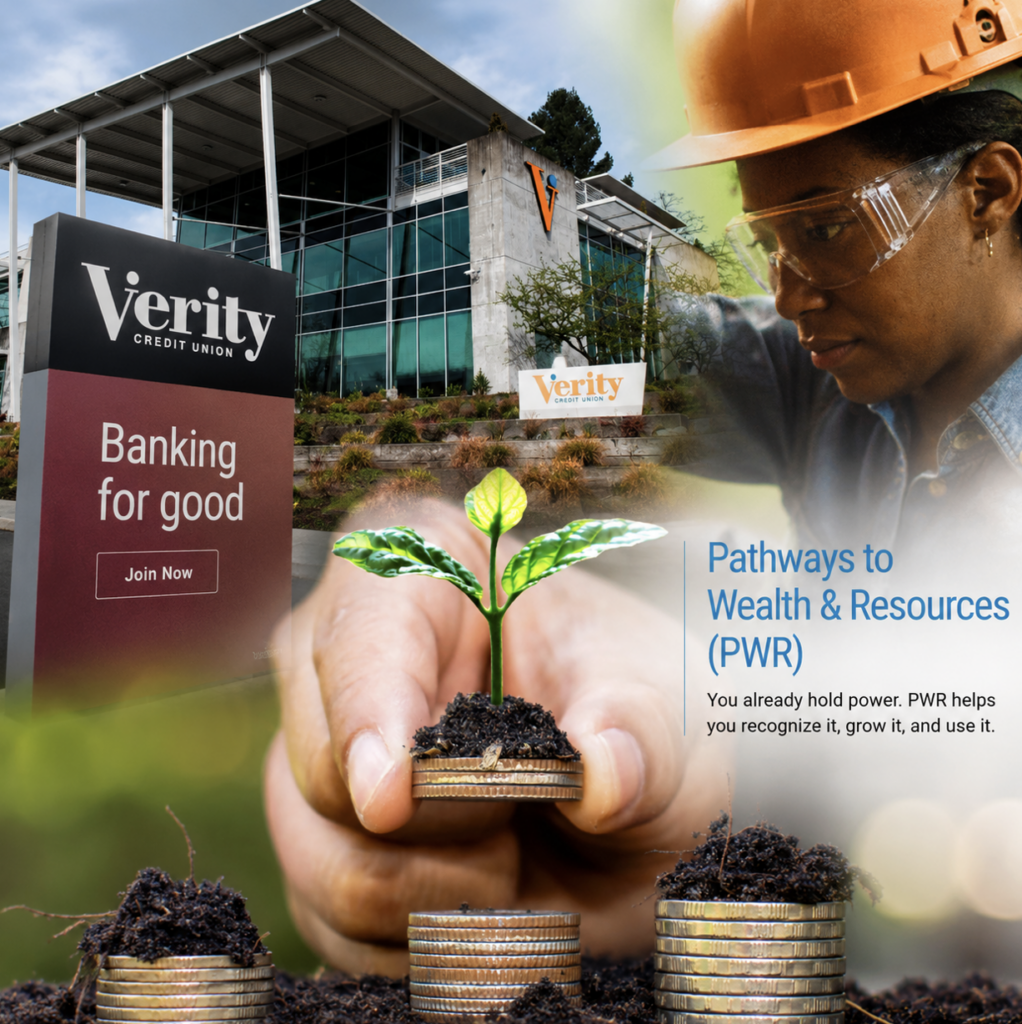
SEATTLE —With a focus on underserved communities, Verity Credit Union has launched a new financial well-being initiative called Pathways to Wealth & Resources (PWR) that is free and open to the public and which is designed to help individuals and small businesses build financial knowledge and pursue long-term stability—and now it’s sharing why it has done so.
The $735-million Verity CU said the initiative is grounded in the belief that individuals bring valuable lived experience and community knowledge to their financial journeys, and that those strengths should be recognized and supported.
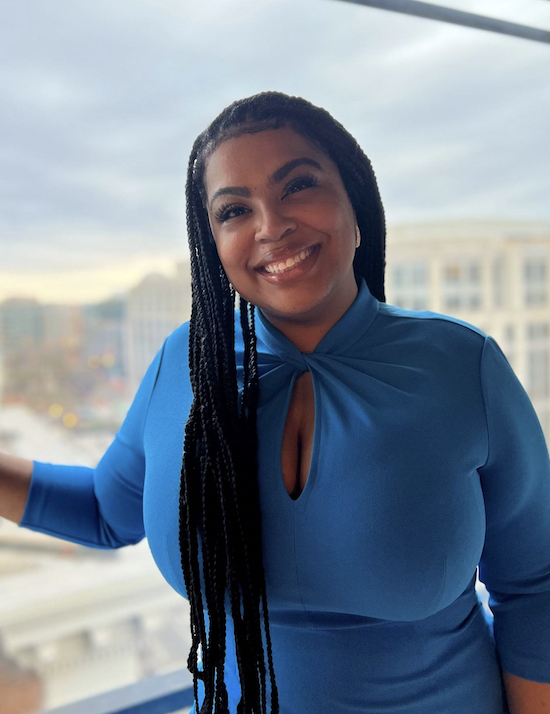
Below, Ziquora Banks, chief impact strategy officer with the credit union, offers insights and information about some of the thinking behind Pathways to Wealth & Resources with CU Daily readers.
The CU Daily: How did this program come to be, and what was the development timeline? Does Verity’s FOM play a role in the reasons for this launch?
Banks: As a certified CDFI and low-income designated credit union serving the Greater Puget Sound region, Verity’s mission is grounded in something fundamental to the credit union movement: people deserve access to quality financial education, tools, and products to build the lives they’re working toward. We have a responsibility to the communities we serve in actively meeting people where they are with products and services that address their needs. Pathways to Wealth and Resources is how we’re living that out in a tangible, intentional way.
PWR grew out of a question we kept coming back to: what would financial well-being programming look like if it was built with the people it is meant to serve? Before we built out anything, we listened. We surveyed our members and community partners and had real conversations with people across our community. What came back was a consistent theme, people wanted financial education that was accessible, practical, and built around their actual lived experience.
The CU Daily: Clearly, Verity sees a gap in the market. What gap did you identify, and what did you learn from your own experiences?
Banks: The gap isn’t really a market gap. There’s no shortage of financial education out there. What we identified is a gap in relevance and trust. People need financial education they can connect with, programming that respects what they already know and reflects the real financial lives they are living.
Our community partners and members were specific about not just having financial education, they wanted to see culturally responsive financial education that is designed for the people in the room. What we learned is that people aren’t lacking information. They’re lacking environments where their lived experience is treated as an asset, not a liability. PWR starts there.
Before we talk about budgeting or credit scores, we start with a person’s relationship to money — which is shaped by culture, family, history, and community. That foundation changes everything about what comes next.
The CU Daily: Please walk us through what the experience is like for a participant. How do they engage with the program?
Banks: Someone might find PWR through a community partner, a branch, social media, or word of mouth. Registration is simple, and there’s no membership requirement to attend.
When they walk into a workshop, or join virtually, they’re not sitting through a lecture. The environment is intentionally small, low-pressure, and conversational. We start where participants are, not where we think they should be.
The PWR journey moves through three stages: Foundations, Building, and Generational, participants enter wherever it makes sense for them. Foundations begins with something most financial programs skip: your relationship to money. What shapes it, what it means to you, what it makes possible. From there, we move into how financial systems work and build practical skills in a space that respects what participants already know.
Building PWR is where understanding becomes action, goal-setting, credit-building, savings strategies. And Generational PWR is about the long game: homeownership, entrepreneurship, planning for what you want to leave behind.
People can engage through single workshops, multi-session cohorts, coaching connections, or by bringing PWR directly to their school, workplace, or organization. The idea is that it grows with you.
The CU Daily: How will you get the word out about the program to those who need it most? Relatedly, how will you overcome the common hurdle that those who need this type of financial assistance and guidance are often the most reluctant to seek it out?
Banks: We go where people already are. We don’t expect people who have been historically underserved by financial institutions to seek us out. That’s on us to close that distance.
PWR is primarily delivered through community partnerships, organizations and spaces people already trust, where Verity has built meaningful relationships over time. When a housing nonprofit, a community college, or a cultural center says, ‘This program is worth your time\\ that carries weight. Those relationships are the strategy.
The barrier to engagement usually isn’t a lack of interest, it’s experience with programs that felt inaccessible, impersonal, or irrelevant. PWR is designed differently. No pressure, no shame. No checklist of what you’re doing wrong. We start with what’s true: you already know things. Your experience already matters. The program builds from there.
The other piece is cultural language. And we mean that in a deeper sense than translation (though expanding language access is something we’re working toward). Tone,
context, and the way we communicate reflects the lived experiences and cultural frameworks people carry with them. Financial concepts don’t land the same way across every community because money isn’t experienced the same way across every community. How families talk about it, what it means to ask for help, what “wealth” even looks like — those things are shaped by culture, history, and community. PWR is designed to hold that. When someone sees themselves in the language we use, the barrier to walking through the door gets a lot lower.
The CU Daily: This program is open to non-members. Will you be encouraging them to join Verity?
Banks: The workshops are educational spaces and we protect that trust. Financial education on its own is valuable but paired with access to affordable financial products and services is where it becomes transformational. We want every PWR participant to leave with both knowledge and a clear pathway to put it into practice. From understanding how credit works to accessing a credit building product, that pathway exists at Verity. We want people to know it is available to them and we exist as a resource.
We intentionally include our branch staff and other SME across Verity’s products and services as co-facilitators in the workshops. If a participant wants to learn more about Verity’s products or services, that door is open, and the best people are there to help.
And over time, we believe that when people experience Verity as a trusted, presence in their financial lives, some will choose to become members — because it makes sense for them, their families, and their communities. That’s the kind of growth that reflects our credit union values and that lasts.
The CU Daily: Who will lead the in-person workshops, and what have you learned makes these kinds of events most effective?
Banks: Workshops are led by our Community Financial Education Specialist, a dedicated role we created specifically for PWR, paired with subject matter experts across Verity. That combination is intentional. Participants get someone focused on financial education working alongside Verity staff with deep expertise in lending, savings, homeownership, small businesses and financial planning.
What makes these events work: small groups, genuine conversation, and facilitators who meet people where they are. The most effective workshops feel less like a class and more like a space where people can engage in discussions about finances honestly and without judgement.
We’ve also learned that what happens before the workshop matters as much as the content. How the invitation is worded, what the space feels like when you walk in, whether someone greets you at the door, all of that sets the tone. Trust gets built in details.
The CU Daily: In announcing this program, you reference financial equity and inclusion — terms that have come under increased scrutiny in recent years. Should credit unions be sensitive to potential pushback?
Banks: The credit union movement was built on people getting access to fair, affordable financial services. It’s a foundation we were built on and why Verity credit union exists.
As a LID and CDFI, the language we use reflects the realities of the communities we serve and a commitment to serving the full breadth of our community. PWR is that commitment in action. The goal is to support all of our communities with building lasting financial well-being that holds throughout generations.
The CU Daily: How will you measure the program’s success?
Banks: As a CDFI, measurement and accountability are built into how we operate and PWR is no different.
In the short term, we look at reach — who participated, where they came from, whether we’re serving the communities we said we would. We track participant feedback and self-reported changes in knowledge and confidence.
But the outcomes we care most about are longer-term: Are people building savings? Improving their credit? Are they connecting to financial products and services that are designed to work for them, not against them? Are they moving toward goals like homeownership or starting a business? We’re designing PWR to support longitudinal tracking. This means staying connected with participants over time, not just counting heads at a single workshop.
We also look at operational learning, especially right now as we pilot in-branch delivery. What works, what doesn’t, what we need to adjust before we expand. That kind of reflective measurement is built into how we run the program.
The CU Daily: Anything else you’d like to add?
Banks: People already carry power. Lived experience, cultural wisdom, resilience, community knowledge are real assets. PWR is built on that truth. It meets people where they are, pairs their strengths with the right knowledge and financial tools, and creates a clear path toward the financial future they are building. That is Verity’s mission in action.