SYDNEY, Australia — Organizations seeking sustained high performance know the traditional metrics, but the most successful leaders and companies also turn to some nontraditional approaches, including conducting “pre-mortems,” encouraging “collisions” between different types of workers, holding “Bring Out the Dead Days,” and even pitching their ideas to six-year-olds, according to one expert.
Those same organizations also sustain high performance by sharpening communications, focusing on pivotal cultural behaviors and managing employees’ energy as carefully as financial investments, global leadership analyst and change architect Holly Ransom told attendees at the World Credit Union Conference.
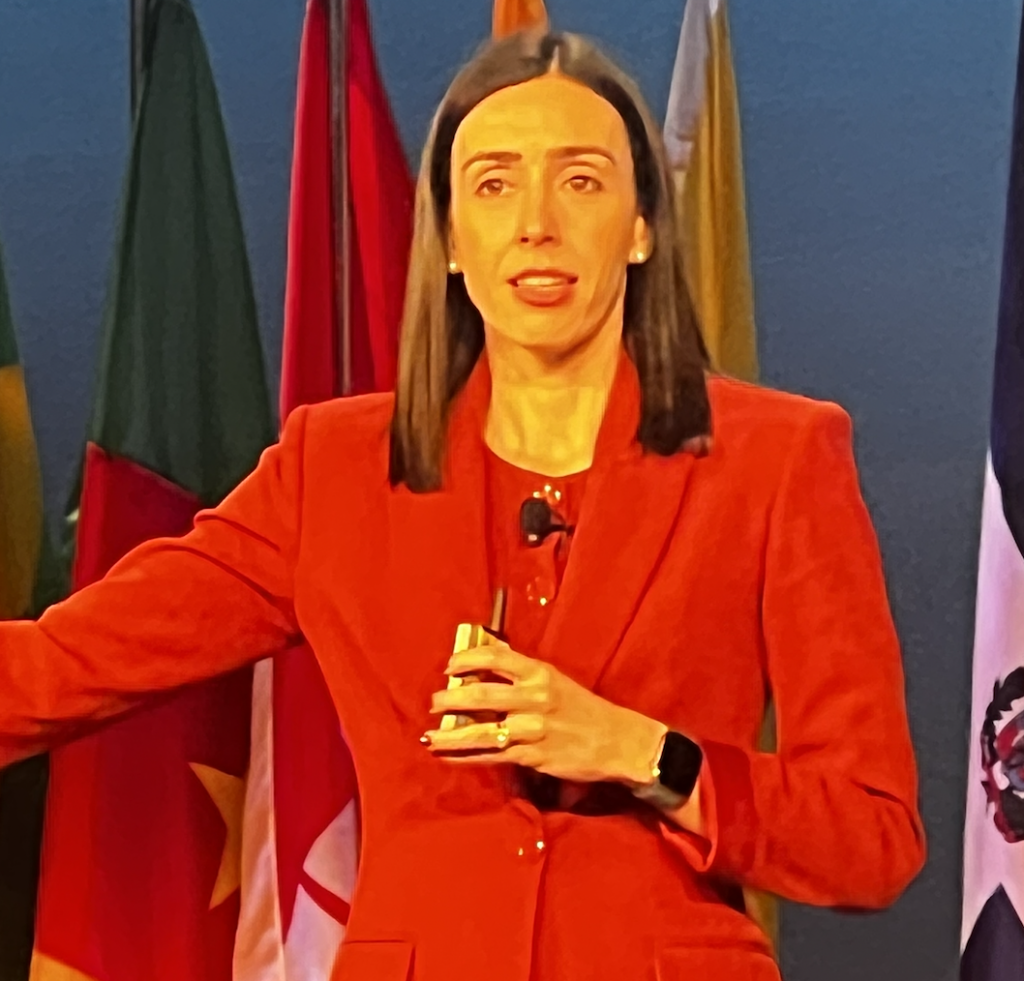
Ransom said she has spent 15 years studying how the world’s best-performing organizations sustain an advantage. Her work has included more than 950 high-stakes engagements across more than 20 industries and has led her to develop a model for maintaining high performance.
“My obsession for 15 years has been: How did the world’s best do it?” Ransom said.
Her performance model centers on three capabilities: directing and protecting attention, using “high-signal” techniques to create alignment and shared meaning, and moving from understanding to action, particularly under pressure.
Three Central Ideas
Ransom organized her remarks around three central ideas and offered tactics credit union leaders could take back to their organizations.
The first idea, she said, is that “high-signal thinking is a contact sport,” meaning organizations must intentionally create opportunities for people with different perspectives to collide.
High-signal thinking depends on seeing a fuller picture, she said.
Ransom recommended “Centennials,” a book examining organizations that have outperformed competitors for more than 100 years. Rather than sustaining success for only a quarter or several years, those organizations have remained successful decade after decade.
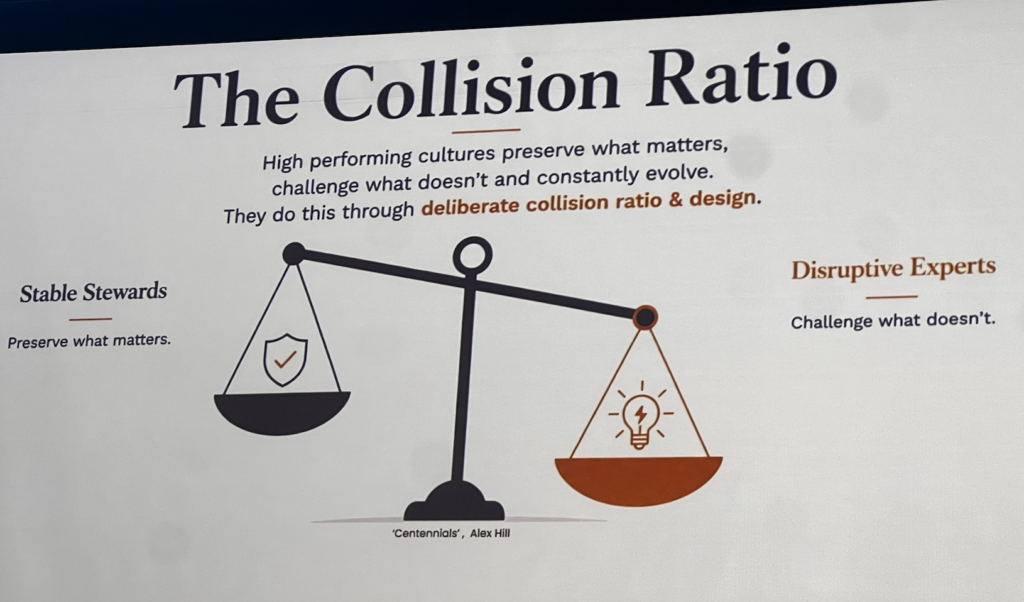
Among the practices identified by the researchers was careful attention to the composition of the workforce, Ransom said. The organizations placed particular value on two groups: employees with more than 10 years of experience and “deliberately disruptive experts.”
Those organizations developed what Ransom described as a “theory of composition.” Roughly one-quarter to one-third of the workforce consists of people who deeply understand how the organization operates, while as much as two-thirds consists of people who can intentionally disrupt established thinking.
Creating Collisions
The objective is to create productive collisions between the two groups, she said.
Organizations often avoid mixing those perspectives in projects and interactions, Ransom said, even though long-lasting, high-performing organizations intentionally bring them together.
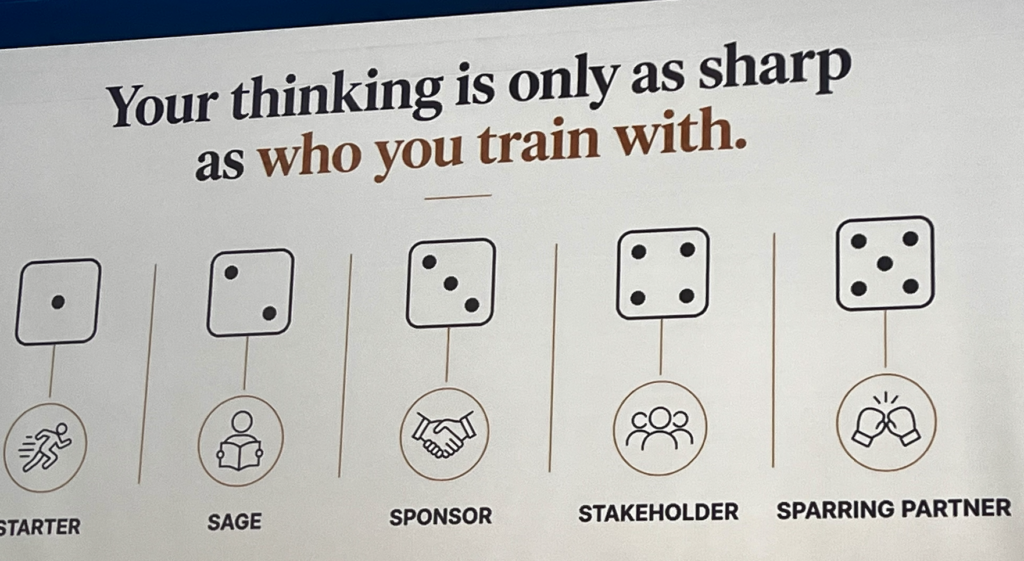
“Your thinking is only as sharp as who you train with,” she said.
Five Types of People
Ransom identified five types of people leaders should have on their teams: a starter, a sage, a scout, a stakeholder and a sparring partner.
The Starter
The starter can offer a younger generation’s perspective. Ransom asked attendees whether they had a mentor under age 35 and observed few, if any, raised hands.
“That must be an opportunity for us, particularly in a space that is rapidly transforming,” she said.
A major intergenerational wealth transfer is taking place at the same time that an entirely new generation of consumers is emerging, Ransom said. By 2030, Millennials and members of Generation Z will represent 75% of the workforce, she said.
“That might be something you want to consider,” Ransom said.
The Sage
The sage is someone who brings deeper expertise in a developing area. Artificial intelligence is one example, she said, because organizations need people who can help leaders think through potential AI use cases and how the technology should be applied.
The Scout
The scout comes from outside the credit union industry and can expose leaders to leading-edge practices and ideas from other fields.
The Stakeholder
The stakeholder can provide a fresh and honest perspective on what an organization or leader is like to work with.
The Sparring Partner
The sparring partner is someone willing to challenge assumptions and push a leader’s thinking. . Ransom has described the sparring partner as “caffeinated devil’s advocates” who challenge your thinking, push past your biases, and help you understand risks to raise the bar.
Effective leaders, Ransom said, extract lessons by asking challenging questions during conversations rather than simply gathering information.
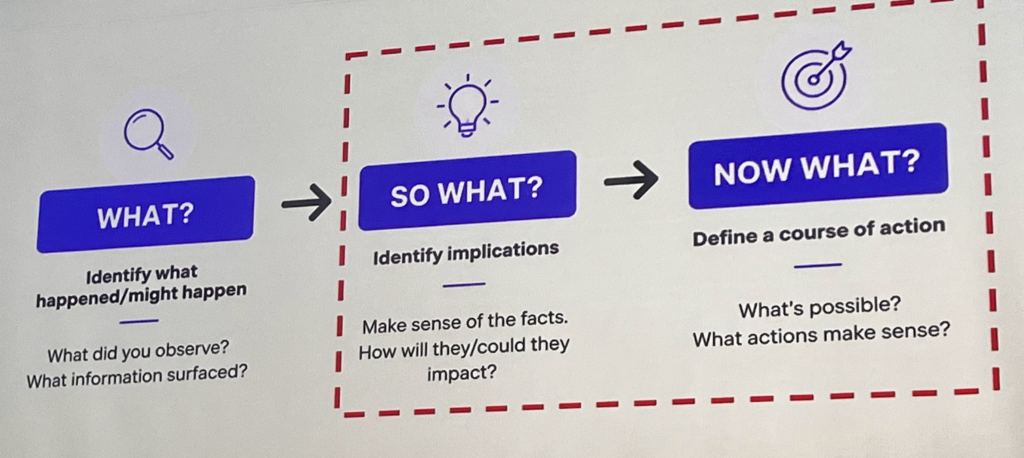
Organizations need people who can help them move beyond asking “What?” and instead answer two additional questions: “So what?” and “Now what?”
“In my experience, this has been where the two big misses are,” Ransom said.
The Pre-Mortem
One tactic leaders can use to improve planning and decision-making is the “premortem,” Ransom said.
Unlike a postmortem, which examines what went wrong after a project has failed, a premortem takes place before the project begins. Team members imagine that the project has already died and ask why it failed to survive. The exercise produces a list of potential problems that could undermine the effort before the organization begins investing substantial time and resources.
“This is one of the most useful planning activities you can undertake,” Ransom said.
She challenged attendees to conduct a “lightning premortem” with a member of their team within the next week.
In the first step, participants should push for volume by identifying as many possible causes of failure as they can. The objective is to force the brain into new territory and surface risks that otherwise might not have been considered.
In the second step, each participant should partner with someone else and exchange risk lists. After reviewing the other person’s list for three minutes, each participant should identify the two risks that deserve the most attention and begin generating possible solutions.
The exercise allows organizations to act on risks before they materialize and creates a safe environment for addressing topics that employees might otherwise hesitate to raise, Ransom said.
Idea Two: The Fulcrum
Ransom’s second major idea was that “performance has a fulcrum.”
She encouraged leaders to focus on their “catalytic move,” or the action capable of producing a disproportionate effect. A fulcrum is the small point on which a seesaw or lever rests. Although it is the smallest part of the mechanism, it determines how much force must be applied.
Performance cultures do not succeed by pushing on everything at once, Ransom said. They improve by identifying the behavior or action that can create the greatest leverage.
Ransom cited an observation often attributed to playwright George Bernard Shaw: “The single biggest problem in communication is the illusion that it has taken place.”
A lack of communication compounds over time and makes it easy for organizations and teams to drift off course, she said.
“Clarity isn’t something to be left to chance,” Ransom said. “Catalyze it.”
Leaders should consider whether employees believe it is safe to belong, learn, contribute and challenge within the organization. Leaders and team members often disagree about where their organization stands on that journey, she said.
The Three Echoes
Ransom recommended using three “echoes” when greater clarity is needed.
- The first is: “Tell me back, in your own words, what this change means.”
- The second is: “Tell me back what you think your part is in it.”
- The third is: “Tell me where you’re least clear.”
Ransom described the third question as the most powerful. “Ask this versus, ‘Are we clear?’” she said.
Leaders also must pay attention to what their organizations recognize and reward because those behaviors are likely to be repeated, Ransom said.
Bring Out the Dead
As an example of a catalytic cultural move, Ransom described an organization that holds a “Bring Out the Dead Day” every six months. During the celebration, the organization recognizes people who identified ideas, red tape, strategies and approaches that should be put to death.
The practice sends a message that eliminating outdated processes is valued and that employees will be recognized for challenging unnecessary work, she said.
Ransom also described another company that operates under the principle that “if you can’t explain it to a six-year-old, you don’t understand it yourself.”
The company’s focus was simplicity, particularly in the user experience and in how it engaged with customers. To test whether its explanations were understandable and engaging, the company brought in an audience of six-year-olds and explained what it was doing.
“Six-year-olds will not pretend to pay attention,” Ransom said. “If they are not interested, they will let you know.”
Ransom encouraged leaders to ask themselves what single behavior could set the tone for their organization’s culture and whether there is something small they could begin testing as a pilot.
Idea Three: Renewable Performance
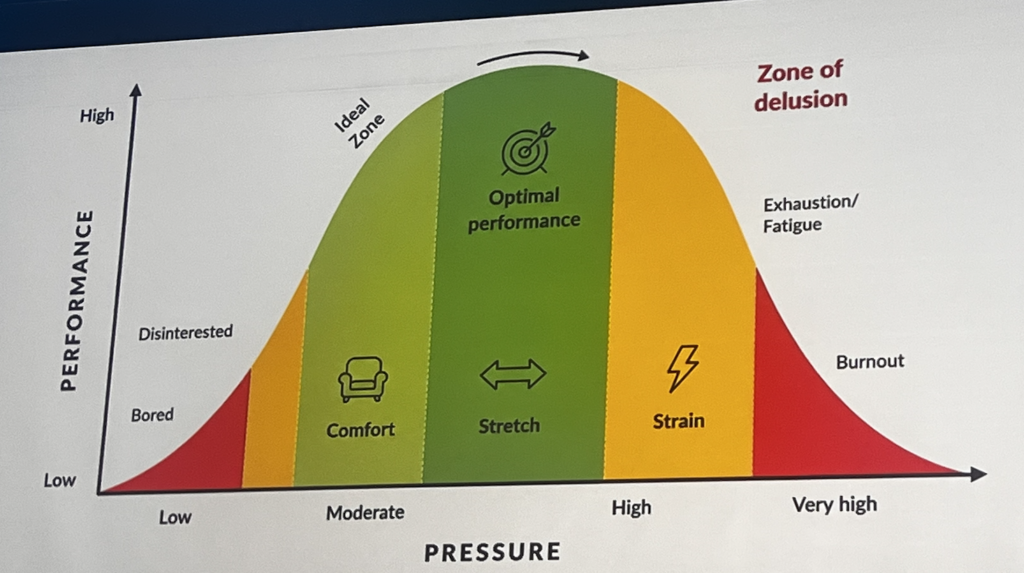
Her third major idea was that “renewable performance has a pulse” and organizations must regulate what keeps that pulse beating. Sustainable performance is not a one-time condition, Ransom said. It is a practice that must continually be renewed.
About 56% of executives experienced burnout during the past year, according to Deloitte research cited by Ransom. At the same time, about 24% of people are disinterested and disengaged, she said.
Organizations must find ways to renew performance so employees can thrive in the demanding environments they face each day, Ransom said.
Investing in ROE
Credit union leaders are passionate about return on investment, but they should be equally passionate about what she called “return on energy,” or ROE.
“Treat your energy like your investments,” Ransom said. “Audit it, build for it and protect it.”
Leaders should examine whether the highest-energy moments of their day are receiving the return they deserve or whether those periods are being spent scrolling through emails and dealing with minutiae.
When high-energy periods are consumed by low-value tasks, neither leaders nor their teams receive an adequate return on energy, she said.
For many people, the lowest-energy period of the week is Monday morning between 8 and 10 a.m., Ransom said. Yet many organizations schedule their weekly meetings during that same period.
Time for a Change. Literally
Ransom recommended changing the time and location of one meeting each week and remaining curious about what the change produces and what new behaviors or ideas emerge. Organizations must perform certain tasks, she said, but they also have opportunities to perform them differently.
Leaders should consider how they conduct activities such as audits and identify ways to introduce greater variety. Research shows variety can help unlock motivation, she said.
“Variety is critical,” Ransom said.
The ‘To-Test’ List
For people who rely heavily on to-do lists, Ransom recommended adding a second list: a “to-test list.”
The list should identify things the organization intends to test during the month to introduce variety and experiment with different approaches.
Within seven days, leaders should run one of the tests inside the organization and bring the idea to life. At the end of the month, the organization should review the results.
If the experiment worked, the organization can continue it. If it did not, leaders should identify what they learned and determine the next experiment to run.
“Energy is the currency of performance,” Ransom said.
She concluded by telling attendees that their organization’s future will not be determined by what they intend to do tomorrow but by the actions they take today.
“Don’t leave performance to chance,” Ransom said.