CHICAGO — The share of U.S. households considered financially vulnerable returned to a record high in 2026 as more families struggled to save, pay bills and manage debt, according to a new analysis from the Financial Health Network.
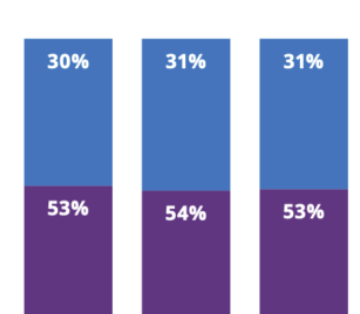
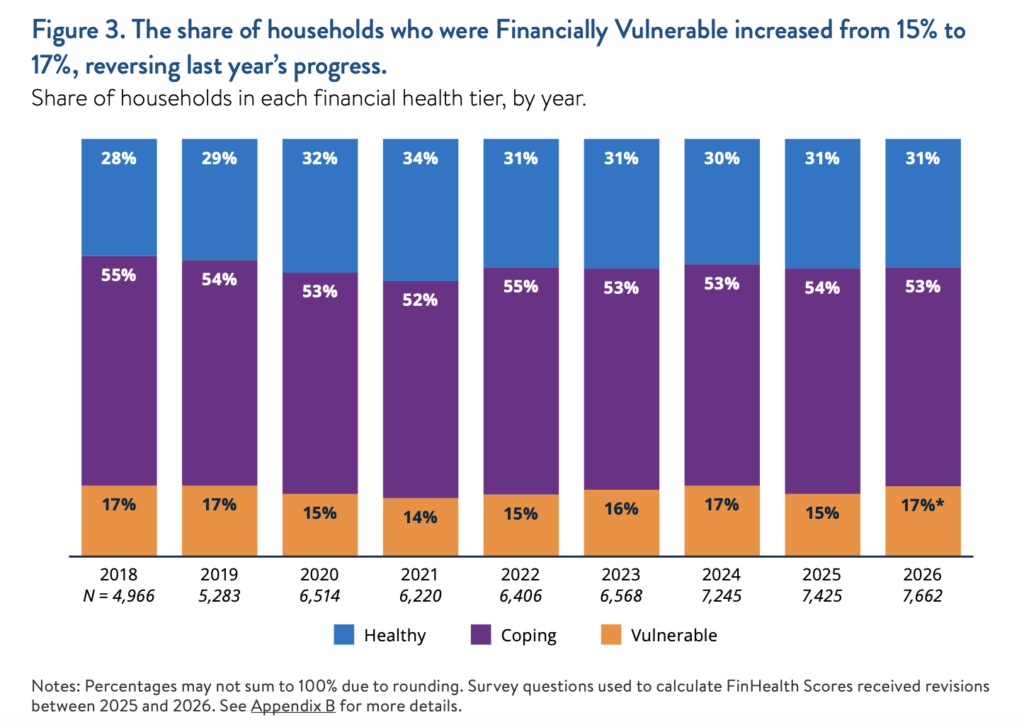
The organization’s Financial Health Pulse 2026 U.S. Trends Report found 17% of households were financially vulnerable, up from 15% in 2025 and matching the highest level recorded since the research began in 2018.
The share of financially healthy households remained at 31%, where it has been largely stuck for five consecutive years. The remaining 52% were classified as financially coping.
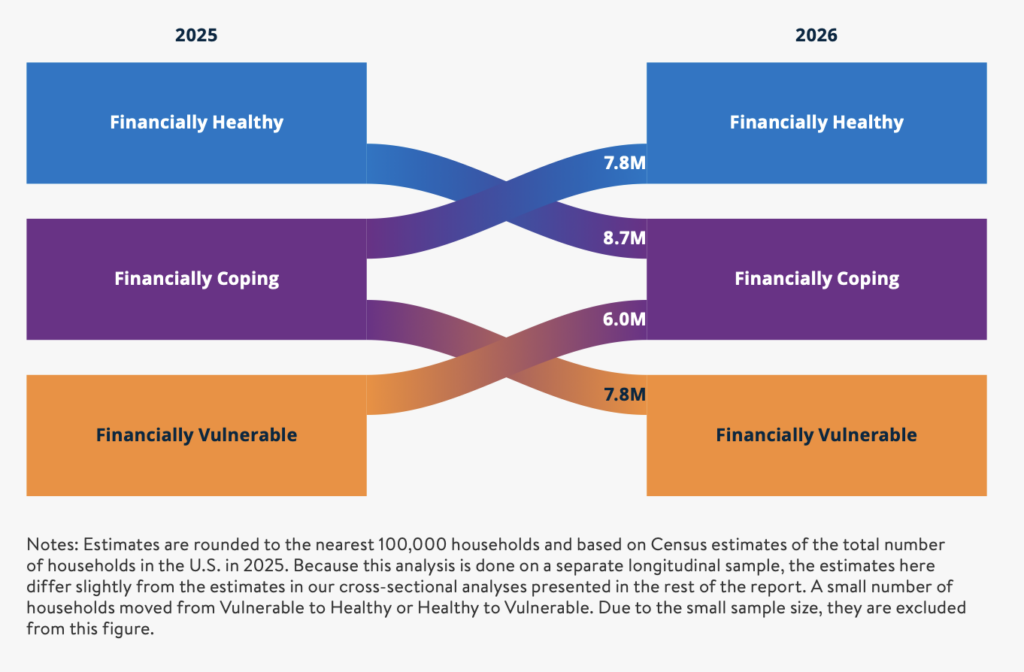
The Financial Health Network said the national figures mask considerable movement among households. About 30.3 million households, or 23% of the country, moved up or down at least one financial health tier between 2025 and 2026.
Downward movement exceeded improvement:
- About 16.5 million households moved down a tier.
- About 13.8 million moved up a tier.
- Approximately 7.8 million households moved from financially coping to financially vulnerable, while about 6 million moved in the opposite direction.
The result was a net increase of roughly 1.8 million financially vulnerable households, according to the Financial Health Network.
Bills, Savings Show Growing Strain
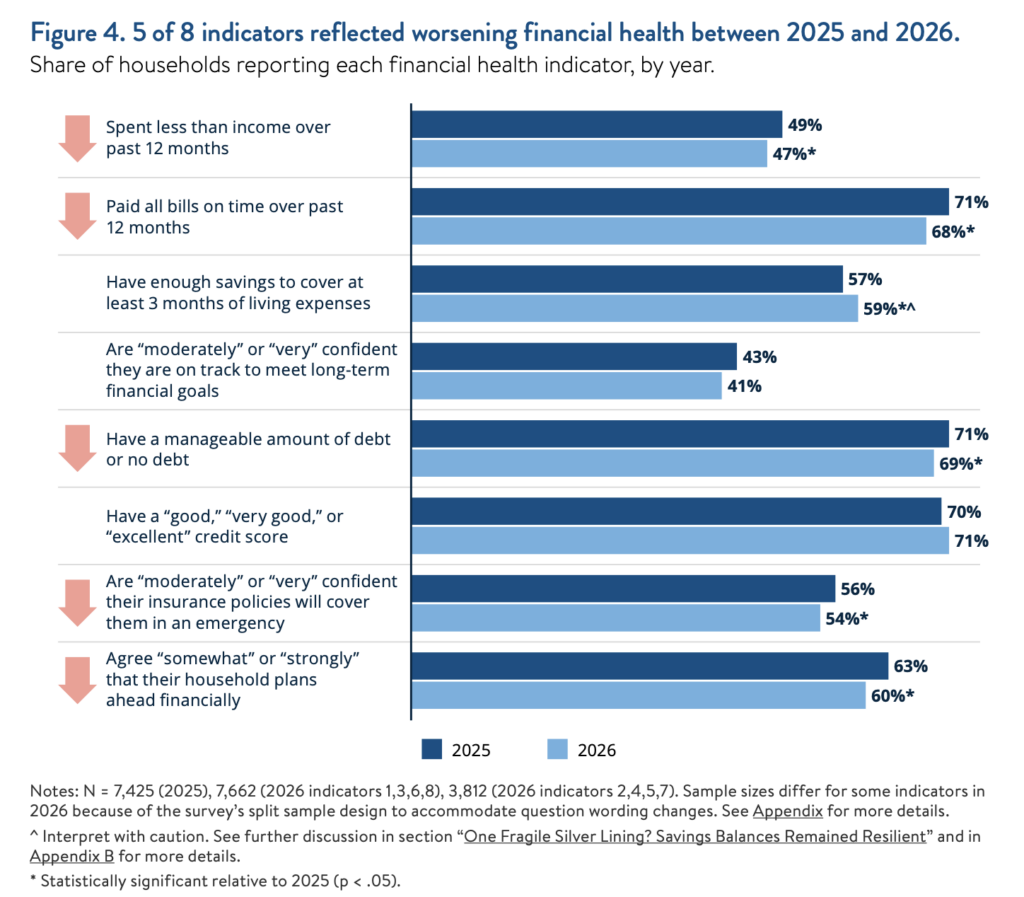
Households lost ground on five of the eight indicators the Financial Health Network uses to measure financial health: spending less than income, paying bills on time, managing debt, confidence in insurance coverage and planning ahead.
Among the findings:
- The share of households spending less than their income declined from 49% to 47%, approaching the lowest level recorded by the survey.
- The share paying all bills on time fell from 71% to 68%.
- The share reporting more debt than they could manage increased from 29% to 31%, the highest level in the report’s nine-year history.
- The share reporting high financial stress rose from 13% to 16%, returning to near prepandemic levels.
The deterioration was most pronounced among low-income households, which the report defined as those earning less than 50% of their area’s median income.
Among those households, the share spending less than income dropped from 35% to 31%. The share paying all bills on time fell from 54% to 49%. Changes among moderate-, middle- and upper-income households were smaller and generally not statistically significant, the Financial Health Network said.
Only 11% of low-income households were considered financially healthy. Among households with a negative net worth, the figure was just 2%.
Student, Auto Borrowers Under Pressure
Student loan and auto loan borrowers reported some of the sharpest increases in debt problems.
The report found:
- The share of student loan borrowers reporting unmanageable debt rose from 50% to 55%.
- The share of auto loan borrowers reporting unmanageable debt increased from 36% to 40%.
- Financial vulnerability among student loan borrowers jumped from 21% to 27%, one of the largest increases recorded for any group studied.
The Financial Health Network linked the pressure on student loan borrowers to the resumption of interest on loans previously in forbearance and movement toward less-generous repayment arrangements. Student loan borrowers also reported declines in their ability to spend less than they earned and in confidence that they could meet long-term financial goals.
Insurance Confidence Hits New Low
Just 54% of households said they were at least somewhat confident their insurance would protect them in an emergency, the lowest level recorded since the research began.
Concerns were spread across health, life and property coverage, although the Financial Health Network found slightly greater concern about property insurance.
Among households experiencing an unexpected medical expense or major health change, about 60% felt mostly or very well protected by health insurance. That compared with about 70% of households that had not experienced such an event.
The report also found a gap between homeowners and renters. About 79% of insured homeowners felt well protected by their property coverage, compared with 61% of renters carrying renters’ insurance.
Essentials Increasingly Difficult to Afford
Only about six in 10 households were completely confident they could afford essentials such as food, housing, utilities and transportation, according to the analysis.
Fewer than one-quarter of households paying or planning to pay for higher education were completely confident they could afford it.
Among households that were not at all confident they could afford food, utilities or housing, approximately seven in 10 were financially vulnerable.
Financial stress closely tracked households’ overall financial condition:
- Half of financially vulnerable households reported high financial stress.
- About 12% of financially coping households reported high stress.
- Just 2% of financially healthy households reported high stress.
Large demographic disparities also persisted. The Financial Health Network said white households were twice as likely as Hispanic or Latino households and three times as likely as Black households to be financially healthy. Asian households showed similarly large advantages. People with disabilities were more than twice as likely to be financially vulnerable as those without disabilities.
Coordinated Response Urged
The Financial Health Network said emergency savings remained roughly stable during the year, providing one of the report’s few positive findings. It cautioned, however, that savings could begin deteriorating if fewer households continue to spend less than they earn.
The organization said temporary debt relief, one-time cash payments and expanded access to banking services have produced improvements in the past, but those gains often proved temporary. It called for financial institutions, employers, benefits providers, technology companies, charitable organizations and policymakers to coordinate their efforts around sustained improvements in household financial health.
The Financial Health Pulse has tracked household finances since 2018. Its 2026 findings are based on a nationally representative, probability-based panel of more than 7,600 households surveyed through the University of Southern California’s Understanding America Study.
Households were evaluated using eight indicators covering spending, saving, borrowing, planning and protection, then classified as financially healthy, financially coping or financially vulnerable. The research was supported by the Principal Foundation.