CHICAGO–Credit unions across the country have trained front line staff to be aware of signs of dementia, but now a major new study has found everyday financial behaviors—captured in routine banking data—can signal early signs of cognitive decline and financial vulnerability in older adults, up to a decade before formal intervention.
The research, published in JAMA Network Open and reported by Medicalxpress.com, was overseen by Professor John Gathergood from the University of Nottingham’s School of Economics, and David Leake at Lloyds Banking Group.
According to the report, the study analyzed anonymized banking records from over 66,000 individuals. It compared 16,742 individuals who were registered for power of attorney (PoA) due to a loss of financial capacity with a control group of 50,226 matched individuals without reported capacity loss.
‘Subtle But Significant’
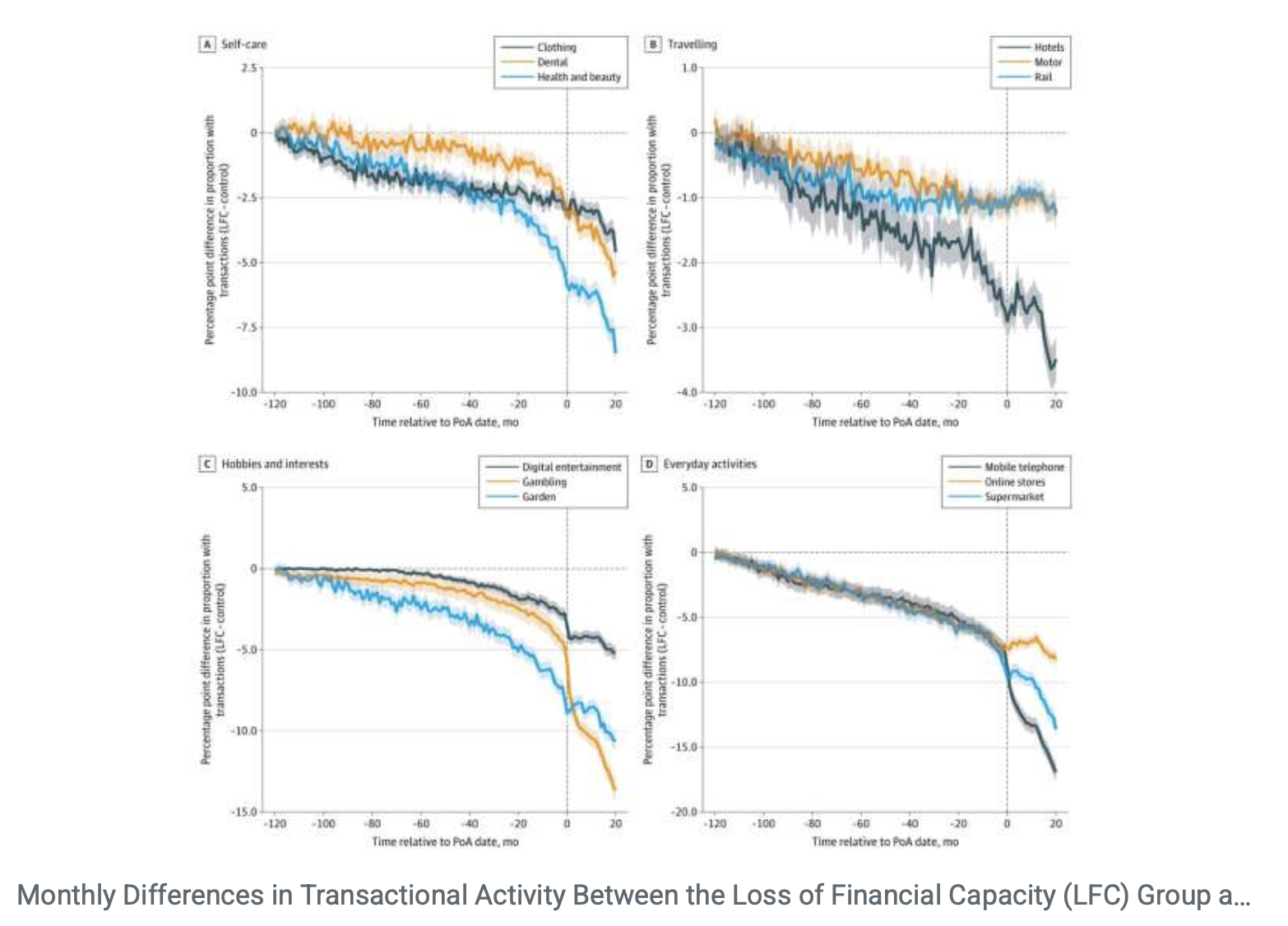
“The results reveal that subtle but significant changes in financial behavior—such as reduced spending on travel and hobbies, increased household bills, fewer online banking logins, and more frequent requests to reset PINs—begin to appear several years before individuals are formally identified as lacking financial capacity,” Medicalxpress.com reported.
“These patterns provide the first large-scale evidence that behavioral data held by financial institutions can reveal the early emergence of cognitive decline,” said Dr. Gathergood told Medicalxpress.com. “It’s a demonstration of how anonymized banking data can be used responsibly to protect the most vulnerable members of society.”
The Key Findings
According to the research published in JAMA and reported by Medicalxpress.com, key findings show that individuals with cognitive decline were:
- 9.6 percentage points less likely to spend on travel five years before PoA registration.
- 7.9 points less likely to spend on hobbies like gardening.
- 1.0 fewer online banking logins per month.
- More likely to report fraud, lose cards, and request PIN resets.
Decreased Engagement
“The research suggests that early-stage Alzheimer’s disease and related dementias may lead to decreased engagement in self-care and out-of-home activities, replaced by increased home-based spending. Importantly, the decline in financial activity also included signs of financial errors and vulnerability to fraud,” Medicalxpress.com stated.
The study calls for further research into integrating financial data ith health and social care pathways—always with strict data privacy safeguards, the report states.