

SACRAMENTO, Calif. — Former Consumer Financial Protection Bureau Director Rohit Chopra’s appointment to lead California’s new Business and Consumer Services Agency could signal more aggressive state scrutiny of financial companies, particularly over fees, artificial intelligence, consumer data and repeat violations, according to an analysis by Troutman Pepper Locke.
Gov. Gavin Newsom appointed Chopra as the inaugural secretary of the Business and Consumer Services Agency, or BCSA, on May 12. The agency began operating July 1 following a reorganization of California’s cabinet-level agencies.
Troutman Pepper Locke said the creation of BCSA does not expand the statutory authority of the California Department of Financial Protection and Innovation, or DFPI. But Chopra’s position gives him an opportunity to coordinate enforcement priorities and policy across agencies responsible for consumer protection.
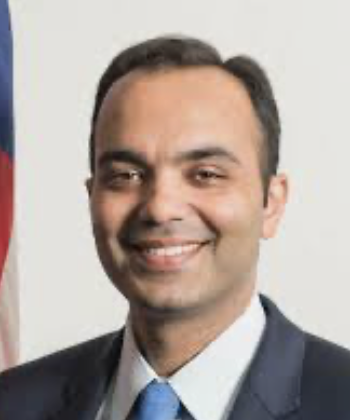
The law firm said Chopra’s record at the CFPB and Federal Trade Commission offers clues about where that scrutiny could be directed.
Fees Could Draw Greater Scrutiny
Among the areas Troutman Pepper Locke said financial institutions should watch are fee-based business models.
During his tenure at the CFPB, Chopra frequently treated fees not simply as disclosure issues but as features of products and business models that could potentially violate prohibitions against unfair, deceptive or abusive acts or practices, according to the analysis.
Troutman Pepper Locke said that approach could carry over to California enforcement under the California Consumer Financial Protection Law.
The analysis pointed to DFPI’s July 1 announcement ordering five broker-dealers to return more than $1.3 million to California consumers who allegedly were charged excessive commissions on small-dollar transactions.
Potential areas of scrutiny could include overdraft and nonsufficient funds fees, late and convenience fees, subscription and automatic-renewal practices and pricing that uses behavioral or personal information, the law firm said.
AI, Algorithms Also in Focus
Artificial intelligence and algorithmic decision-making represent another area of potential enforcement risk.
Troutman Pepper Locke said Chopra has consistently maintained that using algorithms does not shield companies from fair-lending, anti-discrimination or consumer-protection laws.
As a result, the firm expects DFPI to closely examine AI-driven underwriting, targeted advertising and credit scoring systems.
That could include advertising that uses behavioral or geolocation information to steer consumers toward high-cost financial products, underwriting that relies on social media or device information, and credit scoring systems unable to provide clear reasons for adverse decisions, according to the analysis.
The law firm recommended that financial companies pressure-test their AI governance programs against California requirements.
Consumer Data Another Priority
Data collection and monetization also could receive increased attention.
Troutman Pepper Locke cited Chopra’s previous scrutiny of technology companies offering payment services and his support for open banking rules intended to give consumers greater control over financial information.
That approach has already surfaced at BCSA, the firm said. On July 6, the agency urged the FTC not to terminate a privacy and data-security order against X, arguing that mishandling sensitive information can contribute to financial harm, fraud and stalking.

The analysis said companies should expect scrutiny of how they obtain consumer consent, use information for financial marketing and comply with restrictions governing secondary uses of financial data.
Repeat Violations Could Bring Tougher Remedies
Troutman Pepper Locke said companies with previous enforcement problems also should pay particular attention to Chopra’s approach.
At the CFPB and FTC, Chopra advocated structural remedies that could include product restrictions, changes to business practices and individual accountability rather than relying solely on financial penalties, the firm said.
BCSA has said serious violations could ultimately result in the loss of a license to operate in California, while Chopra has indicated the agency will focus auditing and inspection resources on entities posing the greatest risks.
That means companies with recurring complaints or previous enforcement actions should not assume a negotiated penalty and corrective-action plan will necessarily resolve future cases, according to the analysis.
California Could Fill Federal Regulatory Gap
Troutman Pepper Locke said the larger significance of Chopra’s appointment is California’s potential emergence as a more influential consumer financial regulator as federal oversight retreats.
With DFPI, the state attorney general and now a cabinet secretary with extensive federal regulatory experience, California is positioned to become a leading forum for consumer financial enforcement, the firm said. New York is pursuing a similar direction.
For banks, fintechs, nonbank lenders, debt collectors, payments companies and other financial firms operating in California, the analysis recommends reassessing fee structures, auditing algorithmic models, strengthening data governance and ensuring compliance programs can address repeat violations.
Troutman Pepper Locke said the early actions of BCSA and Chopra’s previous regulatory record suggest the change is no longer merely theoretical.
“The industry is no longer preparing for a hypothetical shift; it is now reacting to one already underway,” the firm said.



