ORLANDO, Fla.—It isn’t the work artificial intelligence is doing at credit unions, but rather the way work must be redesigned in response, according to one futurist who advised moving forward competitive advantage will hinge less on access to technology and more on how institutions structure human and machine collaboration.
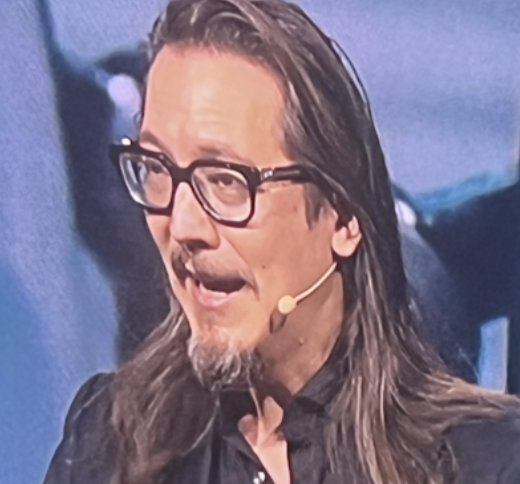
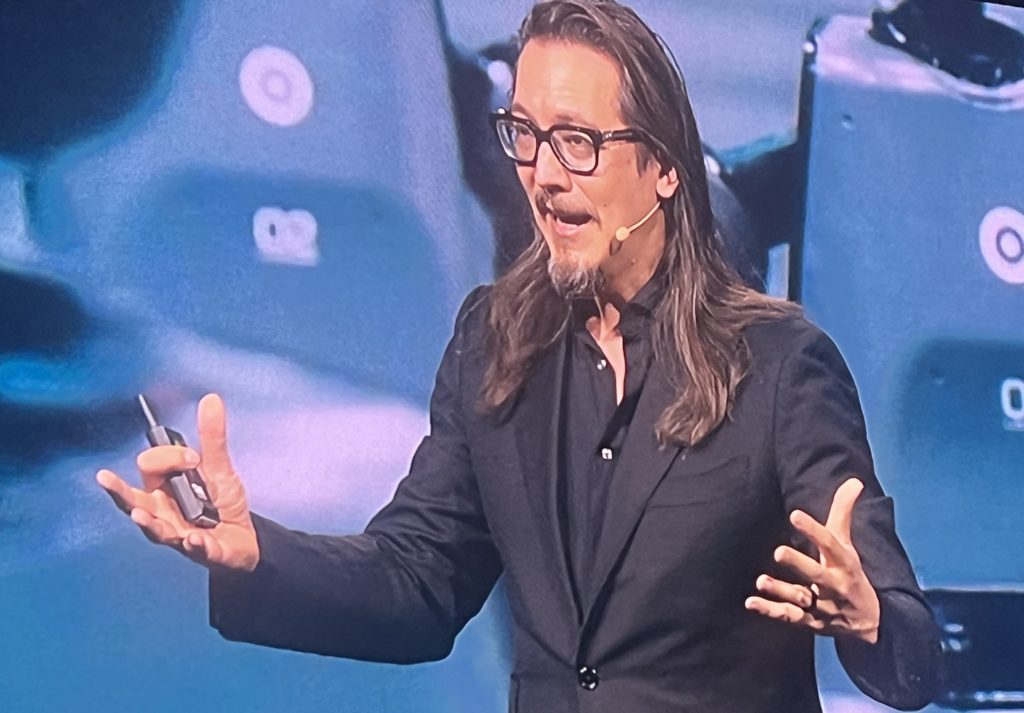
Speaking at the VeleraLIVE conference, futurist and author Mike Walsh said AI represents “an invitation to completely reconsider how we work, where we work and the very structure of our society,” noting that intelligence is no longer scarce.
“Today, you don’t need a team of computer scientists or a giant lab in Silicon Valley,” Walsh said. “You can sign up for tools like ChatGPT or Claude for $20 a month. Every organization now has access to the same cognitive capabilities.”
After consulting with more than 50 of the world’s largest companies, Walsh said the defining question has shifted away from who has the best people or most advanced technology.
“The organizations that will win over the next decade are those that deliberately design where decisions sit and how humans and machines work together,” he said. “Advantage doesn’t come from having intelligence. It comes from how you arrange it.”
The Rise of ‘Digital Labor’
Walsh said many institutions remain focused on outdated applications of AI, such as chatbots, while the next wave—what he called “digital labor”—is already emerging.
“This is software that does work traditionally done by humans, but it scales like software and accumulates value like capital,” he said. “It will completely change the economics of financial services.”
He warned that organizations may be underestimating the pace and magnitude of change, pointing to rapid advancements over the past 18 months and predicting even more dramatic shifts ahead.
Examples of Transformation
Walsh highlighted examples of AI transforming operations in real time, including restaurant operators using AI assistants that monitor sales, staffing and inventory while providing live guidance to managers through earpieces. Similar augmentation is occurring in logistics, where delivery workers use augmented reality tools to improve efficiency and safety, such as Amazon, where the glasses show drivers where packages are in trucks and where they should be left at individual homes.
“Technology is augmenting and accelerating human performance,” Walsh said.
He added that AI is also reshaping service delivery at scale, citing pharmaceutical companies deploying “digital nurses” to monitor patients, ensure medication adherence and provide ongoing support—tasks previously impossible to perform at scale with human labor alone.
“Our definitions of what good service is going to be will change radically,” he said.
Embedded in Everything
Looking ahead, Walsh said AI will move beyond screens and become embedded in everyday environments, eventually outnumbering humans and participating in nearly every interaction.
“AI is going to understand your intent, take action in the real world and do something useful,” he said. “You may come into work and instead of loading dashboards, you simply ask questions: Why are we doing well? Why not?”
Walsh framed the shift as the early stages of a new Industrial Revolution and cautioned against simply layering AI onto existing workflows.
“There is no point applying AI to current processes and then being surprised that nothing has changed,” he said. “If 80% of your business could be done by AI, how would you redesign it today?”
Rethinking Design
He urged leaders to rethink organizational design, asking what work should remain human-driven and what higher-value activities are worth preserving.
“When the tools change, you’ve got to change the work,” Walsh said, noting that traditional skills—such as mastery of spreadsheet tools—are becoming less relevant as AI can generate complex models instantly. “The real value is knowing the right questions to ask and the context behind them.”
Walsh said future knowledge workers will be defined not by their expertise in performing tasks, but by their ability to design better systems and workflows.
“We’ve got to get better at not doing the work, but designing the work,” he said. “We need to become design architects.”
Human Cost vs. Token Cost
He also encouraged organizations to evaluate the “human cost versus the token cost” of AI usage to better understand where people add the most value.
In closing, Walsh emphasized the importance of curiosity and adaptability.
“It’s tempting to fall back on the things you used to do. It’s feels comfortable. But we should do the opposite. We should be curious, take risks, try new things and commit to the discipline of investing and embracing new technologies,” he advised. “You’ve got to be curious and embrace the process. Doing what you did before is a risky bet that the future will be the same as yesterday. The AI revolution is really asking us to step back and design systems that generate the best decisions, and that requires letting go of our egos to some extent.”