

POIPU, Kauai — A state league president and the president of the National Association of State Credit Union Supervisors (NASCUS) shared insights with credit union board members here on a wide range of issues, including stablecoins, artificial intelligence and regulation.
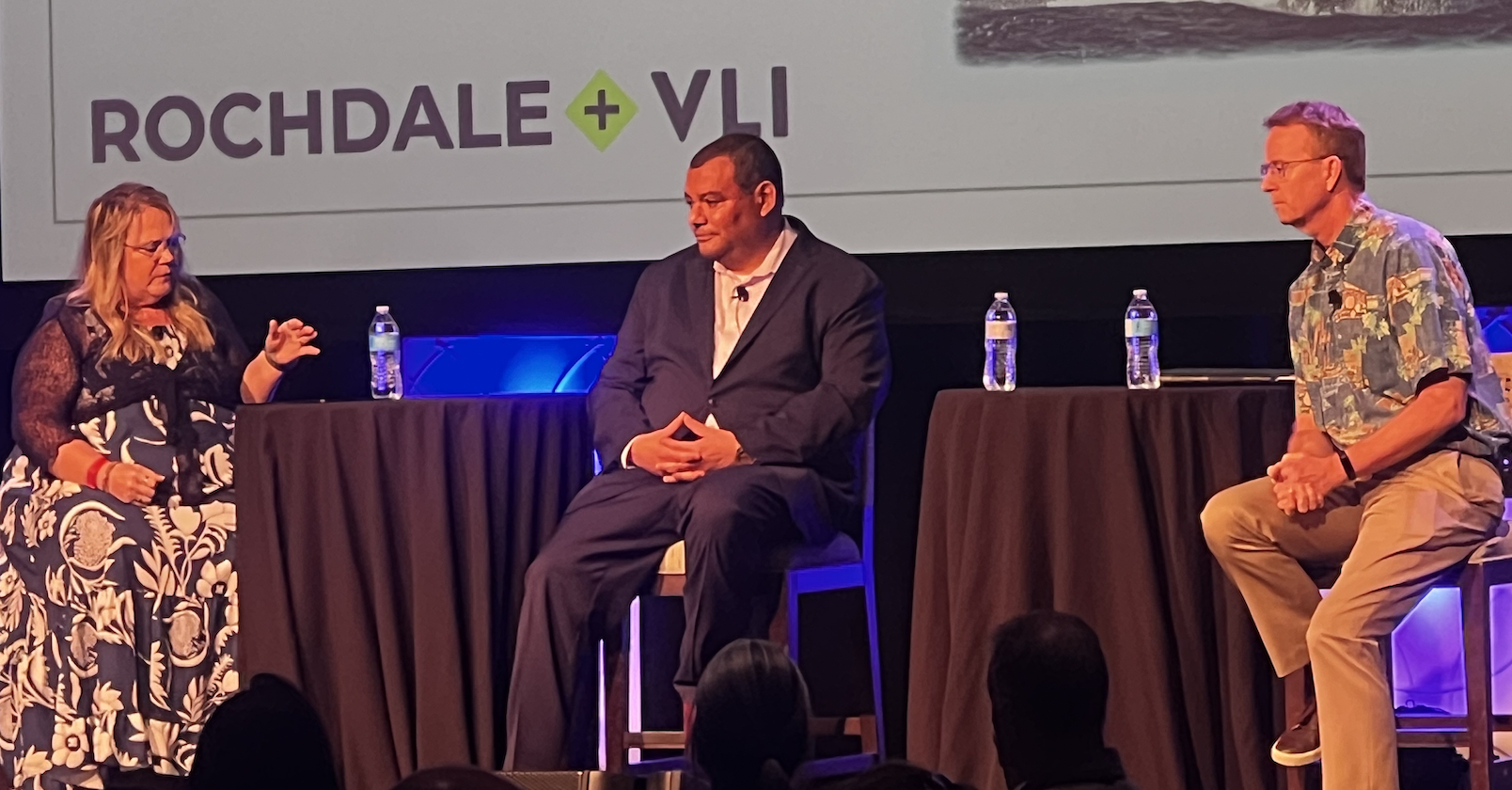
Tim Ashcraft, president of the Hawaii Credit Union League, and Brian Knight, president of NASCUS, spoke during a session at Rochdale’s Volunteer Leadership Institute moderated by Roberta Rodgers, vice president of compliance with Rochdale.
Here are highlights from the discussion:
Rodgers: What do credit unions need to do to prepare for stablecoins following the GENIUS Act?
Ashcraft: Credit unions have always been innovators. From a league perspective and a board perspective, you need to do your due diligence and research to determine whether this is right for your credit union. Technology is changing quickly, and we have to be competitive regardless of size.
Knight: There have always been skeptics, but I’m reminded of when Bitcoin first emerged. Technology ultimately wins out. Due diligence needs to be done, and the credit union system needs to understand these issues and their applications.
Knight noted the U.S. trails other countries in stablecoin adoption and that Tether already holds more than $180 billion in value.
“We need to understand what stablecoin is and the policy implications,” he said. “There are still a lot of unanswered questions, including debates around redemptions, yield and more. Along with understanding the technology, the credit union system needs to pay attention to these policy debates as stablecoins roll out.”
Rodgers: What are your concerns around AI?
Knight: Much like stablecoin, AI is here whether you like it or not. From a financial services perspective, we’re looking at it through a couple of prisms.
First, do your due diligence and understand where it’s going and how it’s being applied. You can’t adopt it first and then decide how to use it. You need an identifiable role and a clear sense of how AI or fintech solutions help achieve that role.

Another issue is that while businesses focus on efficiency, the general public remains skeptical of AI. As we adopt this technology, we have to think about how we communicate with members, so they maintain an affinity for us. What is the deliverable for our members?
Ashcraft: What is the member expectation? They may not like the technology, yet they want a decision in less than a minute. How do you continue to add value for the membership? Leveraging technology is a good start, but due diligence must be part of your strategic plan.
Knight: Regulators are learning this alongside you. They’re figuring out the impact on credit unions and on their own agencies. They’re on the same journey.
Ashcraft: One thing NCUA Chairman Kyle Hauptman talked about was eliminating regulation by enforcement. The game keeps moving and the regulations keep changing. Your next exam could involve an AI bot.
Audience observation: The general public is afraid of AI because they don’t understand it. We have to educate our members, so they’ll embrace it.
Knight: That’s right. You have to think carefully about how you message this to your membership.
Ashcraft: Look back at COVID. I was working at a credit union, and we struggled to get people to use home banking — until they were forced to. People will accept change, just at a different pace.
Audience: With growing opposition to anything coming out of the federal government, what impact is that having on regulators and their relationships with credit unions?
Knight: If the question is how regulators are reacting to shifting policy pronouncements from Washington, there has always been a balancing act between supervision and operations. Within regulatory and academic circles, there’s a nuanced debate around guidance. Some argue guidance isn’t a rule, but that’s different from having no guidance at all. For smaller organizations, guidance can serve as a cheat sheet.
At the state level, there’s also a give-and-take, since states are independent of the federal government but share supervisory responsibilities.
Ashcraft: From the league perspective, credit unions just want to know the rules of the game. Even with the removal of reputation risk by NCUA, I don’t see that significantly changing how credit unions operate. You still don’t want to do anything that could harm your institution.



