WASHINGTON–Analyses from some of the nation’s largest news publications agree that the Supreme Court’s decision in Trump v. Slaughter is among the most consequential separation-of-powers rulings in decades. Where the newspapers differ is in their assessment of whether the decision restores the Constitution’s original design or fundamentally weakens the independence of the federal regulatory state.
Here’s what three major publications had to say:
The Wall Street Journal
The Wall Street Journal characterizes the decision as a historic reaffirmation of presidential authority under Article II. Its reporting and analysis emphasize that the Court completed a constitutional shift that has been underway for years through decisions such as Seila Law and Free Enterprise Fund. The Journal views the ruling as restoring democratic accountability by ensuring executive officers answer to the elected president rather than operating with substantial independence.
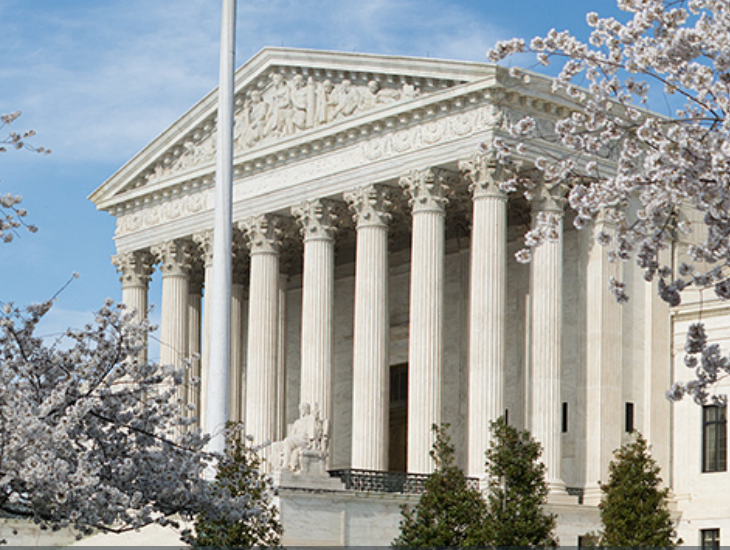
The Journal notes that presidents of both political parties have long complained that independent agencies dilute executive authority while remaining largely insulated from political accountability. From this perspective, the decision is expected to make future administrations more effective by allowing presidents to ensure regulatory agencies implement policies consistent with the administration’s agenda rather than pursuing independent priorities.
At the same time, the Journal notes that the Court deliberately stopped short of dismantling the Federal Reserve’s independence, suggesting the justices recognize some constitutional limits to presidential control.
The New York Times
The New York Times also views the ruling as one of the most significant expansions of presidential power in modern American history. Its analysis focuses less on the immediate dispute involving the Federal Trade Commission and more on the broader restructuring of the federal government.
According to the Times, the decision effectively removes one of the principal legal foundations supporting the independence of dozens of regulatory agencies created over the past century. The newspaper notes that Congress designed many of these commissions to operate outside direct White House control in order to provide continuity, technical expertise and insulation from partisan politics.
The Times suggests the ruling is likely to produce additional litigation challenging removal protections for leaders of other agencies and may accelerate efforts by future presidents—regardless of party—to reshape regulatory bodies immediately upon taking office. It also highlights the uncertainty surrounding agencies that were not directly before the Court, particularly financial regulators.
The Washington Post
The Washington Post similarly portrays the ruling as transformative but emphasizes its practical implications for governance. Its reporting suggests the decision strengthens what constitutional scholars call the “unitary executive” theory, under which executive authority ultimately resides in the President.
The Post notes that the decision could affect agencies well beyond the FTC, including financial, labor and communications regulators. It also highlights the Court’s simultaneous decision protecting Federal Reserve Governor Lisa Cook from removal (see related story), describing the two rulings together as drawing an important—though still undefined—constitutional distinction between the Federal Reserve and most other independent agencies. The newspaper suggests that future litigation will likely focus on determining which agencies, if any, qualify for similar treatment.
The Post also points to pages 27 and 28 of Chief Justice John Roberts’ opinion as particularly significant because the Court declares that it has abandoned the concept of agencies exercising only “partly executive” powers. That language, the Post notes, provides litigants with new constitutional arguments against removal protections across much of the administrative state.