ATLANTA — Counter to the traditional trend, wholesale used-vehicle prices rose in February from a year earlier and posted a stronger-than-typical monthly increase, according to data from Manheim, a Cox Automotive company.
The Manheim Used Vehicle Value Index climbed to 212.3 in February, a 4% increase from February 2025 after adjusting for mix, mileage and seasonality. The index rose 0.8% from January. Historically, February prices tend to decline slightly, with a long-term average monthly move of a 0.2% decrease, the company noted.
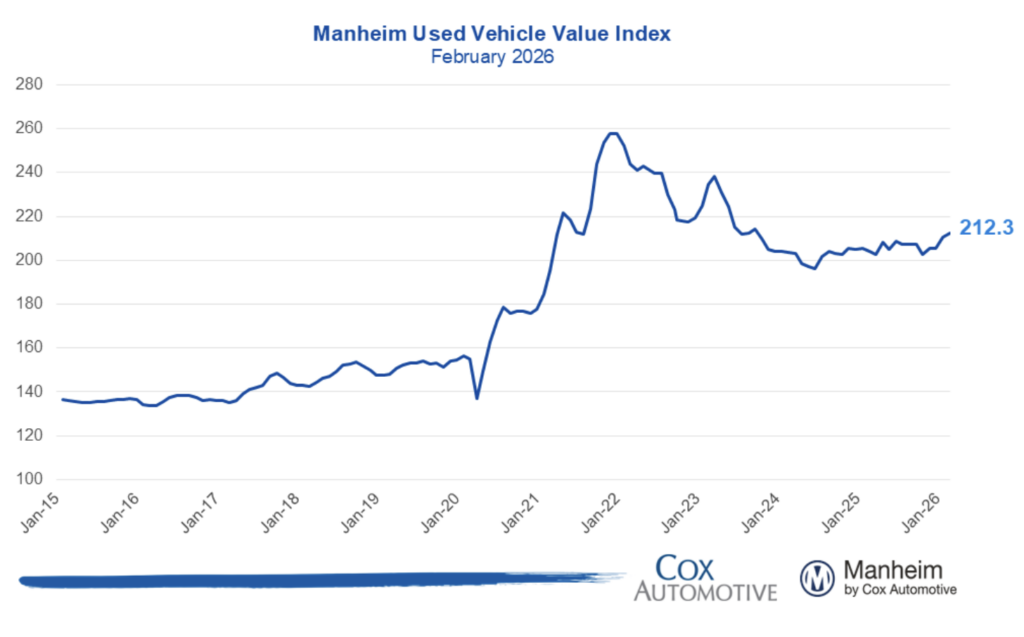
On a non-adjusted basis, wholesale prices were up 4.2% year over year and 3% from January. The typical February gain historically has been about 0.9%, according to Manheim.
Jeremy Robb, chief economist at Cox Automotive, said dealer demand has remained solid early in the year.
‘Solid Demand’
“Since the start of 2026, we’ve seen mostly solid demand at Manheim with higher sales conversion rates indicating an appetite from dealers to buy,” Robb said. “As we progressed through February, we saw prices move higher than usual, especially in the back half of the month.”
Robb noted winter weather in late January and early February slowed dealer traffic, but said demand has begun to strengthen as spring approaches.
“With warmer weather ahead across much of the U.S., we have seen retail demand increasing in our most recent data points for both new and used sales,” Robb said, adding that tax refunds running about 10% higher than last year could help drive dealership traffic in March.
Geopolitical Tensions
However, Robb said geopolitical tensions and rising gasoline prices could weigh on consumer spending in the near term.
“Recent geopolitical events introduce new risks to the economy, and that may put a damper on consumer appetite in the short run,” he said.
Other indicators pointed to strengthening wholesale demand.
Manheim Market Report prices for three-year-old vehicles rose 3.1% in February. MMR retention averaged 100.3%, up slightly from both a year earlier and January. Sales conversion reached 61.5%, 0.4 percentage points above the recent three-year February average and 1.4 percentage points higher than January.
EVs Show Gains & Other Findings
According to the report:
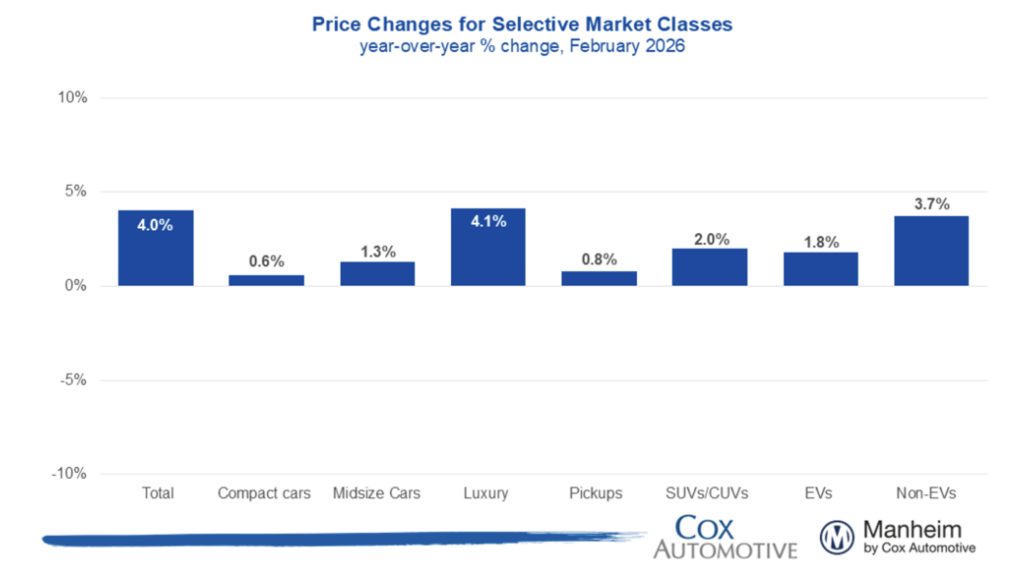
- All major vehicle segments posted price increases from a year earlier, led by the luxury category, according to the report. Compact cars and trucks showed the weakest gains compared with other segments.
- Electric-vehicle prices increased 1.8% from a year earlier and 0.8% from January. Prices for non-EV vehicles rose 3.7% year over year and 0.9% from the previous month. Cox Automotive said EV values remain above year-ago levels despite moderating after the expiration of government-backed incentives.
- Wholesale inventory remained relatively tight. At the end of February, wholesale days’ supply stood at 26.7 days, up 0.6 days from a year earlier but slightly lower than January. Before the COVID-19 pandemic, wholesale supply averaged about 31 days at the end of February.
- Rental-vehicle values rose sharply, increasing 9.1% year over year and 6% from January, according to Manheim. On a non-seasonally adjusted basis, rental prices were up 8.6% from 2025 levels and increased 7.1% during February, driven in part by lower average mileage compared with a year earlier.