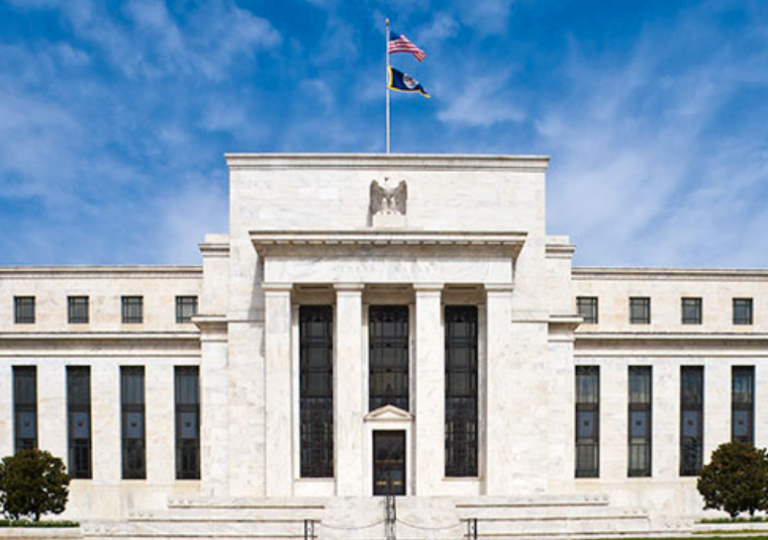
WASHINGTON — Federal regulators have proposed sweeping changes that would allow the nation’s largest banks to hold less capital against potential losses, marking a significant shift in post-financial crisis oversight and delivering a long-sought victory for Wall Street.
In response, America’s Credit Unions is calling on NCUA to similarly “recalibrate” capital rules for credit unions.
The proposal, led by the Federal Reserve and reported by both The Wall Street Journal and other major outlets, would reduce capital requirements for the biggest U.S. banks by roughly 2% to 5% on average, freeing up tens of billions of dollars for lending, dividends and share buybacks.
The changes are part of a broader overhaul of rules tied to the international “Basel III” framework, which was designed after the 2008 financial crisis to ensure banks maintain sufficient buffers to absorb losses.
About the Proposal
Regulators said the plan would simplify how banks calculate capital and revise additional surcharges applied to the largest, systemically important institutions.
According to analysts:
- Capital requirements for the largest banks would decline modestly overall
- Mid-size and regional banks could see larger percentage reductions
- Certain calculation methods viewed as overly complex would be eliminated
- Some risk categories, including credit and operational risk, would be recalibrated
Credit Union Response
“The banking agencies’ proposal to lower capital requirements and modernize risk weightings reflects a recognition that outdated capital rules can constrain lending and limit access to affordable financial services,” said America’s Credit Unions President and CEO Scott Simpson in a statement. “America’s Credit Unions has urged the NCUA to take a similar, tailored approach by recalibrating the capital treatment of mortgage servicing assets, including eliminating the current deduction threshold and adopting more risk-sensitive treatment for residential mortgage exposures. We have also called on the agency to evaluate broader capital relief options, including adjustments to elements of the risk-based capital framework, to ensure requirements better reflect actual risk and economic conditions.
“The Federal Credit Union Act requires a risk-based capital framework that is comparable to banking regulators, and today’s proposal reinforces the need for that framework to evolve alongside broader regulatory changes without imposing unnecessarily restrictive requirements on credit unions,” Simpson continued. “Credit unions are a critical source of mortgage credit, particularly for low- and moderate-income borrowers. When capital rules are not calibrated to actual risk, they can limit the ability of credit unions to support homeownership and invest in their communities.
“We urge the NCUA to act to modernize its capital framework so credit unions can continue meeting the needs of their members while maintaining safety and soundness,” he added.
‘Overly Burdensome’
Federal Reserve Officials argue the current framework is overly burdensome and may constrain lending and economic growth.
Federal Reserve Vice Chair for Supervision Michelle Bowman said the proposal is intended to “modernize” capital rules while preserving safety and soundness.

As the CU Daily has reported, banking groups have pushed for years to ease capital rules, arguing earlier proposals would have forced large increases—potentially as high as 20%—in required capital.
The revised plan instead results in only minimal increases in some areas that are more than offset by other changes, leading to a net reduction in capital requirements.
The Wall Street Journal reported the proposal would allow the largest banks to hold about $20 billion less capital than under prior plans, and supporters say the changes could help banks compete with nonbank lenders and expand credit availability.
Criticism and Concerns
Critics, including some regulators and lawmakers, warned the move could weaken safeguards put in place after the 2008 crisis.
Former Fed Vice Chair Michael Barr called the reductions “unnecessary and unwise,” while others cautioned they could increase systemic risk if economic conditions deteriorate.
Analysts and policymakers have also questioned whether banks will use the freed-up capital to increase lending or instead return it to shareholders.
Out for Comment
The proposal is subject to a public comment period before final approval, with regulators aiming for implementation in the coming years.