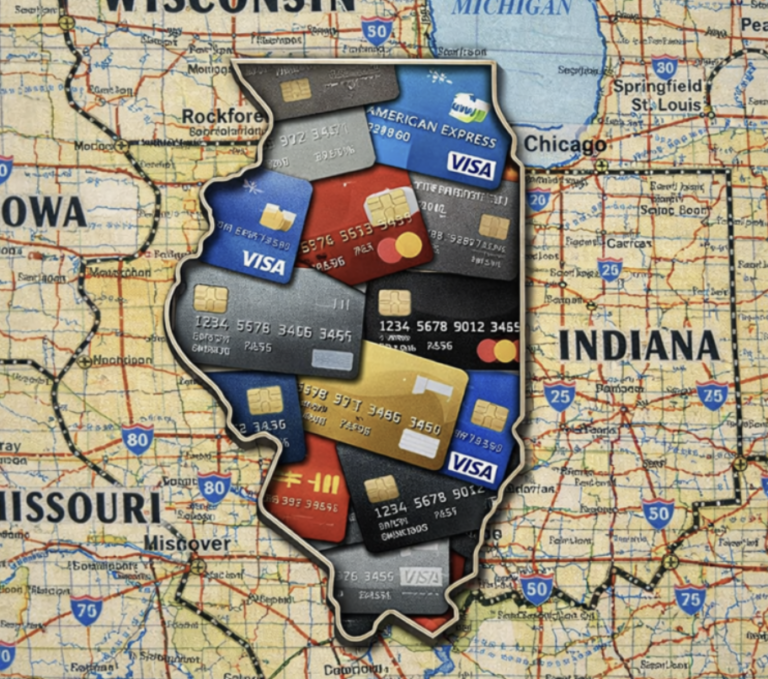
SPRINGFIELD, Ill. — The fight over the card interchange bill in Illinois, has drawn attention from a national publication that is explaining to cardholders that their cards could be declined in the Prairie State, depending on how the fight is resolved. The report in the Wall Street Journal includes comments on behalf of credit unions.
As the CU Daily has been reporting extensively, including related reporting here, the Illinois Fee Prohibition Act (IFPA) is set to take effect July 1 and would prohibit credit-card fees on taxes and tips, marking a new flashpoint in a long-running dispute over interchange fees.
Merchants have long opposed the fees, arguing they unfairly increase costs, while financial institutions, including credit unions, maintain that interchange revenue supports popular consumer rewards programs, such as cash back and travel points, as well as fraud prevention services. The fees are set by card networks such as Visa and Mastercard but are paid to the banks that issue the cards.
Banking groups warn the Illinois measure could disrupt the payments system and even lead some smaller issuers to exit the state. Several community banks and small credit unions said in court filings that compliance costs could reach hundreds of thousands of dollars. America’s Credit Unions and the Illinois league are plaintiffs in the litigation challenging the law. A hearing in the Seventh District Court is scheduled for May 13, following a recent card-related ruling by the OCC.
CU Exec Speaks Out
“The option that we would steer more toward is eliminating card services for our members,” said Peter Fauth, president of Financial Plus Credit Union and board member of the Illinois Credit Union League, during a press conference.
The Illinois law aims to require banks to distinguish which portions of a transaction are subject to fees. Currently, when consumers pay with a credit card at a restaurant, interchange fees are assessed on the entire bill, including taxes and gratuities, even though those funds ultimately go to the government and employees rather than the merchant.
Supporters of the law argue that businesses should not pay fees on money they do not retain. They contend the change could reduce costs for small businesses and potentially lower prices for consumers.
Merchants Paid $500M in Fees
Data from payments consulting firm CMSPI shows merchants paid about $500 million in interchange fees on sales tax in Illinois in 2024, including both debit and credit transactions. Nationwide, those fees totaled nearly $11 billion, the Journal reported.
Business owners say the costs are significant. Mark Robertson, who operates five taverns in Chicago, estimated the law could save his business between $25,000 and $40,000 annually.
“As we’ve seen rewards grow, and competition between cards grow, we’ve seen the cost of processing go up,” Robertson told the Journal. “We’re absorbing that as additional business expense.”
Legislation in Colorado, Delaware
As the CU Daily reports separately, similar legislation could be enacted soon in Colorado, and has also been introduced in Delaware, “potentially turning what has historically been a federal issue into a patchwork of state-level rules,” the Journal stated.
“What this shows is 15 very significant cracks across the country at the state legislative level,” Sean Kennedy of the National Restaurant Association, told the Journal. “States are willing to act.”